Torrential overnight rains triggered severe flash flooding early Thursday along the Georgia-Tennessee border, submerging buildings to their rooflines, washing away a police cruiser and prompting dozens of swift-water rescues.
The deluge pushed the Toccoa River—known across the state border in Tennessee as the Ocoee River—to a historic crest of more than 18 feet on Thursday morning. That level surpassed the previous high mark of 17.75 feet set in February 1990 and exceeded the threshold for catastrophic flooding, according to river gauge records and the National Weather Service.
Communities Cut Off by Rushing Water
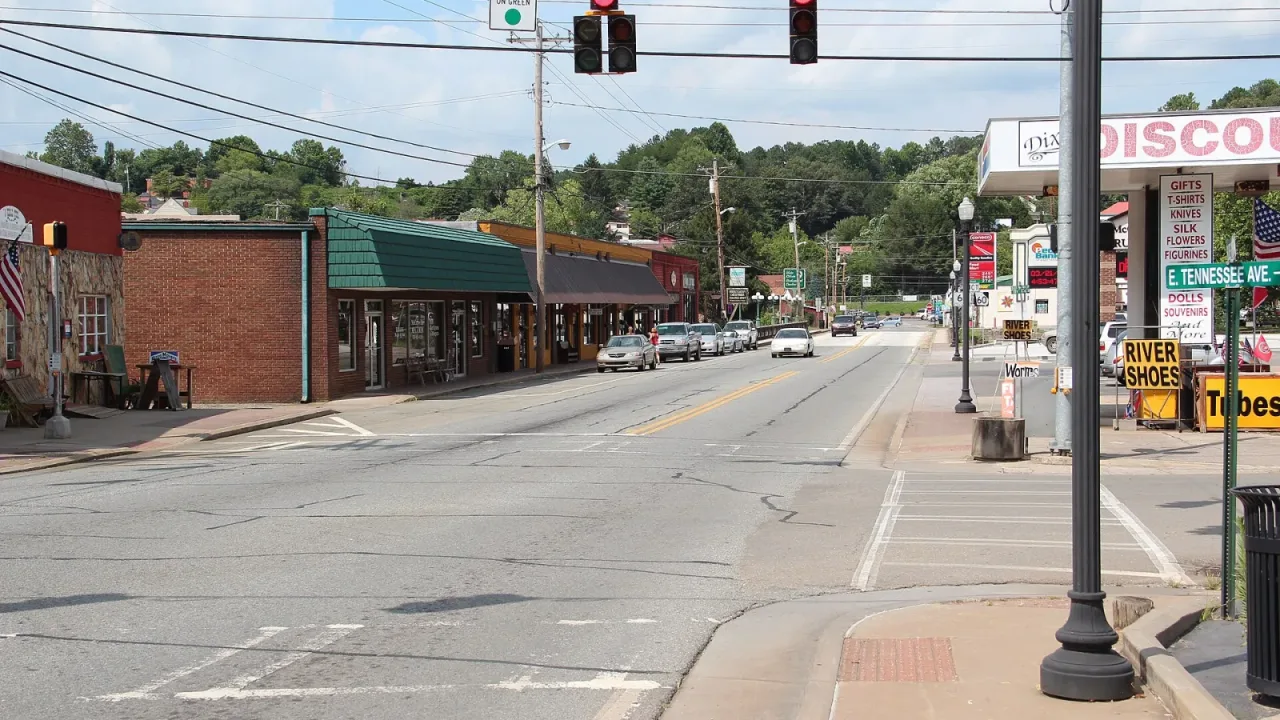
The flooding struck the adjoining mountain communities of McCaysville, Georgia, home to roughly 1,000 residents, and Copperhill, Tennessee, which has fewer than 500. Local officials declared a state of emergency and ordered the closure of both downtown areas to unauthorized personnel as water filled streets and cut off access roads.
In downtown McCaysville, water rose six to seven feet high in the commercial center, with some low-lying structures inundated up to their roofs. McCaysville Police Chief Michael Earley reported that one of the department’s cruisers was swept away by the raging current.
“I have one of my police cars that’s floating down the river right now. Don’t know where it’s at, but it’s somewhere down there,” Earley told Fox 5 Atlanta.
First responders deployed red boats and motorized rafts to extract residents stranded on roofs and inside flooded homes. Discrepancies emerged regarding the precise rescue tally: Earley stated that emergency personnel carried out more than 30 rescues overnight, while Robert Poole, a spokesperson for the Fannin County Emergency Management Agency, estimated that crews rescued roughly 20 individuals. Officials reported no fatalities or confirmed injuries, though local television coverage showed one person being transferred to an ambulance.
Explosions, Road Washouts and Disruption
The rushing water also created secondary hazards throughout the region. A propane tank caught fire and later exploded in downtown McCaysville before firefighters could douse the flames, local outlets reported. County officials noted several building fires believed to have been started by lightning during the storm.
Officials used school buses to move displaced residents to an emergency shelter established at the Fannin County Recreation Center in Blue Ridge. Authorities also issued a boil-water advisory for McCaysville, while county courthouse facilities and local government offices closed for the day.
Public school systems across the impact area canceled classes Thursday, including districts in Fannin and Gilmer counties in Georgia and Polk County in Tennessee. Multiple rural roads suffered severe damage, including bridge washouts and mudslides that temporarily trapped families in Cherry Log and rural Fannin County.
Response Efforts and What Comes Next
Georgia Gov. Brian Kemp announced on social media that the Georgia Emergency Management and Homeland Security Agency is coordinating a multi-agency response alongside neighboring Tennessee agencies, the Georgia State Patrol and the Department of Natural Resources, utilizing boat crews and aviation assets.
Rainfall totals reached between 3 and 8 inches across portions of northern Georgia and southeastern Tennessee within a 12-hour window. Although the heaviest storms ended and river levels began receding late Thursday morning, emergency management officials warned that dangerous conditions persist.
Poole said emergency teams planned to deploy drones and helicopters Thursday afternoon to conduct aerial assessments for any remaining isolated residents. Local officials emphasized that receding water does not mean danger has passed, warning the public to steer clear of flooded roads and barricaded areas as recovery operations begin.