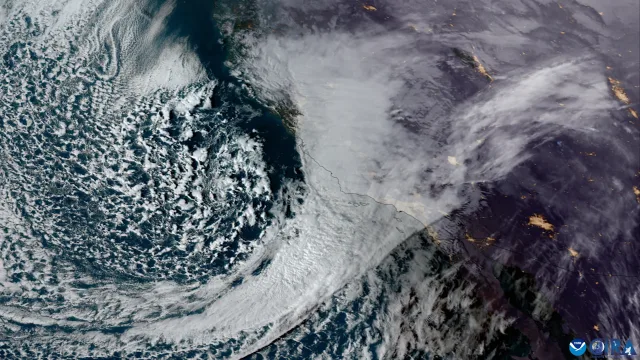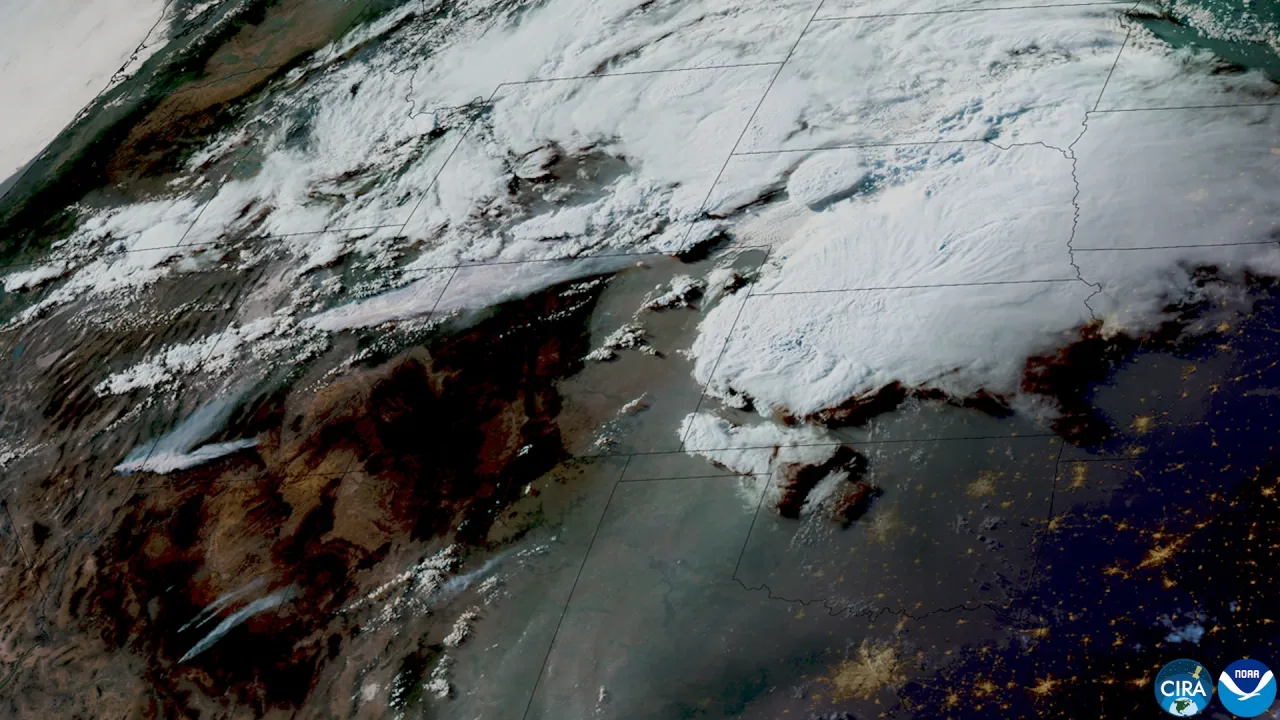
A relentless series of Pacific storm systems dumped torrential rain across the American Southwest on Sunday, sparking dangerous flash floods and forcing emergency evacuations in communities throughout Arizona and Colorado.
In southwestern Colorado, authorities warned of catastrophic conditions in the mountain community of Pagosa Springs, where swollen rivers threatened to exceed records that had stood for more than a century. The Archuleta County Sheriff’s Office cautioned that the San Juan River was projected to rise to dangerous levels, leading to mandatory evacuation directives for residents in low-lying areas along the San Juan, Rio Blanco, Navajo, and Piedra rivers.
Forecasts on the river’s expected peak varied across reports. According to ABC News, county officials anticipated the San Juan River could crest above 19 feet late Sunday night, surpassing the 17.8-foot benchmark recorded during a devastating 1911 flood. Reporting from CBS News noted that weather modeling showed a crest near 17 feet by early Monday, while other regional projections pointed to a potential surge reaching nearly 19.7 feet. Town officials opened an emergency shelter at a local church and closed inbound access on the local highway to protect travelers.
Rescues and evacuations in Arizona
In central Arizona, fast-moving floodwaters overwhelmed residential areas, trapping people inside their homes. Authorities in the popular tourist destination of Sedona ordered immediate evacuations for neighborhoods bordering Oak Creek, directing displaced residents to take shelter at Sedona Red Rock High School.
Ed Mezulis, chief of the Sedona Fire District, confirmed in a video statement that regional emergency crews were assisting local personnel as they responded to multiple calls from residents stranded by the deluge. He urged citizens to avoid driving through rushing currents, to stay away from swollen creek beds, and to seek higher ground immediately.
Nearby in Camp Verde, local emergency managers also issued mandatory evacuation notices for neighborhoods adjacent to the Verde River, Wet Beaver Creek, and West Clear Creek. Further south in Tucson, where swift-water boat rescues were conducted, National Weather Service meteorologist Aaron Hardin told ABC News that the region was receiving “two or three months of rain in a span of a couple of days.”
Dual threat of rain and mountain snow
The intense atmospheric river delivered a sharp divide between torrential valley rainfall and severe winter conditions at higher elevations. The National Weather Service issued flood watches stretching across nearly all of Arizona, southwestern Colorado, southern Utah, western New Mexico, and parts of southern Nevada.
Above 10,000 feet in Colorado’s San Juan Mountains, meteorologists issued a winter storm warning, forecasting between 12 and 24 inches of wind-driven snow, CBS News reported. The severe mountain weather prompted the preventative closure of the Wolf Creek Ski Area to ease burdens on regional emergency resources, according to regional reports. The Colorado Avalanche Information Center raised avalanche risks across the southern and central ranges, warning that danger could reach high levels on steep terrain through Monday.
The current emergency follows another major flood that struck southwest Colorado just over a week earlier, leaving ground soils heavily saturated and incapable of absorbing additional runoff. Forecasters expect the storm to push east toward Colorado’s Front Range on Monday, bringing scattered showers before conditions turn mild and sunny by Tuesday.