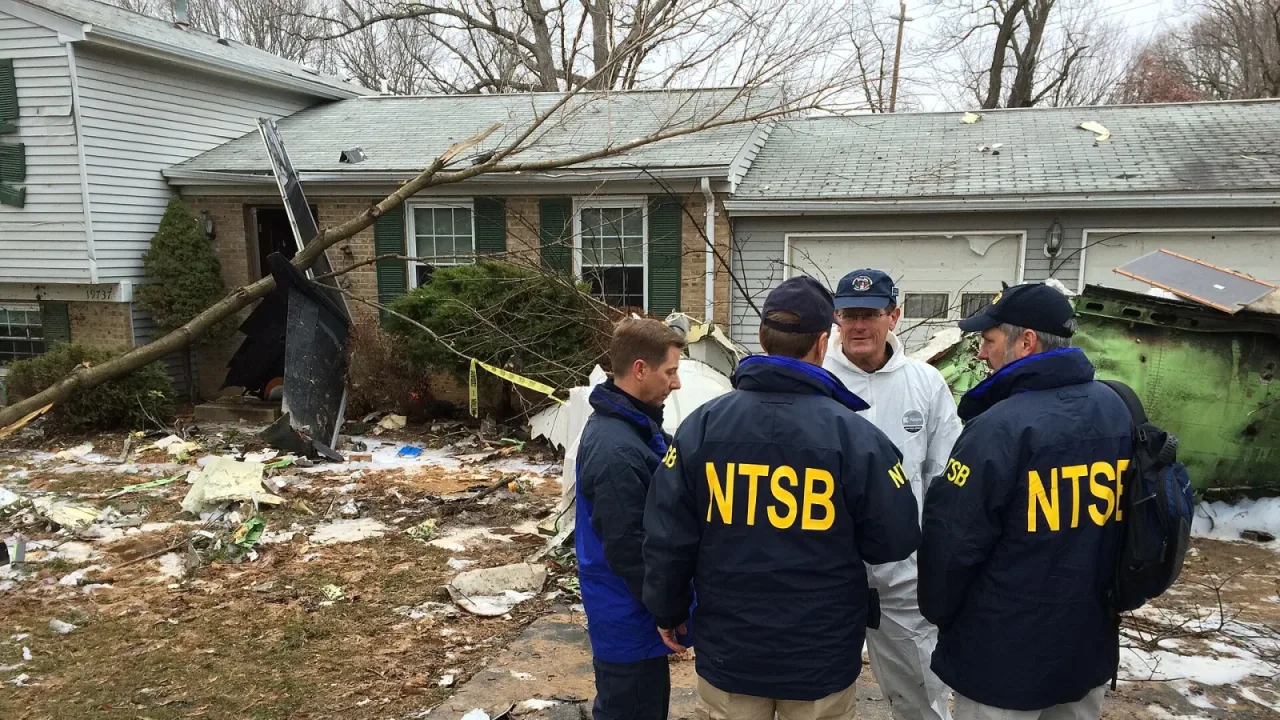
When a Bombardier Learjet 60 plunged into a Palm Beach County, Florida, neighborhood on Sunday afternoon, killing all nine people aboard, it left behind a half-mile debris field and an urgent set of technical questions for federal aviation authorities. As the National Transportation Safety Board sifts through wreckage partially submerged in water, investigators are concentrating on how atmospheric conditions, altitude requests and flight deck decisions intersected in the final minutes of flight.
Atmospheric Hazards and Extreme Descent Rates
The flight departed Austin-Bergstrom International Airport in Texas on Sunday morning en route to North Eleuthera Airport in the Bahamas. According to NTSB member Tom Chapman, the flight crew reported entering moderate turbulence and encountering clear icing at an altitude of 35,000 feet around 12:47 p.m. Air traffic control approved the pilots’ request to climb to 37,000 feet to escape the weather. However, within 30 seconds of that authorization, the twin-engine jet entered a catastrophic dive, according to federal officials.
Severe icing at cruising altitude can degrade aerodynamic performance and disrupt sensor readings, while heavy turbulence adds substantial control burdens. Audio recordings documented by The Associated Press and local broadcasts revealed frantic radio transmissions detailing rapid loss of control, with the crew reporting an overspeed condition and descent rates escalating from 10,000 feet per minute to more than 20,000 feet per minute. Chapman confirmed to reporters that radar data showed the aircraft plunging at rates reaching roughly 32,000 feet per minute before exploding on impact near Cresthaven, Florida.
Structural Breakup and the Question of Control
A primary focus for investigators is determining whether the Learjet experienced structural failure before hitting the ground. Chapman told reporters that preliminary evidence suggests the airframe was breaking apart during the high-speed plunge. At descent rates exceeding typical design limits, extreme aerodynamic flutter and overspeed forces can tear control surfaces and wings from an aircraft before impact.
Investigators are also probing who was flying the aircraft when the upset occurred. The co-pilot was identified by family members as 20-year-old Nathalia Filgueiras, a certified flight instructor who earned her private pilot credentials at age 17 through an aviation academy in the Palm Beach County school system. Her father, pilot Allan Filgueiras, told NBC News that she was serving as first officer in the right seat alongside the flight’s captain. The NTSB noted on Monday that it has not yet established whether Filgueiras or the captain held control of the plane as the emergency unfolded.
Human and Technical Elements Under Review
Federal officials must also verify whether flight data and cockpit voice recorders were installed, functioning and intact enough to provide telemetry from the final moments. Family members identified the passenger group as an Austin tech entrepreneur, his wife, their two toddlers and three friends, while Transportation Secretary Sean Duffy formally confirmed nine total fatalities.
Aviation investigators must now determine whether the rapid drop began with an aerodynamic stall induced by ice, an instrumentation disagreement or control surface failure. The NTSB’s preliminary factual summary, anticipated in coming weeks, will provide initial clarity on aircraft systems and pilot inputs, while a full conclusive determination of probable cause typically requires a year or more.