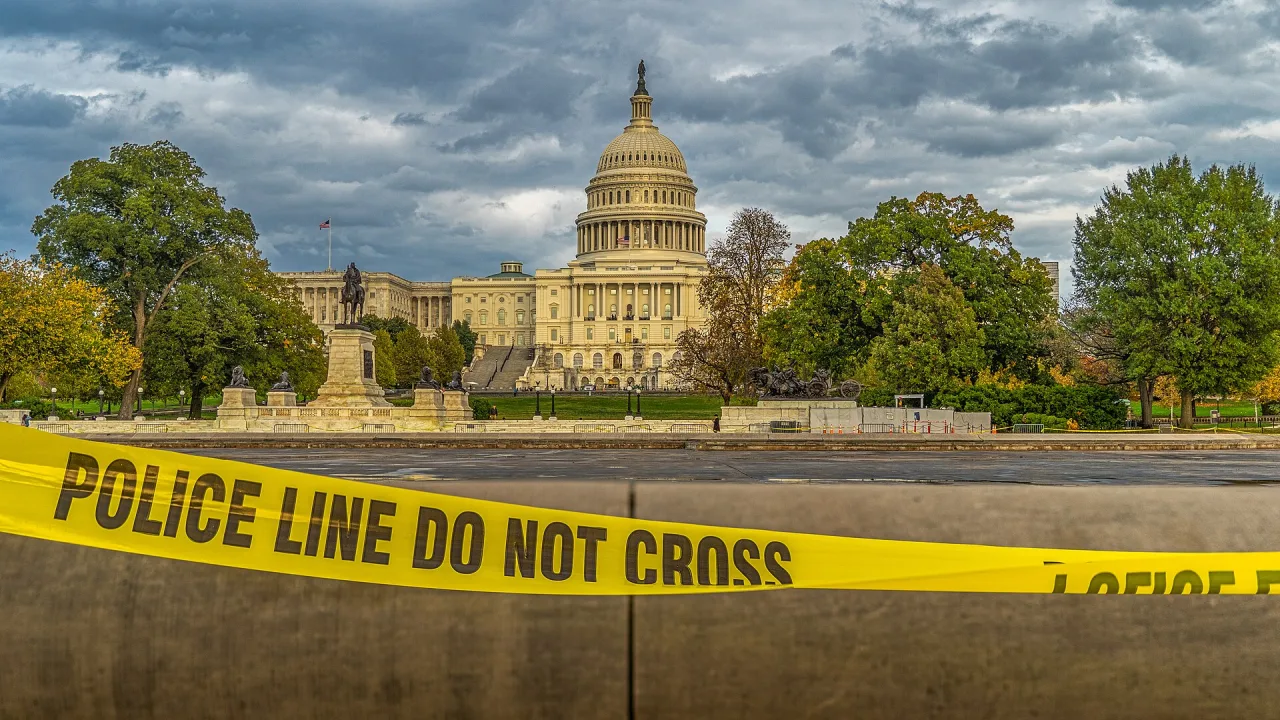
WASHINGTON — Democrats have widened the battleground map into traditionally conservative states across the country, mounting unexpectedly competitive campaigns to erase the Republican Senate majority just days ahead of the November midterm elections.
Republicans hold a 53-47 advantage, meaning Democrats require a net gain of four seats to capture the chamber. While a Democratic takeover once appeared remote, public discontent over the ongoing war in Iran, trade tariffs, and climbing fuel and grocery prices has placed GOP candidates on the defensive in several states carried by President Donald Trump in 2024, Al Jazeera and NPR reported.
Surging Contests in the Plains and Sun Belt
Among the most striking developments is in Kansas, where no Democrat has won a Senate election since 1932. Democratic nominee Adam Hamilton, a founding pastor of a Methodist megachurch, is challenging Republican Sen. Roger Marshall. The Daily Beast reported that polling analyst Nate Silver shifted the race to “Lean D” on his Silver Bulletin Substack following an Emerson College survey showing Hamilton ahead 49 percent to 45 percent, matching a four-point margin in a CNN/SSRS poll. A Washington Post survey released Friday placed Hamilton up 52 percent to 43 percent, according to KWCH. Trump, who won Kansas by 16 points in 2024, announced plans to hold a rally in Salina on Sunday to bolster Marshall.
In North Carolina, both parties largely view the open seat as tilting toward Democrats, NPR reported. Former Democratic Gov. Roy Cooper has built a massive financial advantage over Republican Michael Whatley, former chairman of the Republican National Committee. Cooper had amassed $50 million compared with Whatley’s $14 million through mid-October, with Cooper holding a double-digit lead in recent surveys, according to Al Jazeera.
In Texas, state Rep. James Talarico is locked in a tight race against Republican Attorney General Ken Paxton for an open seat. Democrats have not secured a statewide victory in Texas since 1994, but Paxton’s nomination over incumbent Sen. John Cornyn in a primary runoff prompted Republican outside groups to pour $300 million into the state, Al Jazeera reported. Elon Musk alone contributed $158 million to a Republican super PAC backing Paxton.
Midwestern and Northern Battlegrounds
In Ohio, former Democratic Sen. Sherrod Brown is attempting a political return against appointed Republican Sen. Jon Husted, who took office after JD Vance became vice president. Campaign finance records show Brown raising $68 million to Husted’s nearly $20 million as outside groups spent hundreds of millions of dollars on the race, Al Jazeera reported.
Iowa has also emerged as a competitive target. Following the retirement of Republican Sen. Joni Ernst, Democratic state Rep. Josh Turek is facing Republican Rep. Ashley Hinson in a state where agricultural communities face severe pressure from tariffs and fertilizer expenses. Alaska presents another volatile dynamic under ranked-choice voting, where Democratic former Rep. Mary Peltola leads Republican Sen. Dan Sullivan in recent polling amid GOP accusations that Democrats recruited an independent candidate also named Dan Sullivan to sow voter confusion, according to Al Jazeera.
Democrats must also protect vulnerable territory of their own to preserve their path to the majority. In Michigan, progressive physician Abdul El-Sayed faces former Republican Rep. Mike Rogers in a race where Republican outside groups have spent $136 million, Al Jazeera reported. Meanwhile, in Maine, longtime Republican Sen. Susan Collins is defending her seat against Democratic former state Senate President Troy Jackson in a state won by Democrat Kamala Harris in 2024.
What Comes Next
Whether Democrats can convert these competitive races into a functional majority hinges on election day turnout. Nonpartisan analysts, including the Cook Political Report, have classified contests in Alaska, Iowa, Kansas, Ohio, and Texas as toss-ups, according to NPR. With results in multiple tightly contested states expected to be decided by slim margins, party officials acknowledge that control of the upper chamber may not be established on election night as counting continues across different time zones.