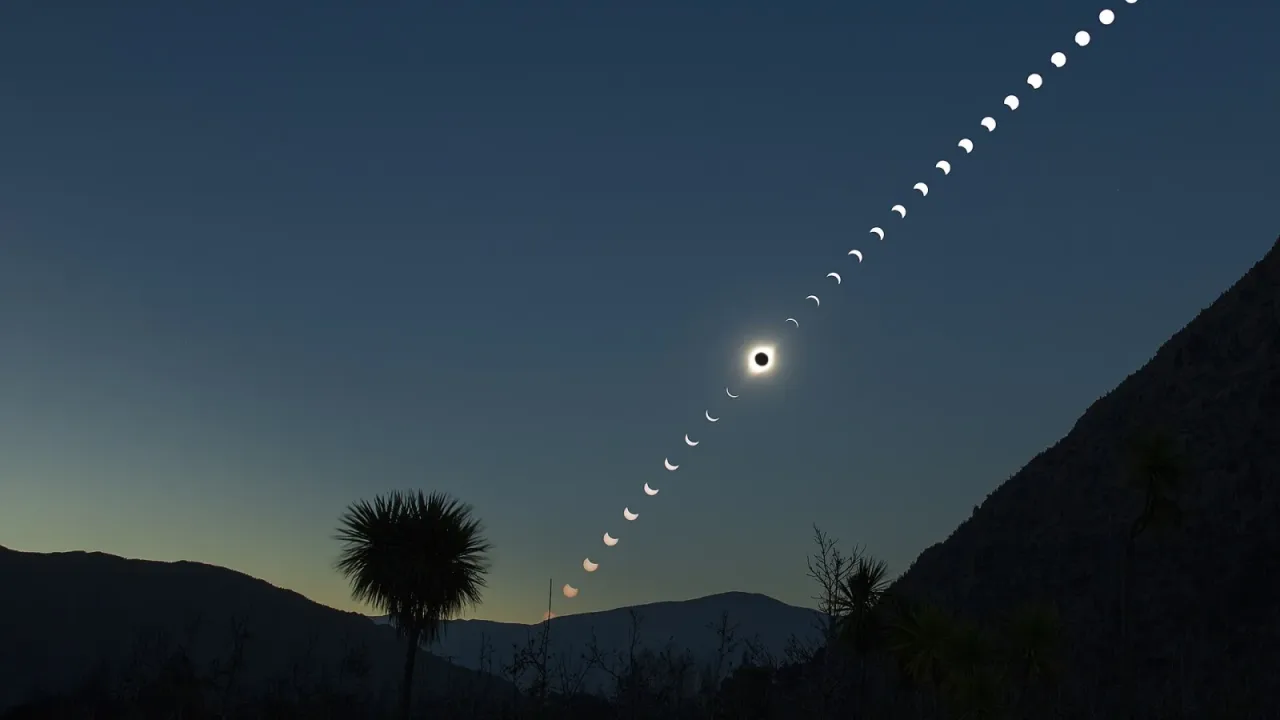
Skywatchers around the world are preparing for what astronomers call one of the most remarkable celestial occurrences of the century: the total solar eclipse set to cross the globe on Aug. 2, 2027.
According to The News-Review, the moon’s dark inner shadow will trace a corridor nearly 9,500 miles long and roughly 160 miles wide, stretching from the Atlantic Ocean across southern Europe and North Africa before concluding in the Indian Ocean. While a very minor partial eclipse might touch slivers of northeastern North America, travelers determined to witness complete darkness will need to journey abroad.
Spain offers prime viewing along southern coast
Southern Spain is poised to become a central hub for international observers, Space.com reported. The track of totality makes European landfall in Andalucía during the mid-morning hours, placing the sun roughly 38 to 42 degrees above the eastern horizon. The region offers extensive transportation infrastructure, an international airport in Málaga, and vast lodging options along the Costa del Sol.
Totality durations across southern Spain vary based on distance from the center of the eclipse track. Space.com highlighted several coastal and inland spots based on data from Time and Date:
- Tarifa: Situated at mainland Europe’s southernmost point, the town will experience mainland Spain’s longest totality at four minutes and 40 seconds starting at 10:45 a.m. CEST, with historical August cloud cover around 13 percent.
- Gibraltar and La Línea de la Concepción: The British Overseas Territory of Gibraltar will observe four minutes and 29 seconds of darkness, while adjacent La Línea offers four minutes and 24 seconds with views framed by the limestone Rock of Gibraltar. However, observers on Gibraltar must contend with the regional Levanter wind, which can generate a cloud cap above the Rock.
- Resort towns: Estepona will receive three minutes and 41 seconds of totality, Marbella will record three minutes and 21 seconds, Torremolinos gets two minutes and 46 seconds, and Málaga will see two minutes.
- Mountain hideaways: Inland in Málaga province, the mountain village of Gaucín maintains a low five percent historical cloud average in August and will offer three minutes and 13 seconds of totality.
Peak totality extends across North Africa
Beyond Spain, the shadow will cut across northern Morocco and Algeria before reaching Egypt, where the event reaches its peak duration. In destinations such as Luxor and the Siwa Oasis, totality will surpass six minutes, according to The News-Review. Historical weather trends show Egypt provides reliably dry, cloud-free August skies, making it an attractive destination for eclipse chasers despite high summer temperatures.
Partial phases will remain visible across large portions of Europe, North Africa, and the Middle East, while locations like the Maldives will record approximately 70 percent coverage at the peak, The News-Review reported.
With prime accommodations already seeing high demand in compact areas like Gibraltar, experts advise travelers to verify regional weather patterns and reserve transportation well in advance. Proper certified solar viewing glasses remain essential during all partial phases of the eclipse.