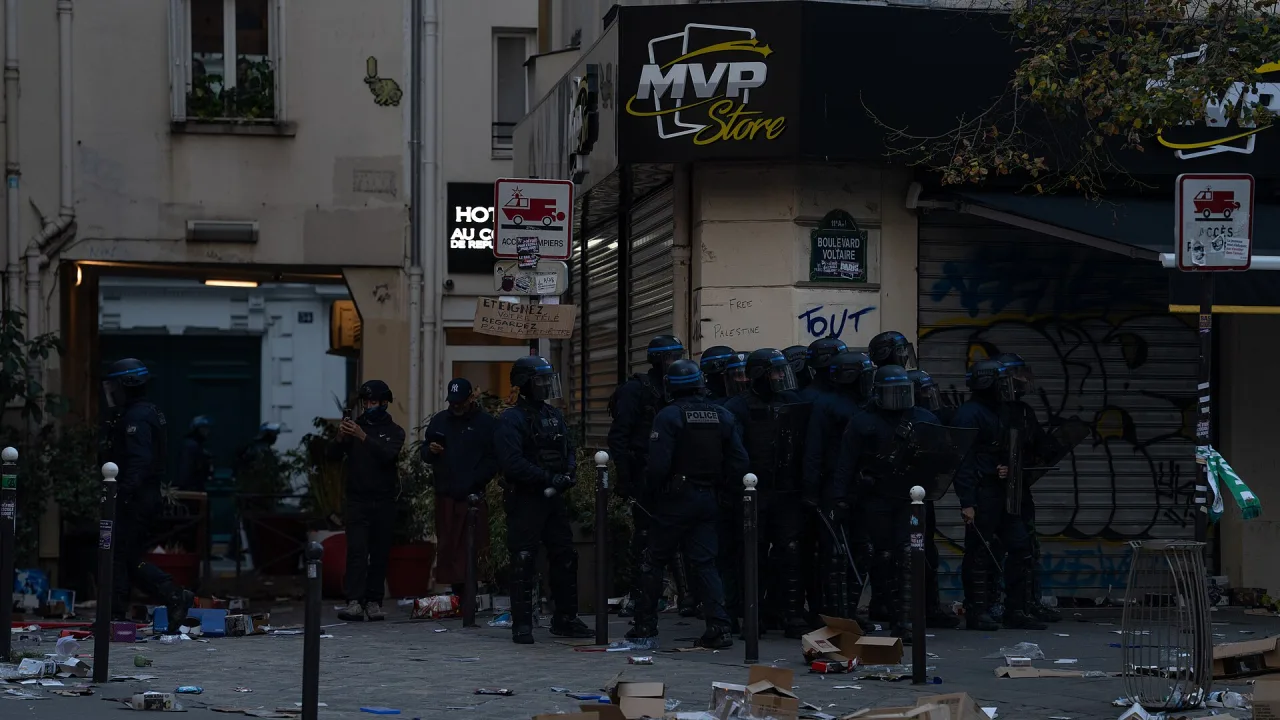
French Prime Minister Sébastien Lecornu instructed regional prefects on Monday to enact localized curfews across the country after massive weekend protests over living costs and education erupted into riots and looting, overwhelming law enforcement.
Speaking following an emergency cabinet meeting, Lecornu stated that regional authorities would designate specific areas under nighttime curfews. The decision followed days of unrest that damaged thousands of commercial properties, ignited city halls, and led to clashes between masked rioters and riot police in major metropolitan areas, including Paris, Lyon, and Marseille.
Government acknowledges security failure
The riots triggered a political crisis in Paris, where top officials acknowledged that security agencies drastically miscalculated the unrest. France’s Interior Ministry estimated that roughly 550,000 demonstrators took part in 110 demonstrations on Saturday, far exceeding initial intelligence forecasts of roughly 200,000 people. March organizers estimated the turnout reached 800,000.
Interior Minister Laurent Nuñez submitted his resignation to President Emmanuel Macron on Sunday, taking responsibility for the planning breakdown. Macron refused the offer, keeping Nuñez in place to direct law enforcement operations while commanding a thorough review into intelligence failures. Justice Minister Gérald Darmanin acknowledged the breakdown directly, saying, “We unquestionably failed,” pointing to difficulties monitoring far-left networks.
Nuñez acknowledged on French radio that police had been overrun during the peak of the disturbances. “You can’t look shopkeepers in the eye when hundreds of businesses have been looted and say we haven’t lost control in some of these major cities,” Nuñez said on France Inter.
Widespread damage across major cities
Officials reported that roughly 60,000 police officers and gendarmes were deployed nationwide to contain the unrest. Despite those numbers, authorities recorded at least 2,400 arrests across the country, while nearly 1,000 police officers and firefighters suffered injuries. Officials estimated Monday that at least 3,000 businesses were damaged or looted over the weekend.
In central France, rioters set fire to the 19th-century City Hall in Limoges, causing the roof of the historic structure to collapse. In Paris, business owners watched helplessly on security cameras as looters broke through storefronts, while municipal crews spent Monday clearing piles of glass and burned debris from transit corridors. At the Louvre Museum, student blockades prevented tourists and visitors from entering the facility on Monday.
In Marseille, authorities prohibited all public demonstrations from noon until 8 p.m. Monday to prevent a resurgence of violence, after demonstrators torched trash bins and commercial storefronts the prior evening.
Origins and growing political fallout
The unrest initially began in September as high school walkouts protesting classroom conditions and severe teacher shortages in the Paris region. The movement quickly mushroomed across France, pulling in labor unions, student organizations, and working-class demonstrators frustrated by rising inflation and deteriorating public services.
The chaos has ignited fierce debate across the political spectrum. Far-right figures, including National Rally leader Jordan Bardella, condemned the administration for failing to preserve order and urged voters to punish Macron’s coalition at the ballot box. Meanwhile, former U.S. President Donald Trump posted criticism blaming French immigration policies for the destruction, though French officials maintained that the destruction was carried out by far-left militants and opportunistic criminal groups rather than immigrants.
Lecornu said authorities would detail the precise boundaries of the localized curfews later Monday, while security forces test revised tactical deployments to regain control of urban centers before additional demonstrations are staged.