New research analyzing prehistoric footprints and ancient genetic material is reshaping scientific understanding of when humans first reached North America and how they navigated harsh ice age environments.
For decades, many archaeologists maintained that humans initially migrated into North America approximately 13,000 to 13,500 years ago across the Bering land bridge, a concept known as the “Clovis First” model. However, recent findings detailed in two separate scientific studies challenge that timeline by pointing to human activity thousands of years earlier, Fox News and Live Science reported.
Evidence in the New Mexico Mud
In a study published in the journal Science Advances, an international team led by researchers from the U.S. Geological Survey and the University of Arizona confirmed that human footprints preserved in a dry lakebed at White Sands National Park in New Mexico date to between 21,700 and 23,500 years ago. The team extracted and dated hundreds of thousands of prehistoric pollen grains from an 82-foot-long trench in the gypsum clay to verify the timeline, addressing earlier debates over whether radiocarbon dates from aquatic plant seeds had been skewed by lake chemistry.
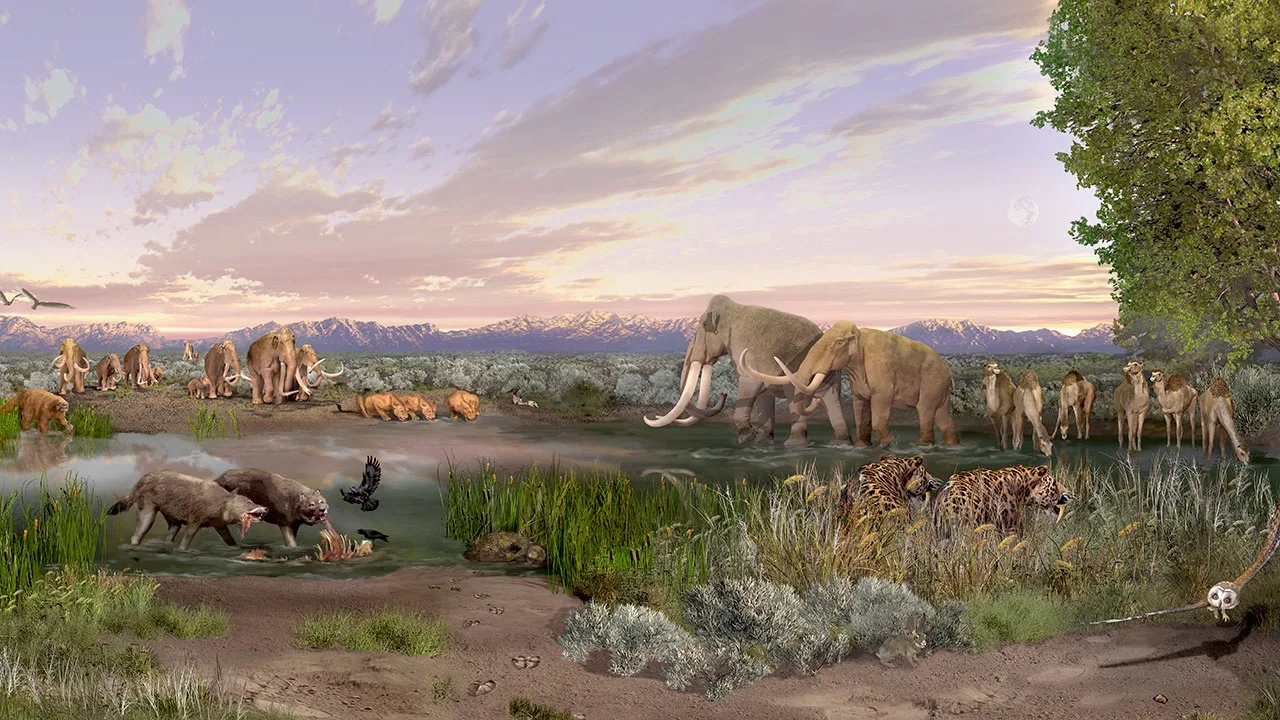
The excavation uncovered 152 human tracks across 20 distinct sediment layers, demonstrating that people visited the basin repeatedly over nearly two millennia during the height of the Last Glacial Maximum. The tracks belonged to children, teenagers and adults who walked alongside extinct megafauna, including mammoths, dire wolves and giant ground sloths. Researchers also discovered long grooves alongside the prints, indicating the use of wooden poles or travois to transport cargo across the landscape.
Sediment chemistry and fossil pollen also revealed that early inhabitants witnessed drastic environmental upheaval within individual lifespans. Around 24,200 years ago, the site was covered by Lake Otero and flanked by conifer forests. Over the next two millennia, regional warming caused the lake to shrink into a playa while forests rapidly shifted into sagebrush, oak, pinyon and juniper.
“It’s remarkable that early humans in the region were real-time witnesses to a rapidly changing environment discernible within a human lifetime — that is really food for thought,” study co-author Kathleen Springer, a research geologist at the USGS, said in a statement reported by Live Science.
Edward Jolie, an associate professor of anthropology at the University of Arizona who worked on the dig, noted that the findings support Indigenous oral traditions that have long placed Native peoples on the continent since time immemorial, according to ECOticias.com.
Genetics Points to Early Migrations
Complementing the footprint data, a review published in the journal Current Opinion in Genetics & Development reexamined published genetic records from ancient remains in Asia and the Americas. The authors, led by Bethany Potter and Savannah Hay of the University of Kansas, reported that existing genetic data most strongly supports an arrival between 14,000 and 20,000 years ago, with an arrival before 15,000 years ago considered likely, Fox News reported.
The genetic review showed that some ancestral lineages separated roughly 21,000 years ago, and early Native American populations diverged into northern and southern branches approximately 15,500 years ago, likely south of the continental ice sheets. To reconcile the genetic timeline with the 23,000-year-old White Sands tracks, the authors suggested the earliest footprint-makers may have belonged to ancient lineages that have not yet been sampled by geneticists or that died out without leaving modern descendants.
Researchers at White Sands are now working to identify the atmospheric mechanisms that linked warming events in Greenland ice cores to severe drying in the American Southwest, while geneticists continue searching for unsampled remains to pin down where and when the first migrations diverged.