Astronomers and computational physicists have developed the most comprehensive simulation to date of the early universe, modeling its first two billion years in unprecedented resolution, according to research published Monday, Oct. 26, in the Monthly Notices of the Royal Astronomical Society.
The project, named Lumina from the Latin word for “lights,” was constructed by an international team led by researchers at the Center for Astrophysics | Harvard & Smithsonian and the Massachusetts Institute of Technology. The simulation allows scientists to observe how primordial matter, gas and radiation interacted to generate the earliest stars, galaxies and black holes after the Big Bang.
Re-creating cosmic dawn on a supercomputer
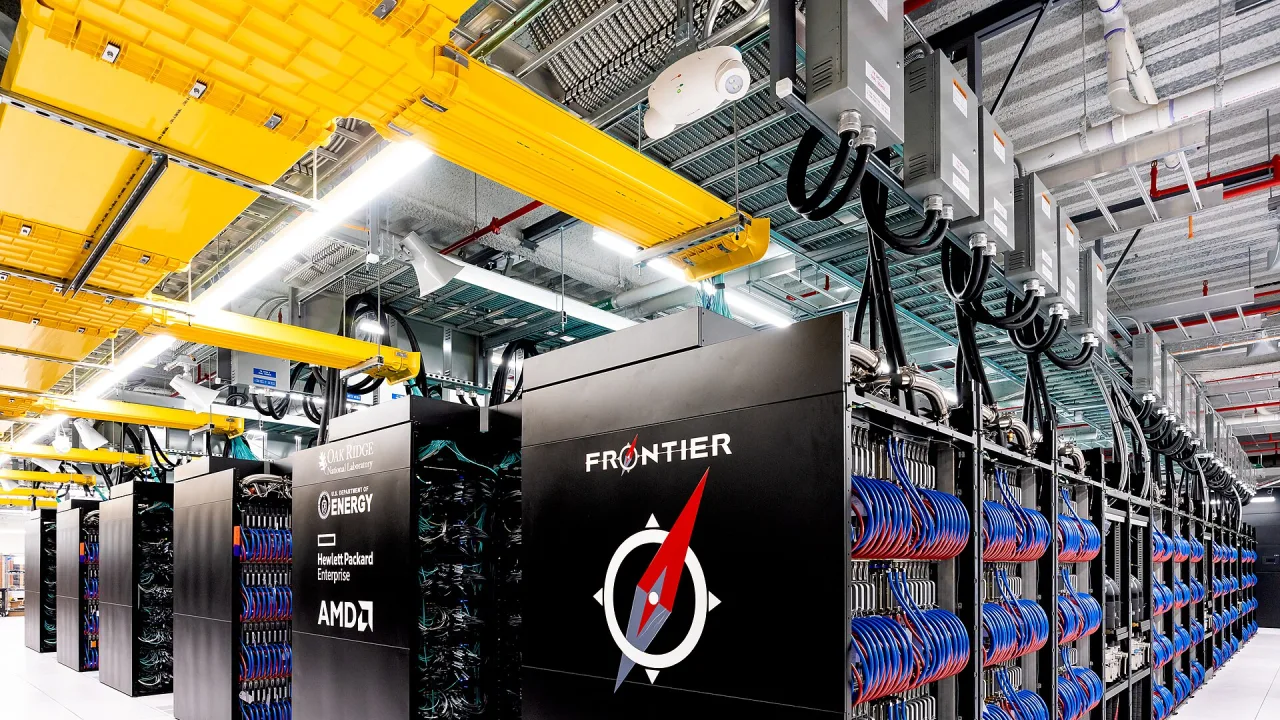
To execute the calculations, the research team deployed Frontier, a top-ranked supercomputer located at Oak Ridge National Laboratory in Tennessee. The computational task required roughly 15,000 graphics processing units and more than 100,000 processor cores running simultaneously, MIT News reported.
The resulting digital universe encompasses half a trillion computational elements across a patch of space measuring about 500 megaparsecs, which is roughly 100 times the volume of earlier comparable simulations. Lumina starts roughly 45 million years after the Big Bang, during the period known as the cosmic dark ages, when neutral hydrogen filled the cosmos.
“Making all of those processors communicate efficiently while continuously evolving trillions of interacting pieces of information is itself an extraordinary feat of computer engineering,” said co-author Xuejian Shen of MIT.
Dual phases of cosmic transformation
Lumina marks the first cosmic simulation capable of charting two defining milestones known as hydrogen and helium re-ionization across a vast expanse while simultaneously tracking individual galaxies.
- Hydrogen re-ionization: Driven largely by ultraviolet radiation emitted by the earliest stars and galaxies, this process stripped electrons from neutral hydrogen atoms, clearing cosmic gas clouds so light could travel freely across space.
- Helium re-ionization: Lumina showed this separate transformation was propelled by intense, high-energy light radiating from active, accreting supermassive black holes in the infant cosmos.
“Lumina does everything from small-scale star and galaxy formation to large-scale re-ionization of hydrogen and helium, in a volume that is 100 times larger than previous best simulations,” physics professor Mark Vogelsberger of MIT told MIT News.
Testing theories against deep space telescopes
Researchers plan to use Lumina to verify and challenge theoretical physics models by comparing its simulations with fresh imagery from deep-space instruments, including NASA’s James Webb Space Telescope and the Nancy Grace Roman Space Telescope, Popular Science reported.
“With JWST, the early universe has become an exciting new frontier in astrophysics,” said lead author Oliver Zier, a computational astrophysicist affiliated with the Center for Astrophysics. “To understand what we are seeing with this telescope, we need to translate our theories into detailed predictions.”
The research team has made the Lumina dataset and visualization tools accessible to the global scientific community. Astrophysicists will now examine whether observed galaxies from the ancient cosmos match the virtual evolutionary pathways calculated by the model or if prevailing theories of early cosmic evolution require revision.