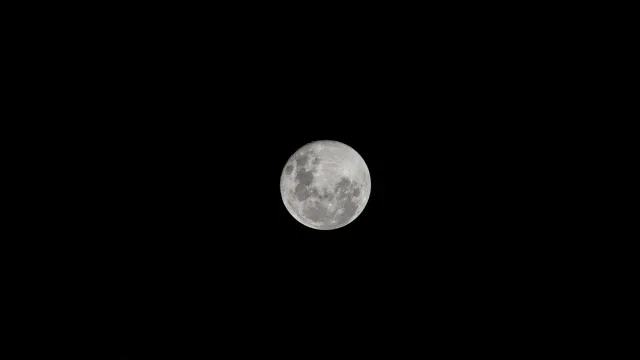
Skywatchers across the United States have a prime opportunity on Sunday evening to see October’s full moon, traditionally known as the hunter’s moon, as it climbs into the autumn sky beside the ringed planet Saturn.
The moon reaches total illumination at 12:12 a.m. EDT on Monday, Oct. 26, according to astronomical data reported by CNN and Space.com. Stargazers can catch their first view as the lunar orb rises above the eastern horizon at sunset on Sunday.
Why the moon glows orange
Viewers who catch the moon early in the evening may see a striking yellow or orange tint. When the moon sits low along the horizon, its reflected light travels through a thicker layer of Earth’s atmosphere. This process scatters shorter blue and violet wavelengths, allowing the longer red and orange wavelengths to pass through to human eyes, the BBC reported.
Observers may also notice the lunar disk appearing much larger near the horizon than it does high overhead. The BBC and Space.com noted that this optical trick, known as the ‘moon illusion,’ occurs because the human brain evaluates the moon against familiar landmarks such as trees and structures on the ground.
Cultural origins and lunar geology
October’s full moon follows September’s harvest moon. Native American tribes historically used the prolonged, bright moonlight to track wildlife and gather food ahead of cold weather, according to reports. Different Indigenous cultures designated the October phase with names linked to seasonal changes, including the migrating moon among the Cree, and the freezing moon among the Ojibwe and Haida peoples.
“These names were assigned to the moon because the moon has a meaning,” Noah Petro, chief of NASA’s Planetary Geology, Geophysics and Geochemistry Lab at Goddard Space Flight Center in Maryland, told CNN.
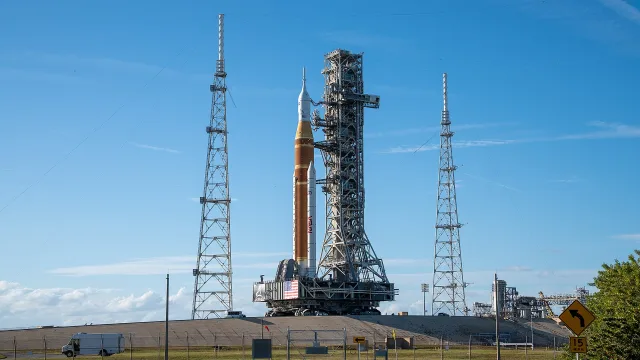
Petro, who serves as project scientist for the planned Artemis III lunar mission, noted that the contrasting shades visible on the lunar surface highlight differences in age and rock composition. Those features provide a window into the moon’s volcanic and cratering history, which NASA expects to examine further during the Artemis III mission scheduled for June 2027.
Spotting Saturn and what comes next
On Sunday night, Saturn will shine with a golden hue just a few degrees south of the moon, CNN reported. While the moon’s intense brightness could make the planet harder to identify without binoculars, clear viewing conditions will aid the search. Petro recommended finding an open viewing spot away from tall buildings and tree cover, adding that “clear eyes and clear skies” are all that casual observers need.
Skywatchers who look outside may also catch residual shooting stars from the Orionid meteor shower, which is just past its peak, though strong moonlight may wash out fainter streaks, according to the BBC.
The celestial show continues later in the week. From Monday through Wednesday, the moon will move toward, eclipse and pass the Pleiades star cluster, a grouping also known as the Seven Sisters, CNN reported. The hunter’s moon represents the 11th of 13 full moons occurring in 2026, with the final two lunar events of the year set to be supermoons, when the moon reaches its closest points to Earth in orbit.