A natural cycle nudging Earth toward its next glacial period was underway for roughly two millennia before human carbon emissions abruptly halted the advance in the mid-20th century, according to a study published Oct. 22 in the journal Science.
By analyzing preserved mosses and rocks emerging from Canada’s melting Barnes Ice Cap, researchers found that the Arctic glacier had been steadily expanding for 2,000 years. That growth reversed around 1960 as fossil fuel pollution drove up summer temperatures, according to the research team led by scientists at Columbia University.
Preserved under Arctic ice
Glacial cycles are typically governed by Milankovitch cycles, which are natural, long-term shifts in Earth’s orbit and axial tilt that alter the amount of solar radiation reaching the northern latitudes. The last major glacial advance concluded roughly 12,000 years ago, leaving the planet in a warmer interglacial phase.
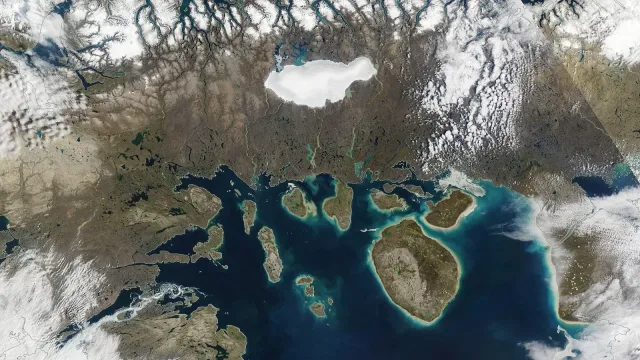
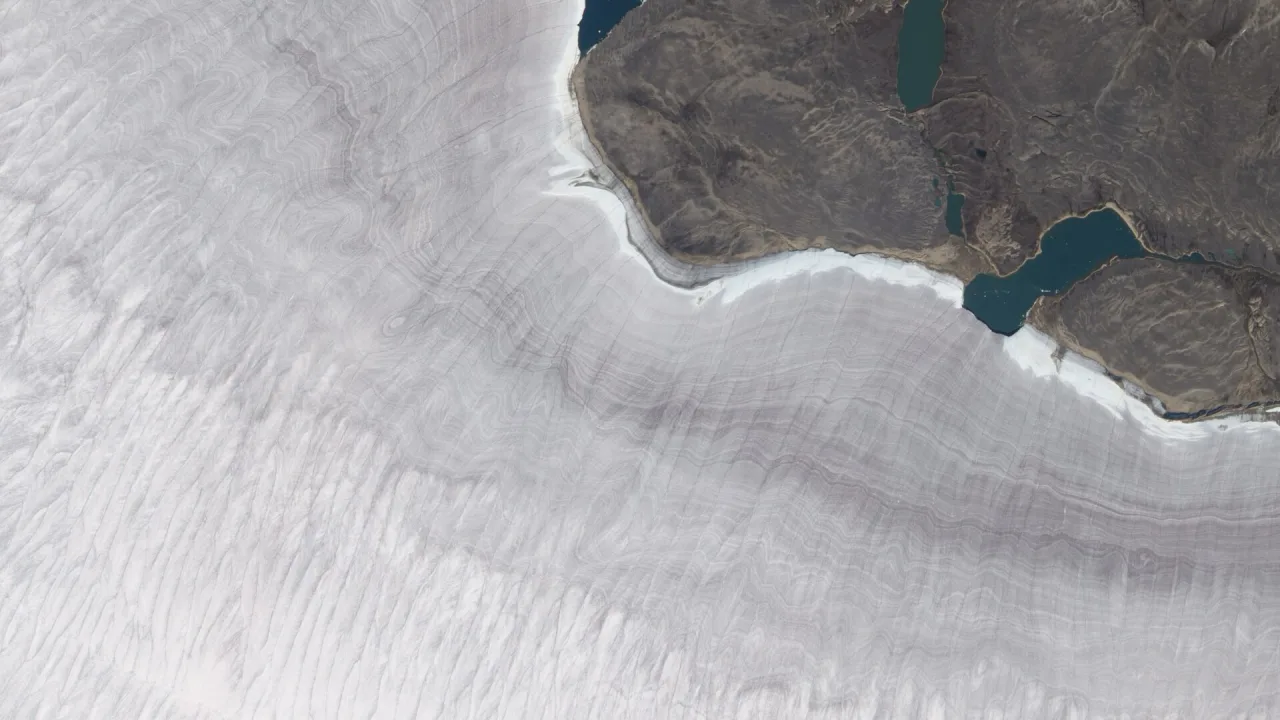
The Barnes Ice Cap, located on Baffin Island in the Canadian territory of Nunavut, is the final surviving segment of the Laurentide Ice Sheet, which once blanketed Canada and parts of the northern United States. Spanning an area comparable in size to Delaware, the ice cap is frozen directly to the bedrock below. Because the frozen base prevents the ice from sliding, it functions like a natural time capsule, encasing tundra plants rather than scraping them away, Columbia University geochemist Nicolás Young explained.
To reconstruct the glacier’s historical footprint, the scientists applied two dating techniques. They used measurements of beryllium-10 in exposed rocks to determine when the ground saw daylight, and they conducted radiocarbon dating on dead moss and lichen exposed along the receding glacial edge. The measurements revealed that the ice sheet shrank to its modern scale roughly 3,600 years ago before initiating a sustained regrowth about 2,000 years ago.
“It was just getting started, everything was normal, the next glaciation was about to happen—and yet it stopped,” Young said in a statement reported by Gizmodo. “It’s a very powerful example of how we have jolted the system.”
A 2,000-year expansion undone
Aerial photographs and modern satellite records revealed that the multi-millennium trend shifted around 1960. Between 1960 and 2022, sections of the ice cap retreated between 200 and 800 meters. Since the 1980s, the ice boundary has shrunk by an average of about four meters each year, WIRED reported.
Researchers determined that since 2010, the ice cap has lacked any accumulation area, meaning it sheds more frozen mass each summer than snowfall can replenish in winter. Young noted that the recent melting has wiped out roughly 2,000 years of net glacial expansion.
“Even as we were just starting to ramp up emissions, we’ve already done enough damage to cause the major North American ice sheet to already start retreating,” Andrew Wickert, an associate professor of environmental science at the University of Minnesota Twin Cities who was not involved in the work, told WIRED.
Meredith Kelly, an earth sciences professor at Dartmouth who was not part of the research team, told WIRED the data revealed a clear pattern of glacial behavior, though she noted additional comparisons with other global sites are needed to fully map how Earth naturally enters a glacial phase.
Long-term consequences for the planet
Computer simulations indicate the Barnes Ice Cap could vanish entirely within 300 years if current warming patterns persist. Because the remnant ice cap has historically served as an anchor for broader continental glaciations, its loss could permanently reshape future climate cycles, Gizmodo reported.
In a related commentary published alongside the study, University of Wisconsin-Madison glaciologist Shaun Marcott wrote that sustained greenhouse gas emissions could delay Earth’s next ice age by hundreds of thousands of years. Scientists caution that while natural astronomical forces still operate, human activity now exerts an overriding influence on the trajectory of global climate.