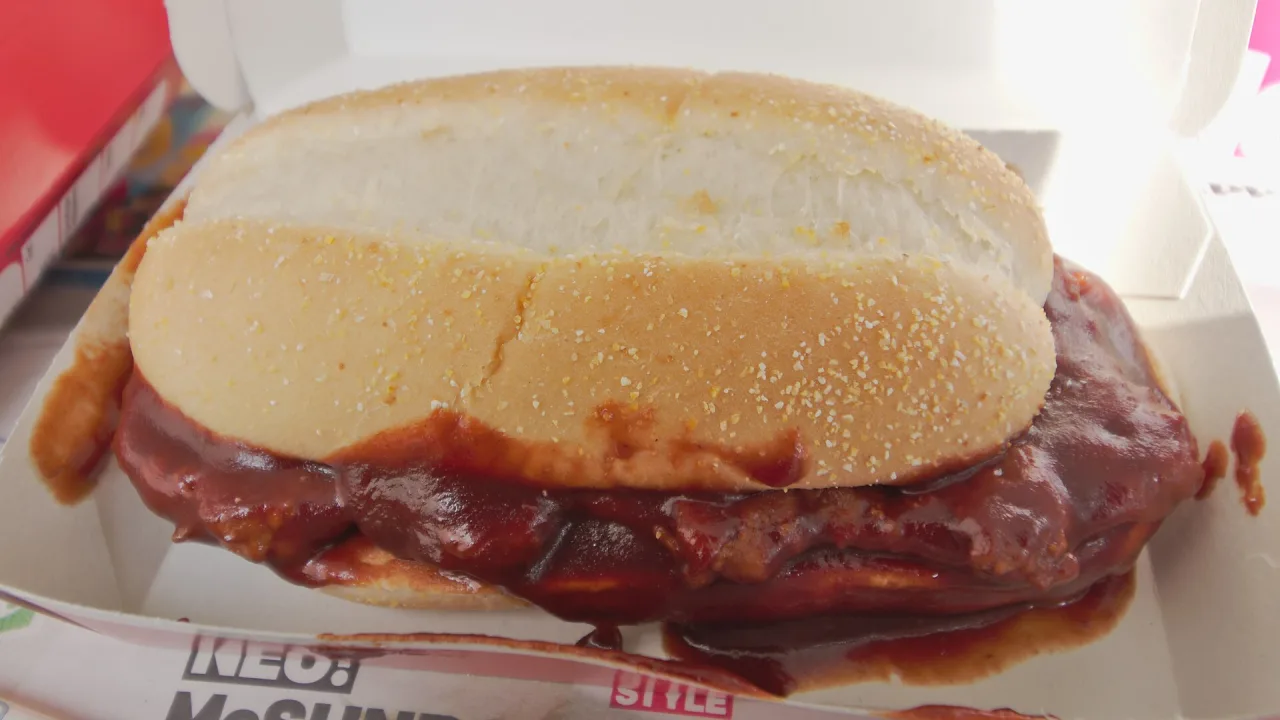
A federal judge in Chicago ruled Friday that McDonald’s must defend against a proposed class-action lawsuit alleging that the fast-food giant deceives diners regarding the ingredients in its McRib sandwich.
U.S. District Judge April Perry rejected an attempt by McDonald’s to throw out the entire lawsuit. Perry permitted claims involving consumer deception, fraud and unjust enrichment to move forward, while tossing five separate claims without prejudice, court filings show.
The lawsuit, initiated by four consumers in December, centers on allegations that the company tricks customers into believing they are purchasing a more expensive cut of pork. The plaintiffs contend that the item’s branding, marketing campaigns and molded shape—crafted to look like a rack of ribs—deceive the public because the sandwich contains no actual rib meat.
Judicial review and consumer surveys
In her decision, Perry concluded that it was premature to decide that ordinary customers could not reasonably expect rib meat in the product. She noted that a customer buying a $7 fast-food meal should not be expected to research meat cuts before making a purchase, adding that the company’s website merely lists the meat as pork without providing specifics.
“Plaintiffs’ proffered understanding of ‘McRib’ is not unreasonable or fanciful,” Perry wrote in her ruling. The judge pointed out that other prominent McDonald’s menu items, such as the Egg McMuffin and McChicken, carry names that directly identify their primary ingredients.
The plaintiffs backed their claims with consumer research cited in the court filings. According to those filings, one survey indicated that 72 percent of respondents believed the McRib included rib meat, while another revealed that 67 percent viewed the inclusion of rib meat as an important factor in deciding whether to buy the sandwich.
The complaint also alleged that the chain substituted cheaper pork components, such as shoulder, heart, tripe and stomach, in place of higher-grade cuts.
McDonald’s defends its ingredients
McDonald’s has firmly denied the lawsuit’s claims, arguing that its public disclosures clearly list pork as the primary ingredient and that reasonable customers would not be duped by the product’s distinctive name. The company has insisted that the sandwich consists of 100 percent pork procured from domestic suppliers and agricultural producers.
In statements to news outlets, the burger chain also explicitly refuted the plaintiffs’ assertions regarding organ meats, stating that it does not use heart, tripe or scalded stomach when preparing the patty.
“This lawsuit distorts the facts and many of the claims are inaccurate. Food quality and safety are at the heart of everything we do…that’s why we’re committed to using real, quality ingredients across our entire menu.”
The company further argued that having a preference for a specific cut of pork should not transform accurate marketing into illegal consumer fraud.
What lies ahead for the McRib
The McRib was originally introduced in 1981 and has developed a passionate following through sporadic, limited-time appearances on menus across the United States. The sandwich consists of a boneless ground pork patty smothered in barbecue sauce, garnished with sliced pickles and onions, and served on a roll.
McDonald’s operates nearly 14,000 locations across the country and more than 45,000 globally.
While the court order allows the plaintiffs to move forward, it does not determine that McDonald’s committed unlawful deception. The ruling means the case will advance toward further evidence gathering and potential trial proceedings unless the parties reach a settlement or the court resolves the dispute in future motions.