When the Golden State Valkyries captured their first WNBA championship on Saturday night at Chase Center in San Francisco, beating the Atlanta Dream 68-63 in Game 7, they achieved more than just a league title. By lifting the trophy in their second season of existence, the Valkyries became the fastest expansion team in major North American professional sports history to claim a crown, eclipsing historic timelines across the WNBA, NBA, NFL, NHL and MLB, according to reports from The Athletic and NBC News.
The landmark achievement validates a modern, aggressive model of sports team construction that combines unprecedented institutional resources with decisive in-season coaching adjustments. Golden State owner Joe Lacob boldly pledged upon launching the club in October 2023 to secure a championship within five years. While such declarations often remain rhetoric, the organization paired that ambition with top-tier infrastructure, operating out of an 18,000-seat arena and generating record sellouts across two seasons, NBC News reported.
Tactical adjustments and a historic rally
Saturday’s championship tilt revealed how quickly Golden State could pivot under pressure. Trailing 37-28 midway through the third quarter after an offensive freeze in the first half, the Valkyries relied on a record-shattering explosion from forward Gabby Williams. After managing only two points before halftime, Williams erupted for 28 points in the second half, finishing with 30 points and four blocks to secure Finals Most Valuable Player honors.
Williams broke a 57-57 deadlock with a 31-foot three-pointer with just over two minutes remaining, putting Golden State ahead permanently, Fox News reported. Head coach Natalie Nakase’s willingness to reconfigure her rotation earlier in the series after falling behind 2-1 proved equally decisive. Shortening the bench and concentrating minutes around Williams, center Kiah Stokes and guard Veronica Burton shifted momentum back to Golden State, according to NBC News.
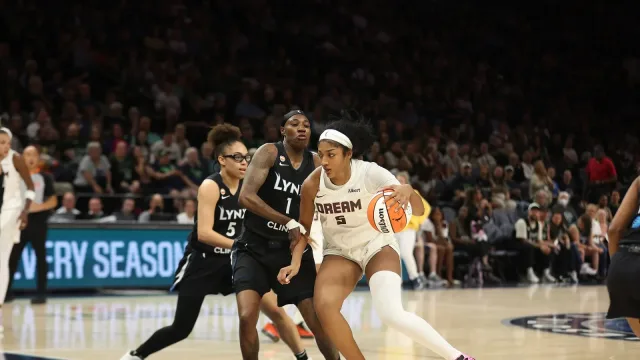
In contrast, Atlanta’s offensive engine sputtered down the stretch. Dream forward Angel Reese was limited to eight points on 3-for-7 shooting, recording four turnovers and attempting no field goals in the final frame, Fox News reported. Atlanta shot 33.3 percent from the field and made only six of 30 attempts from three-point range, unable to overcome Golden State’s defensive pressure during the game’s decisive possessions.
The structural blueprint behind the breakthrough
Golden State’s triumph highlights the shifting economics of women’s basketball. CNBC valued the Valkyries at $1 billion in May, making them the first WNBA franchise to hit that milestone, NBC News reported. That financial standing allowed the organization to cultivate a distinct brand and retain high-caliber talent without treating the team as a subordinate entity to the NBA’s Warriors.
“This is what happens when you invest in women’s sports,” Valkyries guard Tiffany Hayes told the arena crowd after the game, as reported by The Athletic.
The Valkyries also demonstrated that an expansion draft and disciplined free-agency acquisitions can rapidly coalesce into a cohesive core. Rather than enduring a lengthy, multi-year rebuilding cycle, the front office assembled experienced veterans like Stokes, who secured her fourth league title, and Burton, who directed the backcourt after previously fighting for an opportunity in the league.
Golden State now faces the unprecedented challenge of defending a title in Year 3. Meanwhile, the WNBA prepares to welcome additional franchises in Portland and Toronto, followed by future entries in Cleveland, Detroit and Philadelphia. Whether incoming clubs can replicate Golden State’s accelerated blueprint—or if league-wide expansion dilutes the available talent pool—remains the central question facing the WNBA moving into 2027.