Japan launched an ambitious international robotic mission Monday aimed at landing on the Martian moon Phobos and retrieving the first soil samples from the Mars system to bring back to Earth.
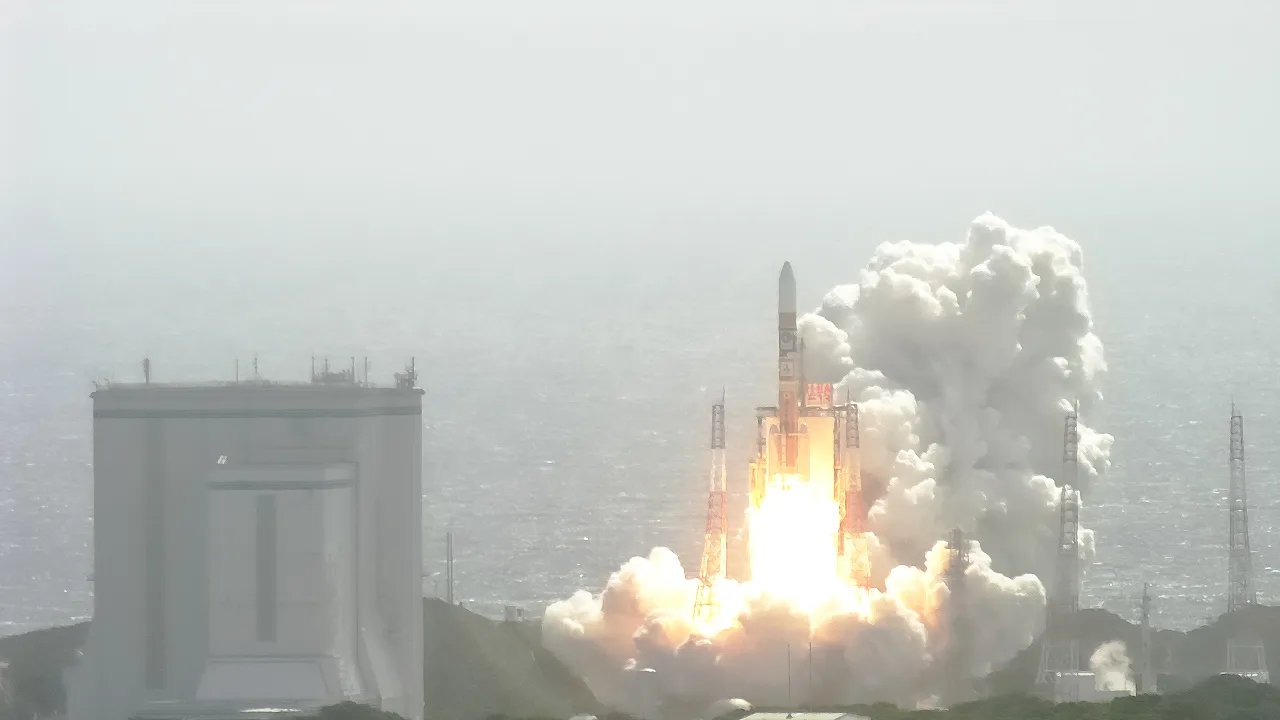
The Japan Aerospace Exploration Agency’s H3 rocket lifted off from the Tanegashima Space Center in southwestern Japan at 3:41 p.m. EDT Monday, which was 4:41 a.m. Tuesday local time. About 71 minutes after liftoff, the 9,900-pound Martian Moons Exploration probe separated from the rocket’s second stage to begin its long journey through interplanetary space, JAXA webcasts showed.
A cooperative journey to Mars
The mission, known as MMX, is led by JAXA in partnership with NASA, the European Space Agency, and the space agencies of France and Germany. Estimates of the project’s overall cost vary, with CBS News reporting a price tag of $350 million and The Guardian placing the figure at $578 million. NASA contributed roughly $87 million to the endeavor, along with scientific instruments such as a pneumatic sampler and a gamma-ray and neutron spectrometer, Space.com reported.
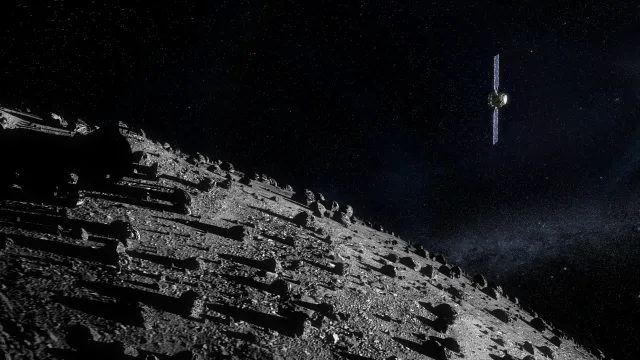
News accounts gave slightly different timelines for the spacecraft’s interplanetary transit, with Space.com and The Guardian citing an expected arrival in Martian orbit in August 2027, while CBS News and Scientific American pointed to September 2027. Once it arrives, MMX will spend roughly three years in orbit, operating in lockstep with Phobos, an oblong moon measuring roughly 14 to 17 miles across.
In late 2028 or early 2029, the main spacecraft will release a small 55-pound rover named Idefix, developed by French and German space agencies. Because Phobos possesses only about one-thousandth of Earth’s gravity, the four-wheeled rover will drop onto the surface without retrorockets, bouncing and rolling before righting itself to inspect potential landing zones and analyze surface soil.
Solving a planetary riddle
Around 2030, the main MMX spacecraft is scheduled to touch down on Phobos to gather at least 10 grams, or about a third of an ounce, of surface material. The craft is slated to perform brief remote observations during flybys of Deimos, Mars’ even smaller moon, before departing the Martian system in November 2030. If all proceeds as planned, a heat-shielded return capsule carrying the samples will land in the Australian desert in 2031.
Scientists hope the material will settle a long-standing scientific controversy over the origins of Phobos and Deimos. One leading theory suggests the moons formed from debris ejected after an enormous planetary impact struck Mars early in its history. A competing hypothesis proposes that both satellites were asteroids captured by the gravitational pull of Mars.
Analyzing pristine extraterrestrial samples in terrestrial laboratories will give researchers unprecedented precision. “MMX will be the first spacecraft ever to return to Earth from the Mars system,” Thomas Statler, a NASA scientist involved with the instruments, told CBS News.
What lies ahead
While Russia attempted a Phobos soil-recovery mission in 2011 that failed to exit Earth orbit, MMX represents the first craft to successfully clear Earth’s pull on a Phobos-sampling trajectory. NASA and China are separately pursuing efforts to retrieve rocks from the Martian surface itself, with China planning a sample-return launch around 2028 that could arrive back around 2031, The Guardian reported.
For MMX, ground controllers now monitor the probe during its transit across interplanetary space. Whether the delicate landing on Phobos’ ultra-low-gravity surface and the subsequent departure from Mars orbit succeed will remain unproven until the end of the decade.