President Donald Trump stated Tuesday that Washington will stop providing annual funding to Israel after the end of 2026, asserting that he finalized an agreement with Israeli Prime Minister Benjamin Netanyahu several months ago.
Speaking on Fox News’ “Fox & Friends” on Tuesday morning as Americans voted in the midterm elections, Trump said the Middle Eastern ally has grown prosperous enough to handle its own security expenses. The United States currently supplies roughly $3.8 billion per year to Israel under a 10-year memorandum signed in 2016 that is scheduled to last through fiscal year 2028.
“We give them more than anybody else, and they no longer need it,” Trump told the network. He added that Israel remains a “thriving country” and insisted that Netanyahu himself proposed the change to neutralize attacks from political opponents.
Domestic Politics and Weapons Purchases
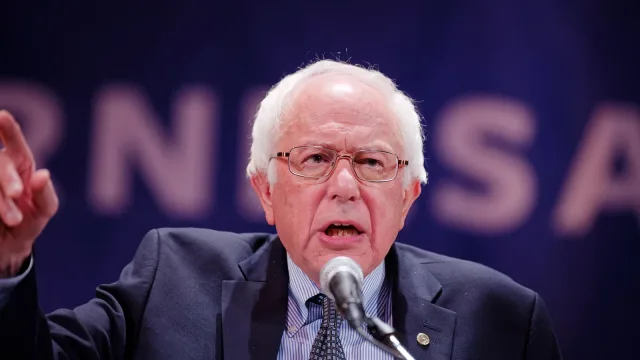
Trump specifically cited progressive critics, including Michigan Democratic Senate candidate Abdul El-Sayed, arguing that removing the funding would take away a major talking point used against Republicans. According to Trump, Netanyahu recognized the political friction surrounding the funding and agreed that halting the money would be suitable.
Trump made clear, however, that ending direct assistance would not block Israel from acquiring American military hardware. When asked if weapons transactions would continue, the president said Israel would still be permitted to purchase whatever systems it needs.
Netanyahu has publicly discussed transitioning away from American financial defense dependency for several months. In January, the prime minister told The Economist that he envisioned Israel ending its reliance on U.S. military assistance within a decade. By May, he told CBS News’ “60 Minutes” that he wished to avoid waiting for a future Congress. Days ahead of Israel’s Oct. 27 election, Netanyahu told Israel’s Channel 10 that aid would inevitably cease because political attitudes in the U.S. had shifted.
Congressional Hurdles and Regional Context
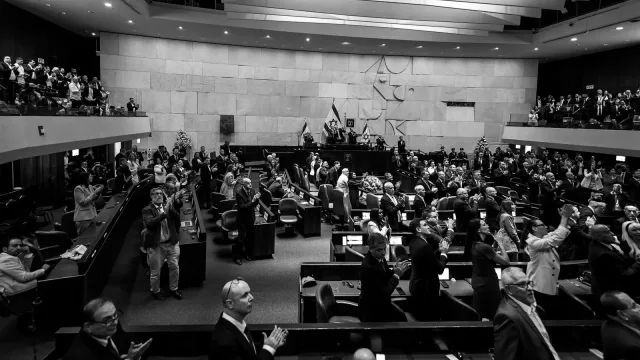
Neither the Israeli prime minister’s office nor the Israeli foreign ministry immediately confirmed Trump’s remarks, and the U.S. Department of State did not respond to requests for comment, Al Jazeera reported. Analysts also raised immediate questions regarding how such a plan would take effect, as federal funding is formally appropriated by Congress rather than enacted through unilateral presidential action.
Thomas Warrick, a senior fellow at the Atlantic Council, told Al Jazeera that a full cessation by the close of 2026 is unlikely because complex collaborative programs—particularly those focusing on missile defense and counter-drone technology—cannot rapidly switch over to foreign military sales channels. Warrick estimated that any phase-out would realistically stretch into 2027.
Assistance to Israel has increasingly sparked debate on Capitol Hill. In July, the House of Representatives rejected an amendment introduced by Republican Representative Thomas Massie of Kentucky seeking to end aid to Israel in a 314-104 vote, with almost half of House Democrats backing the measure. A June Quinnipiac University survey found that 48 percent of registered voters and 66 percent of Democrats believed the U.S. provides too much support to Israel.
During the interview, Trump also addressed recent military actions in the Middle East, confirming that American forces conducted a limited overnight strike on an Iranian air-defense facility on Qeshm Island in the Strait of Hormuz. Defense officials told CNN that the strike was defensive following Iranian fire directed at an American aircraft.
Whether lawmakers in Washington will attempt to enforce the existing bilateral spending agreement or cooperate with the proposed cutoff remains to be seen as Congress prepares for its upcoming post-election session.