WASHINGTON — The Trump administration cleared a proposed $2.1 billion sale of 500 Patriot missile interceptors to Ukraine on Friday, moving to bolster Kyiv’s air defenses without spending American tax dollars.
The purchase will be funded entirely by international partners, the State Department said. Donations from Canada, Germany and Norway through the U.S. JUMPSTART program, alongside national financing backed by the European Union’s Ukraine Support Loan, will cover the full cost. The principal contractor for the PAC-3 interceptors will be aerospace manufacturer Lockheed Martin.
“This proposed sale will support the foreign policy and national security objectives of the United States by improving the security of a partner country that is a force for political and economic stability in Europe,” the State Department announced in a press release.
Concerns Over Lengthy Delivery Timelines
Ukrainian President Volodymyr Zelenskyy welcomed the transaction on Saturday but expressed urgent concern regarding how long the systems will take to reach the front lines. The weapons have not yet been produced, and two people familiar with the decision told reporters that delivery dates could stretch into the 2030s.
Zelenskyy urged Washington to transfer existing stockpiles from allied inventories immediately, which could later be replaced by the newly ordered interceptors once manufacturing is complete.
“Right now, the Russians are attacking our energy infrastructure every single day,” Zelenskyy wrote on social media, emphasizing that air defense shields face an ongoing deficit.
The plea for immediate help follows a wave of lethal Russian bombardments across Ukraine on Thursday. A drone attack struck a crowded train platform in the city of Dnipro, killing at least 14 people, while strikes on two other provincial cities left five dead and a late-evening missile strike killed one person in Kyiv.
Strains in Washington-Kyiv Relations
The weapons approval follows weeks of friction between Kyiv and the White House. President Donald Trump has recently stepped up criticism of Zelenskyy, calling him an impediment to negotiations aimed at ending the war. Washington also faced pushback from Ukraine after easing select sanctions on Moscow under an agreement to obtain Russian diesel fuel.
Zelenskyy had previously accused the Pentagon of stalling the transfer of interceptors funded by European partners. Ukrainian officials also reported that U.S. warning intelligence had temporarily lapsed and that the Starlink satellite communication network operated by SpaceX had suffered service throttling. Ukrainian authorities confirmed Saturday that both Starlink and its military Starshield service were back at normal operation after Trump asked company leadership to restore access.
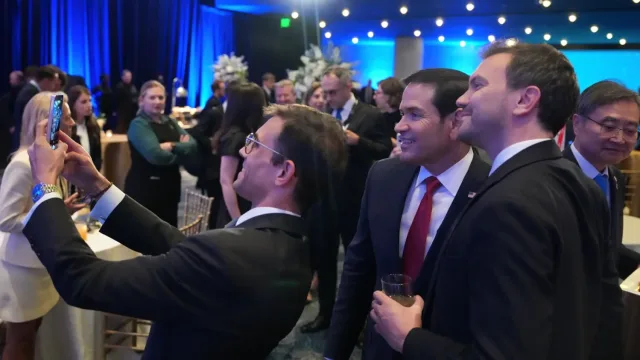
Diplomatic friction also spilled over into international talks in Atlanta on Friday, where Secretary of State Marco Rubio hosted a gathering of G20 foreign ministers. European diplomats boycotted the traditional group photo to protest the attendance of Russian Foreign Minister Sergei Lavrov. During the summit, British Foreign Secretary Ed Miliband directly confronted Lavrov, pointing out Russian strikes against Ukrainian civilians.
It remains unclear whether the Pentagon will agree to expedite Ukrainian interceptor deliveries by drawing directly from existing U.S. military stockpiles, which have also seen heavy usage during recent American operations in Iran.