A federal judge late Friday issued an emergency order barring the Trump administration and the Department of Justice from threatening, intimidating or coercing election workers as millions of Americans vote in the midterm elections.
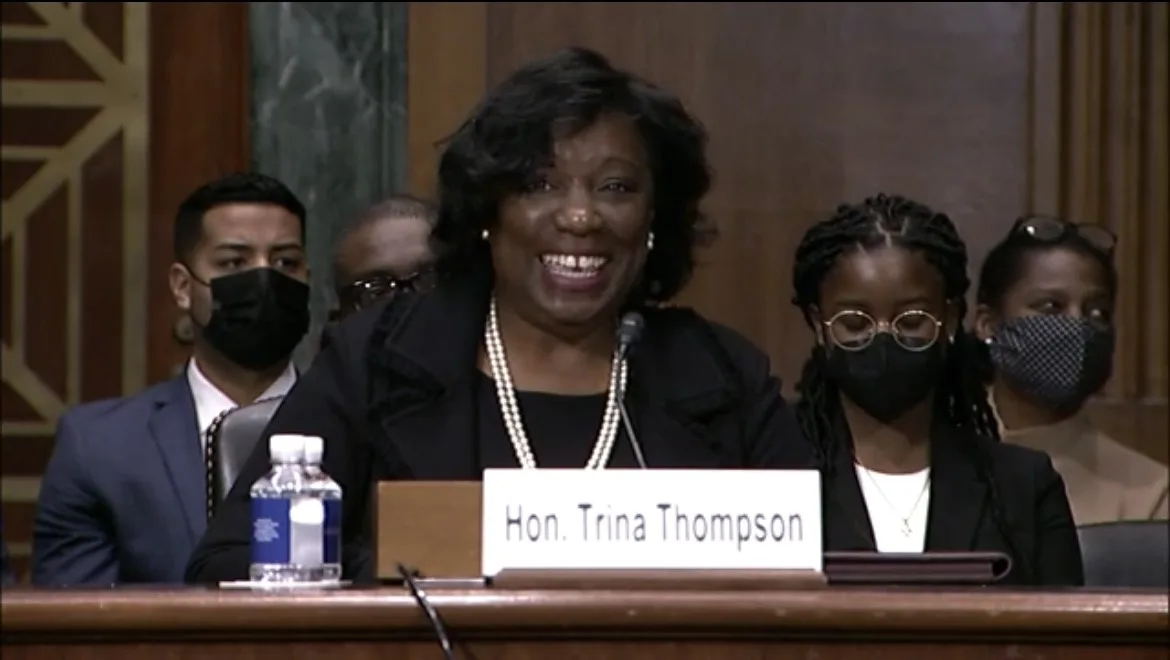
U.S. District Judge Trina Thompson, based in California, ruled that high-ranking officials at the Justice Department and the Department of Homeland Security had carried out pressure tactics against local election administrators in the run-up to the Nov. 3 election. The eight-page injunction remains in effect through Nov. 16, nearly two weeks after Election Day.
Thompson’s order explicitly prohibits federal authorities from taking steps to “threaten, intimidate or coerce state or local elections officials or workers to demand that they halt processing the ballots of any registered voter solely on the basis that the ballot belongs to an individual alleged by [the administration] to be ineligible to vote,” according to NBC News.
Judge Cites Risk of Disenfranchisement
In her decision, Thompson wrote that senior federal officials had engaged in an ongoing effort to intimidate personnel administering the midterm vote. She noted that while federal agencies asserted they were attempting to stop unlawful noncitizen voting, their intervention threatened the election process itself.
“Although Defendants claim that their actions are designed to halt unlawful voting by noncitizens, their actions are likely to have the effect of interfering with election administration and disenfranchising lawful voters,” Thompson wrote Friday.
The ruling followed an earlier legal defeat for the administration on Friday, when the 9th U.S. Circuit Court of Appeals turned down a Justice Department attempt to compel California officials to set aside disputed midterm ballots, The Guardian US reported.
Appeals Court Rebuffs Ballot Segregation
The Trump administration had alleged that California distributed mail-in ballots to roughly 20,000 individuals who might not hold U.S. citizenship. Federal lawyers pushed to have those ballots segregated and uncounted until citizenship could be verified. State authorities countered that the federal list was deeply flawed and included many eligible U.S. citizens.
A lower court denied the administration’s demand on Wednesday, warning of potential disenfranchisement. On Friday, a 2-1 appeals panel upheld that decision. The majority ruling was authored by Judge Mark J. Bennett, who was appointed by Donald Trump, and Judge Gabriel P. Sanchez, an appointee of former President Joe Biden.
“As the district court found – and we discern no clear error – there is no feasible way to identify and segregate the ballots of specific individuals without potentially catastrophic effects on the entire system,” the appellate majority wrote.
Tensions Mount Ahead of Tuesday Vote
The disputes underscore mounting tension between federal law enforcement and local election workers. Bill Essayli, the top federal prosecutor in Los Angeles, cautioned workers against handling certain ballots, stating, “Any election official who knowingly processes the ballot of a noncitizen is opening themselves to legal jeopardy,” according to The Guardian US.
The Justice Department defended its nationwide scrutiny in a public statement: “Federal law prohibits noncitizens from voting. Enforcing that law is not an agenda item. It is the Department’s job.”
Millions of ballots have already been cast in California, and elections administrators emphasize that once processed, individual ballots cannot be matched back to the voters who submitted them. While the California cases have resulted in rebuffs for federal officials, a related challenge brought by the administration concerning election procedures in Washington state remains pending.