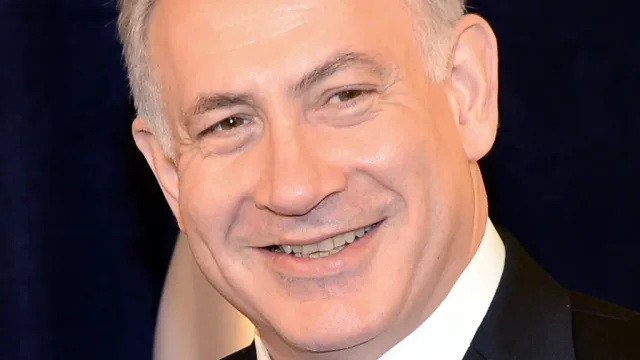
Israel faced a deepening political impasse Wednesday following a historic general election that left both Prime Minister Benjamin Netanyahu and a diverse opposition alliance without a clear path to a parliamentary majority.
With nearly all ballots counted from Tuesday’s vote, Netanyahu’s right-wing and far-right bloc was projected to secure 53 seats in the 120-seat Knesset, according to Israeli media projections reported by The Guardian. The main opposition bloc, unofficially headed by former military chief Gadi Eisenkot, was projected to claim 48 seats. Parties representing Palestinian citizens of Israel achieved historic gains, winning a combined 19 seats. Under Israeli law, 61 seats are required to assemble a governing majority.
Historic turnout and a fractured parliament
Tuesday’s election drew the highest voter turnout in the nation’s political history, The Guardian reported. Large numbers of Israeli citizens traveled back into the country to participate, and nearly 80 percent of Israel Defense Forces soldiers cast ballots.
The remaining uncounted votes consist of absentee ballots, which election workers are scheduled to process Wednesday evening. Final official election results are anticipated by Thursday, Israeli media reported.
The election took place amid ongoing Israeli military operations in the Gaza Strip and the occupied West Bank, Al Jazeera reported, sharpening domestic divisions and setting the stage for difficult coalition negotiations.
Rival leaders lay out competing visions
Speaking to supporters in Jerusalem shortly after 3 a.m. local time, Netanyahu said the official outcome would demonstrate that “Likud is the largest party in Israel,” according to The Guardian. The prime minister insisted the nation must “establish a strong, rightwing national government” and declared that no administration reliant on Arab-led parties should be permitted to take power.
Donald Trump also commented on the outcome, stating that his endorsement had boosted Netanyahu to a stronger finish than pre-election polling had forecast, The Guardian reported.
Meanwhile, Eisenkot addressed a gathering of supporters in Tel Aviv, arguing that the public had clearly rejected the incumbent leader. Eisenkot stated that the “Israeli public has voted against Netanyahu’s service as Israel’s prime minister” and added that “a worthy leader would have accepted the people’s non-confidence and announced today his retirement from politics.” Eisenkot also cautioned the prime minister not to “use Israel’s security” for domestic political leverage, referencing concerns that Netanyahu could seek an attack on Iran during the post-election transition period, The Guardian reported.
Arab-led parties emerge as potential power brokers
Parties representing Palestinian citizens of Israel, who make up roughly 20 percent of the country’s population, captured a record number of seats, according to news reports. The newly formed Joint List ticket of Arab-majority parties secured at least 12 seats, while the Islamic party Ra’am gained seven seats, The Guardian reported. High turnout among Arab voters was fueled by growing concerns over discrimination and racism under Netanyahu’s tenure.
Netanyahu has consistently dismissed any prospect of partnering with Arab-led lists. That stance leaves the political future resting largely on decisions by Eisenkot’s “Change” bloc, which includes Naftali Bennett’s right-wing Together party, Yair Golan’s center-left Democrats and the right-wing Yisrael Beiteinu party.
What remains unresolved is whether Eisenkot’s coalition will attempt an unprecedented governing partnership with the Palestinian parties, explore common ground with Netanyahu, or push the country toward another snap election.