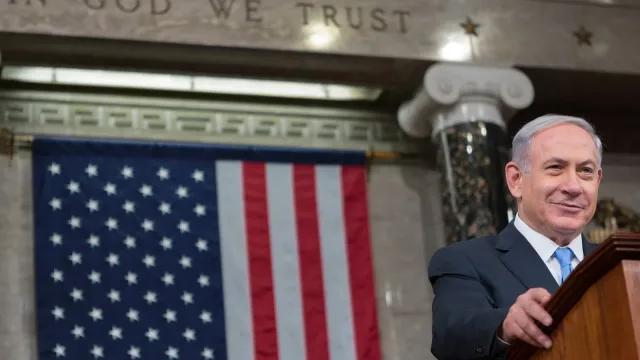
Israel faced fresh political paralysis Wednesday after national election results left Prime Minister Benjamin Netanyahu short of a parliamentary majority while ideological splits blocked his rivals from an easy path to power, CNN and the BBC reported.
With most ballots counted, Netanyahu’s right-wing alliance was projected to win roughly 53 seats in the 120-member Knesset, failing to reach the 61-seat threshold required to govern, according to CNN. The outcome stripped the longtime prime minister of the governing majority he commanded in the outgoing parliament.
The broader opposition collectively secured a numerical majority of seats, but deep internal divisions threaten to prevent them from forming a viable coalition. Netanyahu’s primary opponent, Gadi Eisenkot, was projected to claim 21 seats, CNN reported. To reach the threshold of 61, his bloc would need the backing of two Arab parties that experienced an unprecedented surge at the ballot box.
Arab voter surge shifts parliamentary balance
Driven by a surge in turnout among Arab Israelis, who represent about one-fifth of the nation’s populace, the United Arab List and the Joint List are on track to nearly double their presence to a record 19 Knesset seats, BBC News reported.
Mahdi Kabaha, a campaigner from near Haifa, called the turnout “historic” and told the BBC that Arab citizens demanded “a real say in this country.” Yousef Jabareen, the head of the Joint List, told the BBC that voters were energized in part by a desire to oust hard-right National Security Minister Itamar Ben-Gvir, whom Jabareen accused of racism and provocation. Ben-Gvir, leader of the Jewish Power party, has faced Western sanctions over incitement and has advocated for annexing the West Bank and encouraging Palestinians to leave.
Mansour Abbas, leader of the United Arab List, expressed hope Tuesday night that opposition forces could reach the 61 seats needed to unseat Netanyahu. Yair Golan, who heads the left-wing Democrats, urged partners to embrace an alliance with Arab lawmakers. Golan wrote on social media platform X that leaders must not yield to fear and rejected what he called Netanyahu’s “racist division between Jewish votes and Arab votes,” according to the BBC.
Formidable barriers to a government
Yet an agreement across the anti-Netanyahu camp faces stiff resistance. Eisenkot previously insisted on prerequisites, including that partners formally acknowledge Israel as Jewish and democratic and treat Hamas as a terrorist organization slated for destruction, the BBC reported. Two right-wing parties aligned with Eisenkot outright reject sitting alongside Arab factions or depending on their legislative backing, according to CNN.
Jabareen countered that the opposition “cannot dictate any conditions” if it genuinely wants an alternative to the right-wing coalition. Meanwhile, Netanyahu’s options appear equally constrained. During the campaign, opposition parties pledged not to enter a government under his leadership, mindful that previous coalition partners often emerged politically weakened, CNN reported. While Netanyahu could pursue individual defectors, he faces a substantial deficit to bridge.
Israeli President Isaac Herzog urged political leaders to find common ground as formal coalition discussions approached. “We must do everything we can, certainly after yesterday, to avoid another round of elections,” Herzog said, as reported by the BBC. If the impasse cannot be broken through compromise or a broad unity agreement, Israel risks remaining in limbo for months or heading back to the polls for yet another national vote.