KENNEDY SPACE CENTER, Fla. — NASA has outlined a complex flight plan for its upcoming Artemis III mission, orchestrating three rocket launches in rapid succession to test competing lunar landers built by SpaceX and Blue Origin before attempting a crewed moon landing in 2028.
Speaking at a news conference on Friday, NASA officials explained that the mission will keep four astronauts in low-Earth orbit for up to 17 days rather than sending them directly to the lunar surface. The crew will dock with both Blue Origin’s Blue Moon craft and an uncrewed version of SpaceX’s Starship to evaluate hardware and reduce risks ahead of Artemis IV, according to reports from CBS News and Space.com.
A packed orbital itinerary
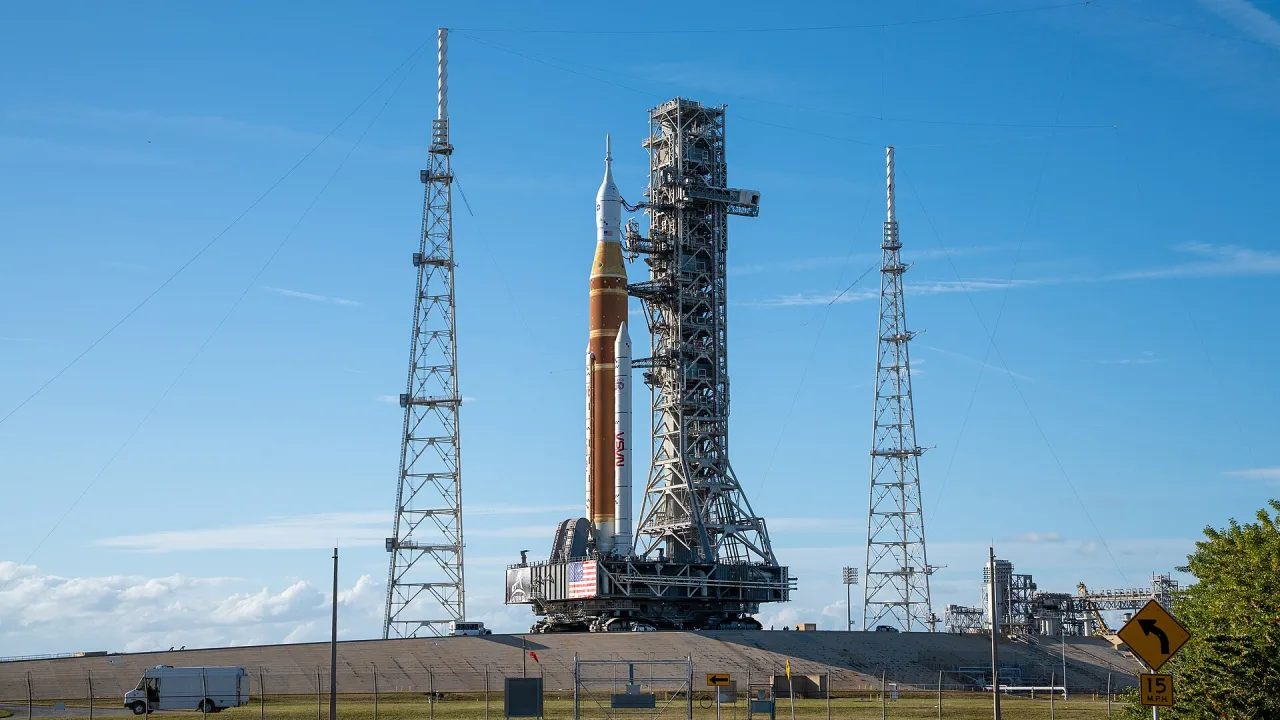
The mission will involve three of the world’s most powerful launch vehicles lifting off from Florida’s Space Coast. Under the flight profile, a Blue Origin New Glenn rocket will launch first, delivering the Blue Moon lander into orbit. NASA’s Space Launch System, modified without its typical upper stage because of the lower energy requirements of low-Earth orbit, will then lift off carrying four astronauts aboard the Orion capsule, Space.com reported.
The Artemis III crew consists of NASA astronauts Randy Bresnik, Andre Douglas and Frank Rubio, alongside European Space Agency astronaut Luca Parmitano. On the third day of flight, Orion is scheduled to dock with Blue Moon at an altitude of about 273 miles, where astronauts will open hatches, float inside, and test life support, communication and control systems over two days.
On the sixth flight day, SpaceX will launch its Starship upper stage fitted with a specialized docking adapter. Orion will separate from Blue Moon, change its orbital position, and dock with Starship at an altitude of roughly 237 miles for approximately two hours. The astronauts will not enter Starship, which will lack a crew cabin, but engineers will gather data on docking forces and vehicle handling, CBS News and Space.com reported.
Rivalry to the lunar south pole
NASA Administrator Jared Isaacman said the space agency plans to delay selecting which company will carry astronauts to the lunar surface on Artemis IV for as long as possible to maximize readiness. The space agency faces competition from China, which is aiming to land its own astronauts on the moon by 2030, CBS News noted.
“We have no intention of surrendering a viable path to the surface before the data and schedule compels us to do so,” Isaacman said, according to Space.com.
Both commercial providers still have technical milestones to achieve. Blue Origin must resume flights of its New Glenn booster, which suffered a destructive launchpad explosion in May, with plans to restart tests late this year or in early 2027. SpaceX is preparing for an orbital refueling demonstration early next year and plans to accelerate Starship launch frequency, CBS News reported.
NASA is targeting the summer of 2027 for the Artemis III launch, though Isaacman previously indicated in an internal memo that the project was running roughly 90 days behind schedule, largely due to supply chain complications, Space.com reported. Regardless of which commercial lander is chosen for the initial landing mission on Artemis IV, program officials noted that both SpaceX and Blue Origin plan to attempt uncrewed landings on the moon in 2028.