British authorities announced Friday that Royal Air Force transport planes and helicopters will be outfitted to drop water on wildfires, establishing the nation’s first permanent military aerial firefighting force following a summer of record-shattering heat.
The announcement from Downing Street came ahead of England’s first wildfire resilience summit, where Prime Minister Andy Burnham met with fire chiefs, regional leaders and environmental specialists. The initiative seeks to bolster emergency services after emergency crews responded to more than 1,100 blazes across England and Wales this year, Reuters reported.
Military aircraft and lightweight gear
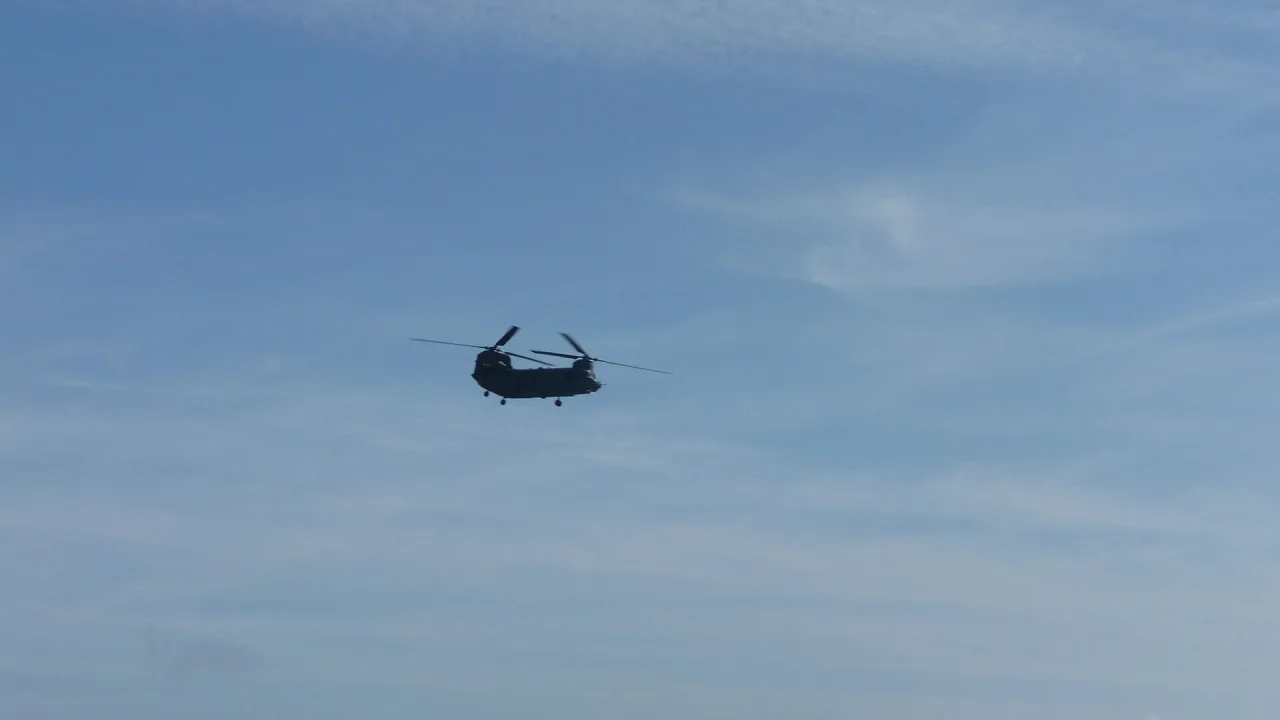
Under the strategy, RAF Chinook helicopters and A400M transport aircraft will receive specialized equipment to assist civil crews fighting blazes in remote terrain, steep hillsides and isolated moorlands. The government will also allocate up to 45 million pounds, or roughly $60 million, for specialized response teams and new protective kit designed specifically for outdoor operations, according to figures released by officials.
Unlike standard heavy structural gear designed for burning buildings, the new turnout gear will be lighter and more breathable, allowing firefighters to endure long deployments during extreme heatwaves.
“I stood in Stourbridge and watched families lose everything,” Burnham said, referencing an August wildfire in the West Midlands that destroyed 19 homes. “I will never forget it. Our firefighters were heroes that day, but heroes shouldn’t have to fight with one hand tied behind their backs.”
Communities Secretary Angela Rayner described this year’s blazes as “unrelenting” and said ministers are taking immediate action to create a sturdier national defense against fast-spreading fires.
Land management and digital tracking
The package includes 25 million pounds earmarked to restore parched peatlands across England so they can function as natural firebreaks. Farmers will also receive financial assistance to excavate retention ponds and clear brush and combustible fuels from vulnerable rural borders.
Ministers are also considering stricter regulations or outright product bans on items that spark blazes during high-danger periods, such as disposable barbecues, which were highlighted in a recent parliamentary committee review. A dedicated artificial intelligence unit will be launched to identify and track ignitions earlier, while the Met Office works to enhance public forecasting alerts.
Mounting climate risks
The summer was marked by five distinct heatwaves, leading officials to send an unprecedented emergency broadcast alert to mobile phones across England and Wales on Aug. 14 warning of critical fire conditions. Severe blazes struck Dunwich Heath in Suffolk and the New Forest in Hampshire, alongside major fires in the Scottish Cairngorms, Northern Ireland’s Mourne Mountains and Wales’ Rhinogydd mountains.
Data from the National Fire Chiefs Council revealed 1,132 wildfires were logged by mid-August, exceeding the overall total recorded in 2025 by more than 300 incidents, according to news reports.
The extreme weather extended across the continent, where fires forced evacuations in Spain, France and Belgium. A modeling study published in Nature Health calculated that over 50,000 heat-related deaths occurred across 854 European cities during June, July and August, with nearly two-thirds of those fatalities attributed to human-induced global warming.
The government plans to hold follow-up talks with devolved administrations in Scotland, Wales and Northern Ireland to finalize a coordinated, nationwide wildfire action plan before the arrival of next summer.