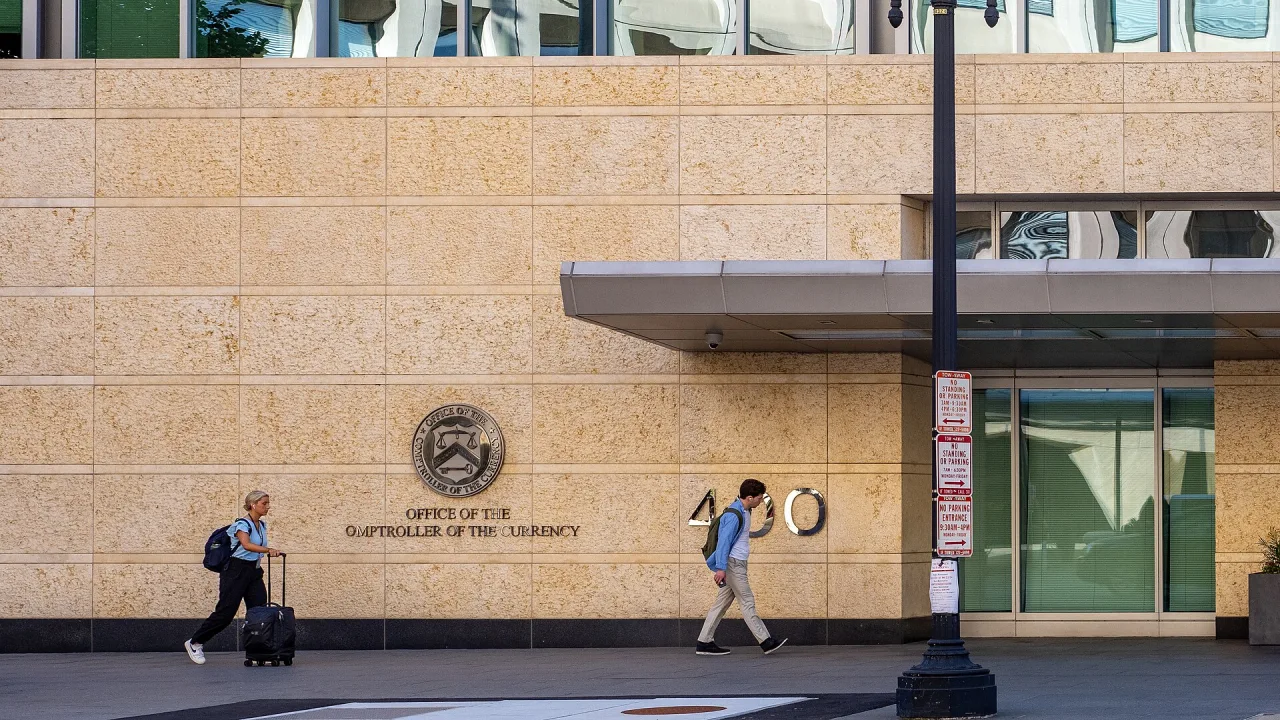
On Wednesday, a federal banking regulator reported that nine major American lenders allowed political and religious beliefs to shape who gained access to banking services. The findings come from the OCC, a bureau inside the Treasury Department. The agency said its probe drew on close to 100,000 consumer grievances and hundreds of thousands of pages of material from the banks, CNBC reported.
The lenders in scope are JPMorgan Chase, Bank of America, Citi, BMO, TD, PNC, Capital One, U.S. Bank and Wells Fargo. The examination started last year under an executive order from President Donald Trump. The agency noted that this group controlled most of the assets held by the commercial banks it oversees.
According to the agency, every one of the nine relied on “reputation risk” rules that had no clear, measurable benchmarks. Those rules could leave customers worse off because of their politics, faith or legal business lines. Comptroller Jonathan Gould described the results as “irrefutable evidence” of denial and discrimination against customers, Yahoo Finance reported. He argued that lenders should judge clients using risk-based yardsticks instead.
Specific cases in the review
One example involved WePay, a payment arm owned by JPMorgan Chase, which shut the accounts of sellers offering Trump and conservative apparel. CNBC reported that the unit’s screening software flagged phrases such as “MAGA” and “America First,” and that neither WePay nor its parent company had formal written criteria for labeling content as hateful or violent. JPMorgan said its rules forbid bias based on politics or religion, conceded the WePay handling “did not meet our expectations,” and said the unit no longer operates.
Some findings pointed in the opposite direction. Capital One stopped working with an abortion-rights nonprofit and an education group whose political committee backed only Democrats. It also declined a gun-rights organization because serving it could be read as an endorsement, CNBC reported. The New York Post, summarizing the document, added that PNC withheld credit from a media firm because of its owners’ public views, and that Wells Fargo pushed a payment processor to drop a faith-based nonprofit.
Industry limits and regulatory response
The review also documented limits on lending to companies in firearms, energy extraction, private prison operations, tobacco and vaping products, and crypto. The OCC observed that some institutions adjusted how much they were willing to lend to those fields as political conditions shifted, a back-and-forth swing that CNBC said the agency compared to changes between administrations.
Each bank told regulators it had altered its practices, yet the OCC said none has openly admitted prior debanking or launched a broad plan to make things right for those affected. No penalties were announced Wednesday, but the agency is weighing more rules to block bias tied to politics or religion and to narrow how reputation risk factors into decisions. A day earlier, Treasury regulators levied more than $1.2 billion in fines on Bank of America for unrelated money-laundering lapses, CNBC noted.
The New York Post said the Consumer Financial Protection Bureau would examine whether the lenders broke federal consumer finance laws. Sen. Tim Scott, R-S.C., who leads the Senate Banking Committee, called the findings “damning” in comments reported by Fox Business. The Bank Policy Institute, a trade group that represents large banks, said it backs consistent rules that broaden access while keeping risk management sound.
Citibank declined to comment, and several other banks had not responded to questions. Open issues include which rules the OCC proposes, whether any lender faces consequences tied to the report, and what the consumer bureau uncovers. The New York Post also noted that Trump has sued JPMorgan Chase over account closures in 2021.