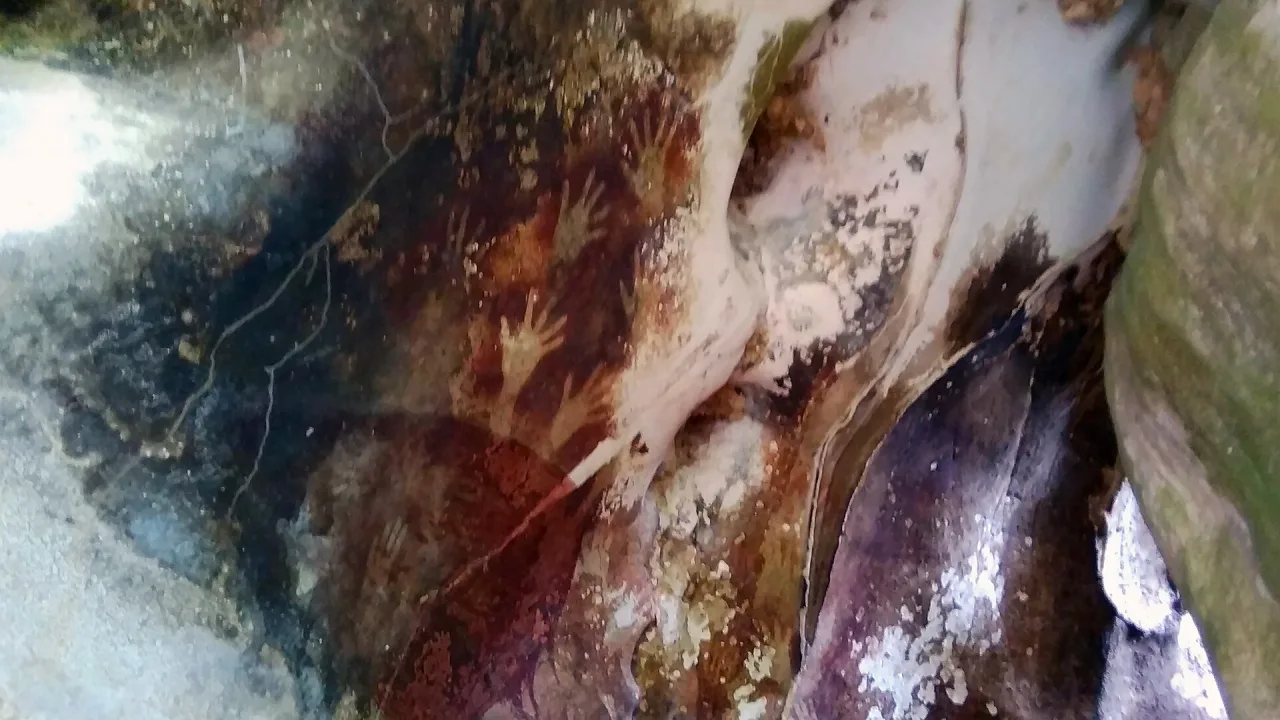
MAROS-PANGKEP, Indonesia — Severe wildfires fueled by an intense El Niño weather pattern are encroaching on ancient limestone caves in Indonesia, putting some of the earliest known cave paintings created by humans in jeopardy, researchers and local officials reported.
Indonesia is currently contending with its most catastrophic forest and brush fires since 2015, Reuters reported. Although the islands of Borneo and Sumatra have borne the brunt of the destruction, blazes have also spread across South Sulawesi, where prehistoric artwork adorns fragile karst caverns.
Flames Approach Prehistoric Sites
In the Maros-Pangkep area of South Sulawesi, a cave painting that shows human-like figures interacting with a pig was determined by researchers at Australia’s Griffith University to be at least 51,200 years old. Another cavern on nearby Muna Island houses a reddish hand stencil dated to at least 67,800 years old.
Local emergency responders have spent weeks trying to contain the blazes as thick plumes of smoke drifted across the jagged karst peaks, which form a national park and UNESCO Global Geopark. Muhammad Ikfar, a firefighter in the region, said flames burned near the Maros-Pangkep site for more than a week earlier in October, coming within 800 meters — roughly 2,625 feet — of the cave entrance.
According to Ikfar, the fires scorched more than 270 hectares, or approximately 667 acres, of the national park between Sept. 30 and Oct. 18. Fire crews continued working on Thursday and Friday to extinguish stubborn pockets of fire in other sections of the park amid sustained dry weather and no precipitation.
The Threat of Heat and Soot
Archaeologists warned that direct contact with flames is not required to cause irreversible damage to the delicate pigments. The extreme warmth generated by nearby blazes alters the microclimate inside the caverns and speeds up natural deterioration.
Basran Burhan, an archaeologist with Griffith University, told Reuters that the primary and most destructive consequence is ambient heat. Burhan explained that rising temperatures around the rock faces can accelerate corrosion. He added that soot produced by the surrounding smoke settles directly onto the surfaces, warning that “the paintings will become blurred and difficult to identify.”
The current fire crisis has been worsened by El Niño conditions, which have driven up regional temperatures and severely curtailed rainfall across Southeast Asia, leaving peatlands and heavily forested areas dry and susceptible to rapid fire growth, The Independent reported.
Calls for Tactical Mitigation
With drought conditions lingering and rain nowhere in sight, researchers stressed that emergency measures must be implemented swiftly to safeguard the cultural treasures.
“If we don’t do something about this quick, if there isn’t any tactical mitigation efforts for this incident we will lose one of the most amazing evidence of human history in Maros-Pangkep,” Burhan said, calling any potential loss “a great shame.”
For now, local crews remain on alert across the national park, monitoring flare-ups and dampening hot spots as they wait for seasonal rains to break the prolonged dry spell.