Smoke from the catastrophic January 2025 fires in Southern California exposed roughly seven million people to airborne lead concentrations more than 80 times above typical background levels, according to research published Wednesday.
The study, conducted by scientists at the California Institute of Technology and published in the journal Science Advances, analyzed how smoke fundamentally changes when blazes consume neighborhoods instead of open wilderness. When homes, vehicles and electronics ignited during the Eaton Fire, the resulting plume carried dangerous quantities of heavy metals and chemicals across the Los Angeles basin, the researchers found.
A Distinct Threat From Urban Fires
Contrasting the Eaton Fire plume with smoke from the September 2024 Airport Fire, which consumed 24,000 acres of brush in Riverside County, Caltech investigators identified stark chemical differences. The urban plume held more than 50 times more lead, seven times more halogens including chlorine and bromine, and three times more arsenic than typical wildfire smoke, the Los Angeles Daily News reported.
Co-author Haroula Baliaka stressed that public safety agencies must recognize the risks carried by drifting plumes. “Smoke travels; it’s not just about the burn area,” Baliaka told KFI AM 640. “What does a plume mean for people who are miles away from a fire but receive the smoke? We evacuate for fire, but we don’t evacuate for smoke exposure.”
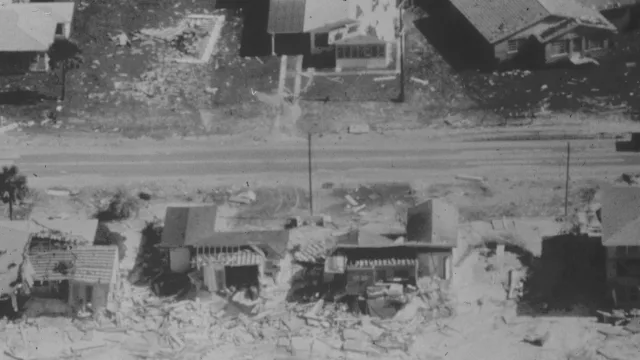
The blazes that started on Jan. 7, 2025, in Altadena and the Pacific Palisades destroyed more than 16,000 structures and claimed at least 31 lives. As flames tore through residences, they incinerated household plastics, wiring, paint and appliances, releasing heavy metals into the atmosphere, according to the study.
Tracking Emissions in Real Time
To capture the chemistry of the smoke, the team relied on a monitoring station in Pico Rivera, roughly 11 miles south of Altadena. The site is part of the Atmospheric Science and Chemistry Measurement Network, known as ASCENT, a nationwide system established in May 2024 that measures fine particulate matter continuously.
Standard air-sampling methods collect particles on physical filters over 24-hour windows every few days, with laboratory analyses taking weeks or months, the researchers explained. The hourly ASCENT data enabled scientists to detect sudden spikes that traditional testing would have missed entirely.
Lead concentrations surged across the San Gabriel Valley and eastern Los Angeles on Jan. 8 and Jan. 9, 2025, according to the findings. As the Eaton Fire moved into the rugged San Gabriel Mountains between Jan. 11 and Jan. 12, the plume’s ratio of potassium to lead shifted, eventually resembling standard wildland fire emissions.
Co-author Nga Lee “Sally” Ng noted that high-speed winds pushed much of the smoke plume toward the Pacific Ocean rather than further inland, preventing even wider population exposure, the Los Angeles Daily News reported.
Unknown Health Repercussions
Lead functions as a potent neurotoxin capable of damaging children’s cognitive development and elevating adult blood pressure, while arsenic is linked to multiple forms of cancer. However, health experts and researchers emphasize that the specific medical consequences of brief, severe spikes in airborne metal exposure remain unknown.
Outside experts said the findings underline an urgent need to adapt emergency planning as climate change and suburban expansion cause more fires to breach populated communities.
Ed Avol, an air pollution researcher and professor emeritus at the University of Southern California Keck School of Medicine, told the Associated Press that the high metal readings were consistent with structural combustion but remained eye-opening because researchers previously lacked the tools to document them in real time.
Yaguang Wei, an assistant professor of environmental medicine at the Icahn School of Medicine at Mount Sinai, told the AP that governments should bolster monitoring networks, issue faster health alerts and expand prescribed burns to reduce wildfire severity before it reaches urban borders.