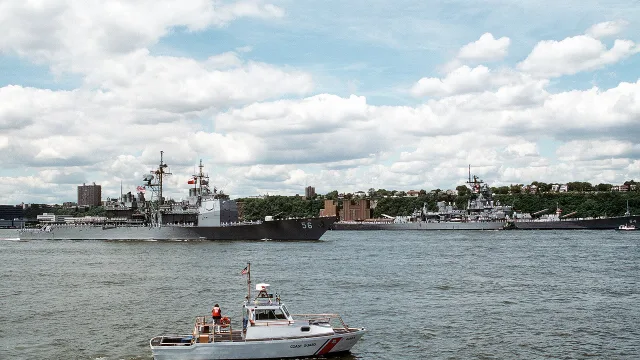
WASHINGTON — The U.S. military announced Saturday that it has launched a new operational unit designed to interrupt Iran’s ground transport networks, broadening a maritime blockade of Iranian ports that has been underway for months in the Strait of Hormuz.
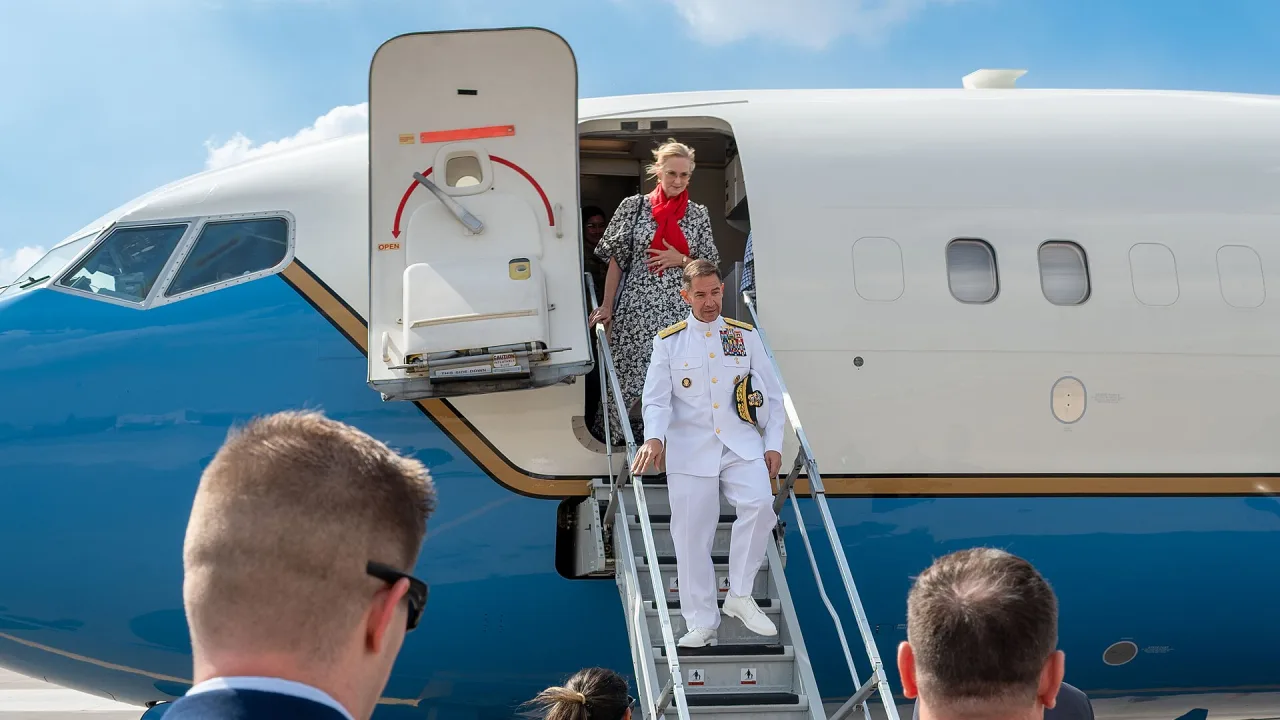
U.S. Central Command, which directs American military operations across the Middle East, said the newly created Task Force Iron Gate is tasked with halting the flow of advanced weapons, dual-use technology, sanctioned goods and illicit revenue across Iran’s terrestrial frontiers and the Caspian Sea. The unit will operate out of Tampa, Florida, and work in conjunction with other federal agencies, CENTCOM said.
CENTCOM Commander Adm. Brad Cooper said the task force will bolster “the success of our ironclad blockade against Iran at sea,” according to Al Jazeera.
Expanding from Sea to Land
The establishment of the ground-focused unit follows intensive U.S. naval operations that began during the summer. CENTCOM disclosed Saturday that American forces had struck and disabled the St. Kitts-flagged commercial cargo vessel M/V Huda in the Gulf of Oman after instructing its crew to leave targeted compartments. A military aircraft deployed precision munitions against the ship’s stern, officials said.
According to CENTCOM, enforcement efforts since July have prompted 147 commercial vessels to comply and turn away, while American forces have disabled five commercial ships that refused to obey orders.
Michael Mulroy, a former U.S. deputy assistant defense secretary for the Middle East, told Al Jazeera that the task force will seek to pinpoint incoming weapons and energy routes. If President Donald Trump chooses to escalate the conflict, Mulroy noted that subsequent strikes could pivot toward economic and infrastructure nodes, moving beyond the military targets emphasized under Operation Epic Fury to constrain Tehran’s finances and logistical capabilities.
Strikes and Maritime Hazards
Kinetic actions continued along Iran’s coastline over the weekend. Iran’s official state news agency, IRNA, reported explosions Saturday on Qeshm Island in the Strait of Hormuz, alongside additional blasts heard in the coastal cities of Jask, Sirik and Bandar Abbas.
Trump acknowledged carrying out strikes on Qeshm Island a day earlier, characterizing the damage as “minor,” while noting that Iranian officials still desire an agreement as talks mediated by Qatar proceed, Al Jazeera reported.
Hazards to shipping also intensified in nearby waters. The naval branch of the Islamic Revolutionary Guard Corps reported Saturday that two oil tankers struck sea mines and sustained heavy damage after entering an unsafe zone in the Strait of Hormuz with their navigation transponders turned off, Iranian state television reported.
Pressure at Home and Abroad
The military maneuvers come amid political friction in Tehran. On Saturday, hardline demonstrators wearing burial shrouds gathered outside IRGC headquarters to protest what they called a failure by the armed forces to execute an Oct. 31 directive from Supreme Leader Mojtaba Khamenei demanding retaliatory strikes, Iran International reported. The demonstration prompted a swift rebuke from Tabnak, a website connected to Supreme National Security Council Secretary Mohsen Rezaei, which warned that authorities had begun countering the protest movement.
At the same time, Washington is ramping up pressure on Tehran’s atomic infrastructure. On Friday, the Trump administration offered a reward of up to $20 million through the State Department’s Rewards for Justice program for actionable details regarding Iranian nuclear facilities, materials and scientific personnel, CBS News reported. The U.S. launched its war with Iran in February, with Trump repeatedly declaring that Tehran will not be permitted to field a nuclear weapon.
Whether the newly created task force signals an imminent wave of strikes against Iranian border infrastructure or serves primarily as an intelligence-gathering mechanism remains uncertain as diplomatic talks continue in Qatar.