WASHINGTON — President Donald Trump is confronting mounting resistance from members of his own party following his decision to waive new sanctions and tariffs against Russia, an effort aimed at lowering fuel costs that critics argue weakens American leverage over Moscow.
Trump signed an executive order Friday granting waivers under the Lindsey O. Graham Sanctioning Russia and Iran Act, which he had signed into law on Sept. 18. The statute, named after the late South Carolina senator, granted authority to impose tariffs reaching 100 percent on goods imported from major purchasers of Russian petroleum and natural gas. The law carried an initial 30-day enforcement deadline that fell on Sunday.
Republican Lawmakers Break Ranks
The president defended the move as being in the national interest, telling reporters Saturday that it was a sound choice that would benefit both the nation and global stability. However, the waiver drew immediate condemnation from prominent Republicans, Fox Business reported.
Sen. Thom Tillis, a North Carolina Republican, characterized the move as deeply irresponsible, pointing out that the Senate had approved the sanctions legislation by an 86-11 margin. Tillis was among six Senate Republicans, alongside Susan Collins, Alan Armstrong, Lisa Murkowski, Mitch McConnell and John Cornyn, who previously urged Trump to maintain strict economic penalties against Moscow.
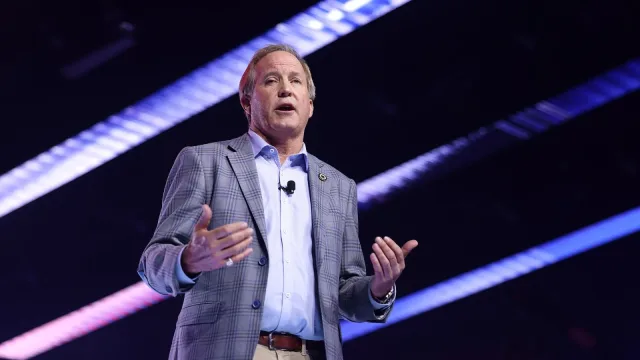
Sen. Ted Cruz, R-Texas, stated during a Saturday television appearance that he viewed the decision as an error, according to Fox News. Asked if he would advise Trump against waiving the penalties, Cruz said he would, while acknowledging the administration’s concern over elevated diesel and gasoline costs.
Former United Nations Ambassador Nikki Haley also faulted the decision on social media, warning that easing pressure represented a severe miscalculation regarding Russian President Vladimir Putin. Sen. Darline Graham, the South Carolina Republican who succeeded her late brother, told reporters she favored maintaining full economic pressure on Russia, Reuters reported.
Energy Strategy and Battlefield Repercussions
The sanctions waiver follows an Oct. 9 announcement by the White House outlining an agreement to permit Russian diesel onto international markets. The Treasury Department subsequently issued General License 135, authorizing transactions involving Russian diesel through April 7, 2027. Under that initiative, Russia was slated to provide 300,000 metric tons of fuel immediately, followed by larger tranches over subsequent months.
The White House has argued that increasing global diesel supplies will help ease price spikes for American consumers and signal potential economic advantages for Moscow if it agrees to negotiate an end to the fighting in Ukraine. Trump envoys Steve Witkoff and Jared Kushner discussed the arrangement with Ukrainian officials to explore restarting peace talks, according to Reuters.
Ukrainian President Volodymyr Zelenskyy strongly objected to the relief, writing on social media that reducing penalties assists only the Kremlin and encourages continued aggression. While Trump had declared an energy ceasefire, Russian forces launched a major strike Wednesday that damaged Ukrainian energy facilities and cut electricity to hundreds of thousands of people, Ukrainian authorities said. Ukraine has since resumed strikes against Russian refining facilities.
Skepticism Over Market Effects
Energy analysts have questioned whether the policy will accomplish the administration’s economic goals. Masha Kotkin, a fellow at the Center for Strategic and International Studies, told S&P Global that the volume of diesel involved would represent a minute fraction of worldwide demand and would fail to alter domestic fuel expenses.
Sergey Vakulenko, an energy analyst at the Carnegie Russia Eurasia Center, observed that Ukrainian drone attacks have drastically limited Russian refining throughput, with Russian diesel exports dropping from 3 million tons in April to roughly 325,000 tons in September.
Congressional leaders have not indicated whether they will seek legislative mechanisms to challenge the executive waiver, while the administration continues to monitor domestic fuel prices ahead of the winter season.