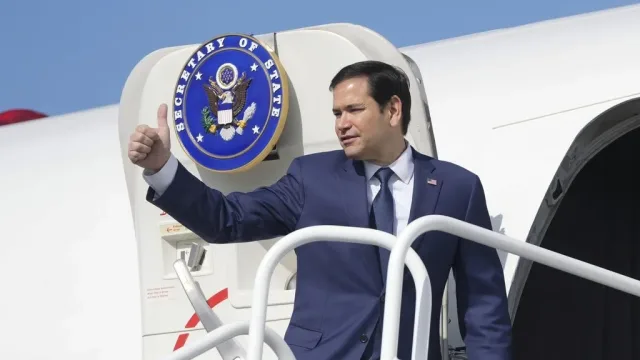
WASHINGTON — U.S. Secretary of State Marco Rubio said Saturday that Ukraine does not currently have access to Starshield, the military-grade satellite network developed by SpaceX, but noted that a request from Kyiv to use the system is under discussion.
Speaking to reporters at Joint Base Andrews in Maryland, Rubio distinguished between the commercial Starlink network and the defense-focused Starshield platform. He emphasized that the military satellite product is managed through U.S. defense agreements and is not currently provided to Ukrainian forces, who have requested it to conduct deep strikes within Russian territory.
Dispute Over Speed Restrictions
The remarks followed assertions by Ukrainian President Volodymyr Zelenskyy that recent operational restrictions on satellite terminals had impaired Ukraine’s ability to defend against Russian airstrikes. Zelenskyy told journalists on Saturday that satellite tracking ceases for equipment moving faster than 161 kilometers per hour (100 miles per hour), which he said disabled Ukrainian drones tasked with intercepting fast-moving, jet-powered Russian drones.
Rubio dismissed suggestions that the U.S. government had orchestrated any slowdown of satellite connectivity in Ukraine. He stated that neither the White House nor any federal agency had directed service reductions to restrict drone flights, adding that standard commercial connectivity had reportedly returned to normal levels.
However, Ukrainian diplomats indicated that difficulties persisted. Denys Sienik, Ukraine’s chargé d’affaires to the United States, told CBS News that Kyiv had not received formal confirmation from either the Pentagon or SpaceX that unrestricted performance had been restored.
Contrasting Accounts of System Control
Ukrainian military personnel and defense officials reported encountering sudden velocity constraints late Tuesday, attributing the disruptions to unilateral limitations from SpaceX, CBS News reported. The restrictions disrupted Ukrainian drone operations amid large-scale Russian missile and drone bombardments against more than 15 energy infrastructure sites.
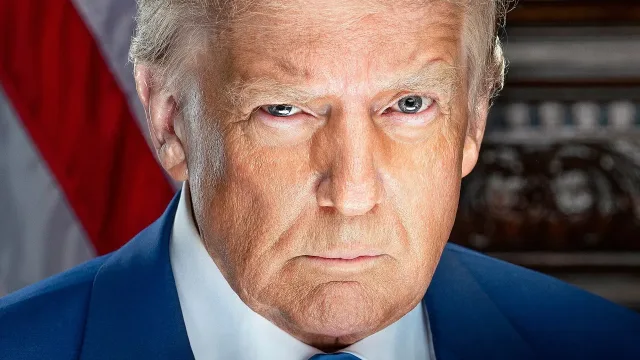
SpaceX Chief Executive Officer Elon Musk posted on social media Wednesday that Starshield is owned and managed by the U.S. government, asserting that any performance thresholds or operational rules are determined by the military and the American president. In contrast, President Donald Trump told reporters on Friday that he had not curtailed Ukrainian access to the service and expressed doubt that Musk had done so.
Strains in Washington and Kyiv Relations
The technology dispute comes alongside mounting geopolitical friction between Washington and Kyiv. The Trump administration recently granted a waiver on sanctions targeting Russian oil and gas purchases, aiming to mitigate global energy market pressures. White House spokeswoman Taylor Rogers told CBS News that enforcing the sanctions immediately could hamper administration efforts to broker a peace agreement.
Zelenskyy strongly criticized the waiver on Saturday, warning that easing economic penalties provides financial benefits that encourage Moscow to continue its offensive. Trump has recently criticized Zelenskyy, calling strikes against Russian energy infrastructure counterproductive to ongoing negotiations.
In response to the recurring connectivity concerns, European officials and Ukrainian leaders have increased calls to accelerate sovereign satellite communications capabilities. Ukrainian officials confirmed discussions regarding European alternatives, including the European Union’s planned IRIS² multi-orbit satellite constellation, though that system is not anticipated to begin service until at least 2029.