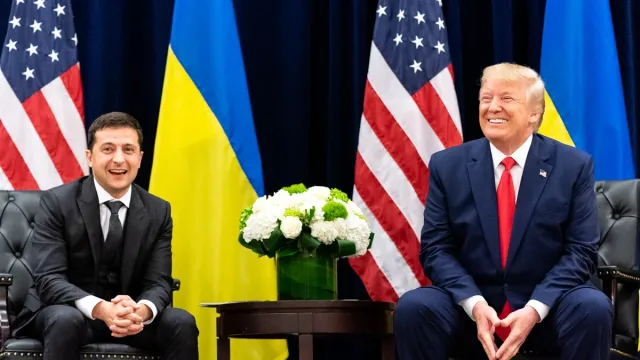
WASHINGTON — Strains between the United States and Ukraine intensified Monday as top administration officials rejected accusations from Ukrainian President Volodymyr Zelenskyy that Washington temporarily withheld crucial ballistic missile warnings and interfered with battlefield satellite communications.
Speaking to reporters in Uzbekistan, Secretary of State Marco Rubio dismissed Zelenskyy’s claims that U.S. early-warning intelligence had been paused, remarking that the Ukrainian leader should instead concentrate on bringing an end to the fighting, the New York Post reported. On Sunday, Zelenskyy said on NBC News’ “Meet the Press” that American alerts detailing incoming Russian ballistic strikes were halted for three days before being restored.
Disputes Over Intelligence and Starshield Connectivity
Zelenskyy argued that Ukraine relies exclusively on unique American tracking data to counter Russian ballistic missiles, particularly given Kyiv’s dwindling stockpiles of Patriot interceptor missiles. U.S. officials told the New York Post that intelligence sharing never stopped and suggested technical issues within Ukraine could be responsible for any lapses.
The feud also centers on Starshield, the military variant of Elon Musk’s Starlink satellite internet system operated by SpaceX. Ukrainian officials reported receiver performance was artificially capped at speeds above 100 mph, preventing air defense units from intercepting Russian jet-powered drones. Zelenskyy claimed the slowdown was an intentional political message orchestrated through SpaceX, according to The Guardian.
U.S. officials quickly rejected that assertion. Treasury Secretary Scott Bessent labeled Zelenskyy’s remarks “very reckless” on NBC News, insisting neither President Donald Trump nor the administration ordered connectivity limits. Meanwhile, Rubio indicated during an interview with Breitbart that Ukraine remains barred from Starshield for strikes deep inside Russia, though Kyiv’s request for deeper access remains under discussion.
Collapsing Ceasefire and Escalating Energy Strikes
Relations between Washington and Kyiv have grown increasingly fragile following an Oct. 9 announcement by Trump that the U.S. would import hundreds of thousands of tons of diesel fuel from Russia to curb domestic pump prices. On Friday, Trump also paused implementation of a bipartisan sanctions measure honoring the late Sen. Lindsey Graham that was scheduled to punish Moscow’s energy sector.
Defending the move on Truth Social, Trump posted that he is negotiating peace between the nations and intends to avoid moves that would drive Russia away from negotiations. However, the decision sparked criticism from lawmakers in both parties who warned that easing tariffs and restrictions provides Moscow with vital revenue.
At the same time, an informal energy ceasefire outlined by Trump collapsed as both sides traded large-scale bombardments. Over the weekend, Ukrainian forces launched more than 1,000 drones against Russian infrastructure, hitting oil terminals, logistics hubs, and datacenters in St. Petersburg in one of Kyiv’s largest aerial assaults of the conflict, The Guardian reported. Rubio accused Ukraine of hitting vessels carrying American-owned petroleum in the Black Sea, adding that corporate complaints had reached Washington.
Zelenskyy defended targeting Russian refineries, arguing in a social media statement that Moscow launched 76 attacks on Ukraine’s power and gas grid in the past week alone. Russian strikes on Sunday killed civilians in western Ukraine’s Volyn region and the southern city of Zaporizhzhia, while a suspected drone diversion prompted temporary air raid warnings and a brief airport closure in Lithuania, according to European authorities.
What happens next remains uncertain as Trump envoys Steve Witkoff and Jared Kushner maintain contact with Ukrainian leaders. While Rubio stated the U.S. is prepared to mediate a settlement, the administration is taking up to 60 days to evaluate the broader economic fallout of its waived sanctions.