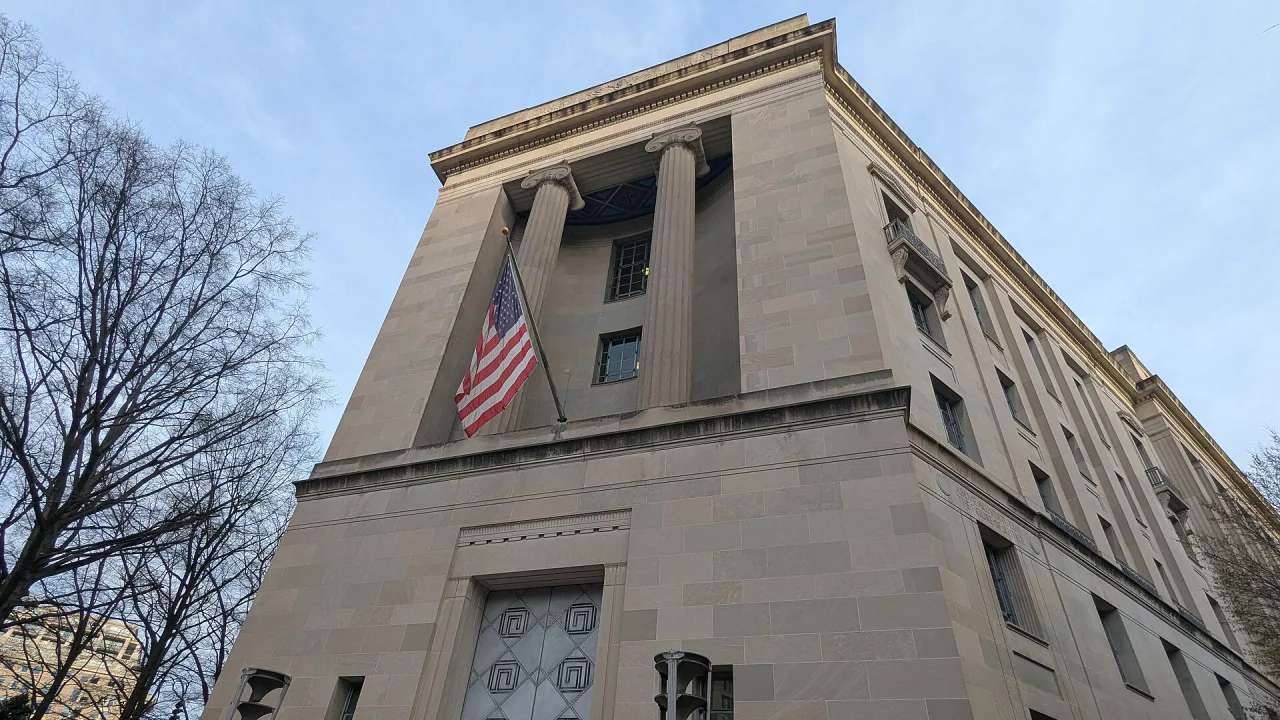
Federal prosecutors have unsealed charges against five individuals across three states for their alleged roles in nationwide schemes that used stolen identities to enroll fictitious college students and siphon millions of dollars in federal financial aid, officials announced Thursday.
The criminal charges mark the first public wave of arrests in a sweeping, interagency investigation dubbed “Operation Ghostbusters,” led by the Justice Department and the FBI across 26 field offices. Assistant Attorney General Colin M. McDonald, who leads the department’s National Fraud Enforcement Division, warned that fraudsters who exploit college aid programs will be tracked down “whether you are in Nebraska, New Jersey, Virginia, or Nairobi.”
Fictitious students and online classrooms
In so-called ghost student schemes, conspirators steal personal identifying information from real citizens and submit bogus Free Application for Federal Student Aid (FAFSA) forms, according to federal authorities. The conspirators then register non-existent students in higher education institutions, particularly online community college programs, collect federal grants and loan refunds after tuition is deducted, and transfer the remaining cash to bank and cryptocurrency accounts.
To maintain enrollment and keep money flowing semester after semester, operators used artificial intelligence to generate schoolwork and submit assignments, federal officials explained. In other instances, overseas workers were paid as little as $1 to sit in front of webcams during live virtual lectures to maintain the illusion of genuine attendance, according to McDonald.
Investigators said the ring disproportionately targeted low-income Americans who had never attended college. Many victims only discovered the fraud when they found their credit damaged and debt collectors pursuing them for loans they had never requested, ABC News and ABC7 Los Angeles reported.
Indictments span three states
The newly unveiled cases center on federal court filings in Nebraska, New Jersey and Virginia, involving networks that allegedly moved stolen taxpayer money to co-conspirators in Kenya:
- In Nebraska, Kenyan citizen Francis Mogambi, who entered the U.S. in May 2024 through the Diversity Visa lottery, was indicted on five counts of theft of government money and five counts of aggravated identity theft. Prosecutors allege Mogambi diverted financial aid funds, pocketing 30 percent while wiring the rest to Kenya; he pleaded not guilty and remains detained pending trial.
- In Virginia, an unsealed indictment accused a Kenyan national of taking in more than 700 fraudulent aid refund deposits totaling roughly $1.44 million, shipping about $1.3 million to foreign and domestic bank accounts.
- In New Jersey, three people were charged with acting as money mules in an operation that intercepted over $1 million, funneling money through American accounts to Kenyan conspirators linked to a purported safari company.
Outlets reported differing totals for the losses tied to the charged schemes, with ABC News reporting $2.9 million, ABC7 reporting more than $1.3 million, and the Justice Department noting broader losses across similar schemes topping $32 million.
Massive scale uncovered
Investigators cautioned that the initial arrests represent only the tip of an enormous problem that has surged alongside online postsecondary education. In California, community college officials determined that nearly one-third of all 2024 applicants were fraudulent, resulting in roughly $13 million in losses, according to ABC7 Los Angeles.
During September and October alone, federal agents flagged 830,840 suspicious Federal Student Aid accounts tied to nearly $130 million in potential payouts and advised the Department of Education to shut them down, BBC News reported. Authorities estimate related ghost-student operations may have siphoned more than $200 million over the past five years.
Federal agents are collaborating with Kenyan authorities to trace stolen assets, having recently confiscated more than $750,000 from a Kenyan cryptocurrency wallet. With more than 40 related inquiries still active across the country, prosecutors say further indictments and extradition attempts are expected.