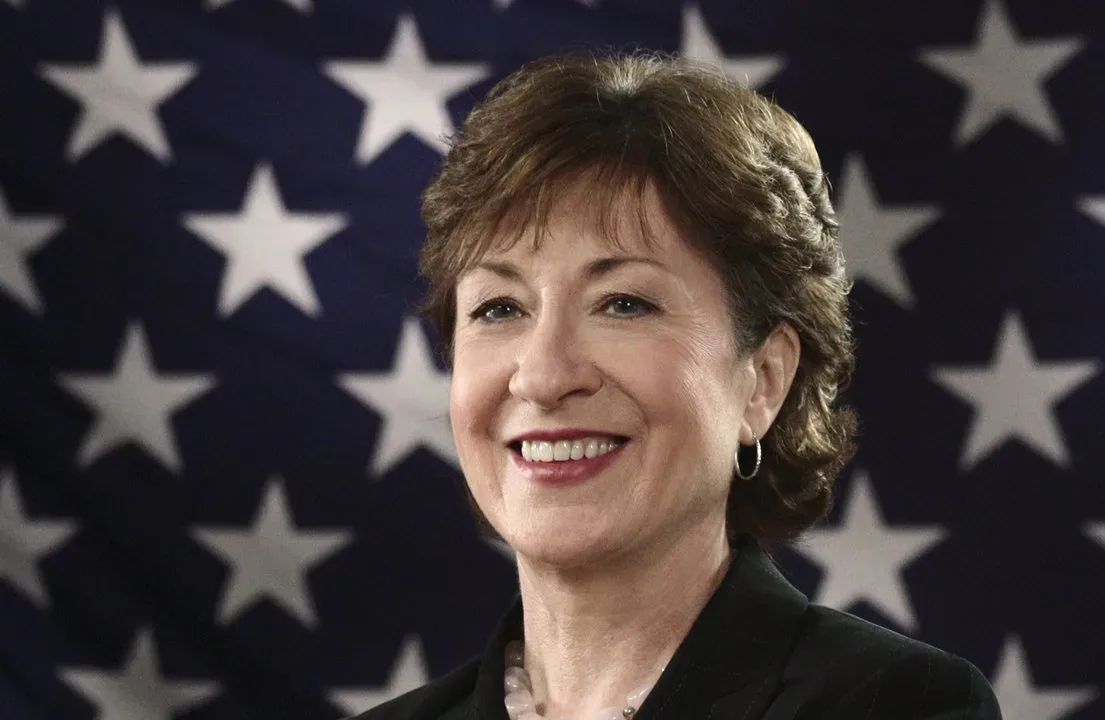
PORTLAND, Maine — Five-term Republican Sen. Susan Collins and Democratic challenger Troy Jackson are locked in a high-stakes, deadlocked battle in Maine that could determine which party controls the U.S. Senate next year, according to reports from PBS NewsHour and local news outlets.
With Election Day less than two weeks away, the contest has drawn more than $200 million in combined spending from campaigns and independent groups, making it the highest per capita total of any state this cycle, PBS NewsHour reported. Recent polling shows Jackson holding a narrow advantage over the 30-year Senate veteran, the Portland Press Herald reported.
Stark contrast in visions for Maine
Collins has leaned heavily on her seniority and her post as chair of the Senate Appropriations Committee, highlighting roughly $1.5 billion in federal funding she helped direct back home, including grants for water treatment facilities, community health centers, and 45 local fire stations, PBS NewsHour reported. Collins’ supporters, like midcoast resident Linda Post, credit her office with resolving constituent crises like heating oil assistance delays and argue Maine needs her institutional leverage.
Collins has also promoted her reputation as an independent centrist who can work across the aisle, holding a campaign stop Wednesday in Lewiston with former Democratic Sen. Joe Manchin of West Virginia. Manchin told reporters that Collins was the most independent-minded lawmaker he had ever met, the Portland Press Herald reported.
Jackson, a former logger and former president of the Maine Senate, entered the campaign in July after previous nominee Graham Platner dropped out following scandals that included a denied rape allegation, according to PBS NewsHour. Campaigning as an unvarnished progressive, Jackson has cast Collins as an enabler of President Donald Trump.
On Thursday, Jackson appeared onstage in Portland alongside progressive U.S. Rep. Alexandria Ocasio-Cortez of New York at a town hall focused on student issues and corporate wealth. Jackson called for the repeal of the One Big Beautiful Bill Act to restore Medicaid funding, backed Medicare for All, supported abolishing Immigration and Customs Enforcement, and pushed to end stock trading by members of Congress, the Press Herald reported.
Fiery debates and sharp disagreements
The rivals met for their fourth and final debate on Oct. 16, trading sharp barbs over national allegiances and campaign ethics, Maine Public reported. Tensions flared when a Bowdoin College student shouting about data centers disrupted Collins, leading her to remark that the demonstrator was likely a Jackson supporter. Jackson retorted, “Oh, shut up. I didn’t — I don’t even know that kid,” an exchange that drew criticism from Republican super PACs.
Substantively, the candidates clashed over the direction of the federal judiciary. Jackson said he backs expanding the Supreme Court, implementing judicial term limits, and eliminating the Senate filibuster to overcome Republican opposition, Maine Public and PBS reported. Collins opposed adding justices, arguing that doing so would transform the high court into a purely political body.
The two also disputed Collins’ voting alignment with Trump. Jackson alleged Collins backed Trump’s positions 96 percent of the time, while Collins cited independent evaluations showing the figure was closer to 72 percent and noted that she opposed Trump’s reelection and voted against Defense Secretary Pete Hegseth, Maine Public and PBS reported.
Independent voters hold the balance
Maine remains a political outlier. In 2020, it was the only state in the country to split its statewide results by supporting Joe Biden for president and electing Collins to the Senate. With both candidates drawing at least $75 million in untracked dark-money support, according to debate moderator Steve Mistler of Maine Public, the final verdict will rest on a shrinking pool of undecided swing voters wrestling with the future direction of Washington.