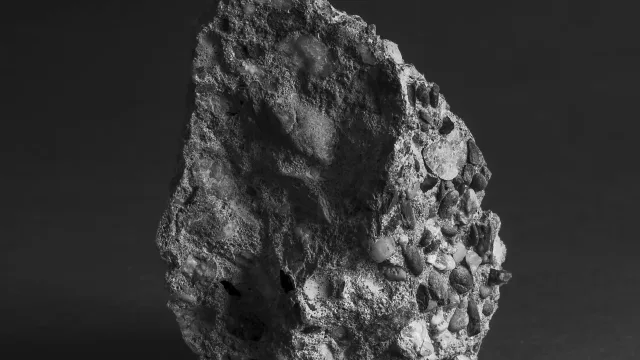
A Harvard astrophysicist is challenging statements from NASA’s top official regarding a mysterious 36-foot-wide space object that is accelerating as it travels near Earth, Fox News reported.
The object, designated as 1998 KY26, has drawn intense interest from astronomers because its movement cannot be fully explained by gravitational pull alone. NASA Administrator Jared Isaacman stated Thursday on “Fox & Friends” that he had not seen evidence indicating the object was anything other than an asteroid. Isaacman added that the object poses no threat of colliding with Earth, according to Euronews.
Debate Over Origin
Harvard astrophysicist Avi Loeb disputed Isaacman’s classification, arguing that standard asteroids do not display non-gravitational acceleration without visible outgassing. Loeb and researchers Adam Hibberd and Adam Crowl suggested the object could be Phobos 1, an uncrewed Soviet spacecraft launched on July 7, 1988, that lost contact with Earth while traveling to Mars, Euronews reported.
Loeb told Fox News Digital that because the object shows no sign of a cometary tail or released dust, conventional explanations fall short. Loeb argued that scientific innovation requires considering possibilities beyond established categories like asteroids and comets when data does not fit existing models.
Researchers led by Loeb built a simplified model of Phobos 1 to evaluate how sunlight would reflect off its surface during rotation. Their calculations indicated that the simulated probe matched eight distinct sets of observations of 1998 KY26, which rotates roughly once every five minutes and reflects nearly 52 percent of the sunlight striking it, Euronews reported.
Alternative Scientific Theories
NASA maintains that natural forces fully explain the object’s trajectory. In a statement to Fox News Digital, NASA cited a 2025 orbital analysis by its Center for Near-Earth Object Studies. The agency concluded that the object’s non-spherical shape causes sunlight and thermal emissions to push against it, creating solar radiation pressure that drives its complex path without needing comet-like activity.
Other scientific studies have examined whether 1998 KY26 could be a “dark comet”—a rocky body that releases gas without forming a visible tail. However, recent research published in the journal Icarus by Georgia Institute of Technology aerospace engineers Korbin Hansen and Masatoshi Hirabayashi cast doubt on that theory. Their thermal modeling revealed that even the coldest parts of the object reach temperatures above minus 77 degrees Fahrenheit, meaning any buried ice would have evaporated within 62 years, according to Futurism.
The Georgia Tech researchers concluded that 1998 KY26 is likely a dehydrated asteroid that lost its water long ago, leaving solar radiation or thermal emissions as the most probable causes for its acceleration.
Upcoming Space Mission
A definitive conclusion about the object’s true nature may not arrive until July 2031, when the Japan Aerospace Exploration Agency’s Hayabusa2 spacecraft is scheduled to rendezvous with 1998 KY26, according to Euronews. The encounter will mark the first direct close-range investigation of an asteroid of such small size.
Loeb acknowledged that if Hayabusa2 arrives at the object and discovers ordinary rock or ice, his Soviet spacecraft hypothesis will be disproven, Fox News reported. However, he maintained that the mission could reveal an artificial artifact from early space exploration history.