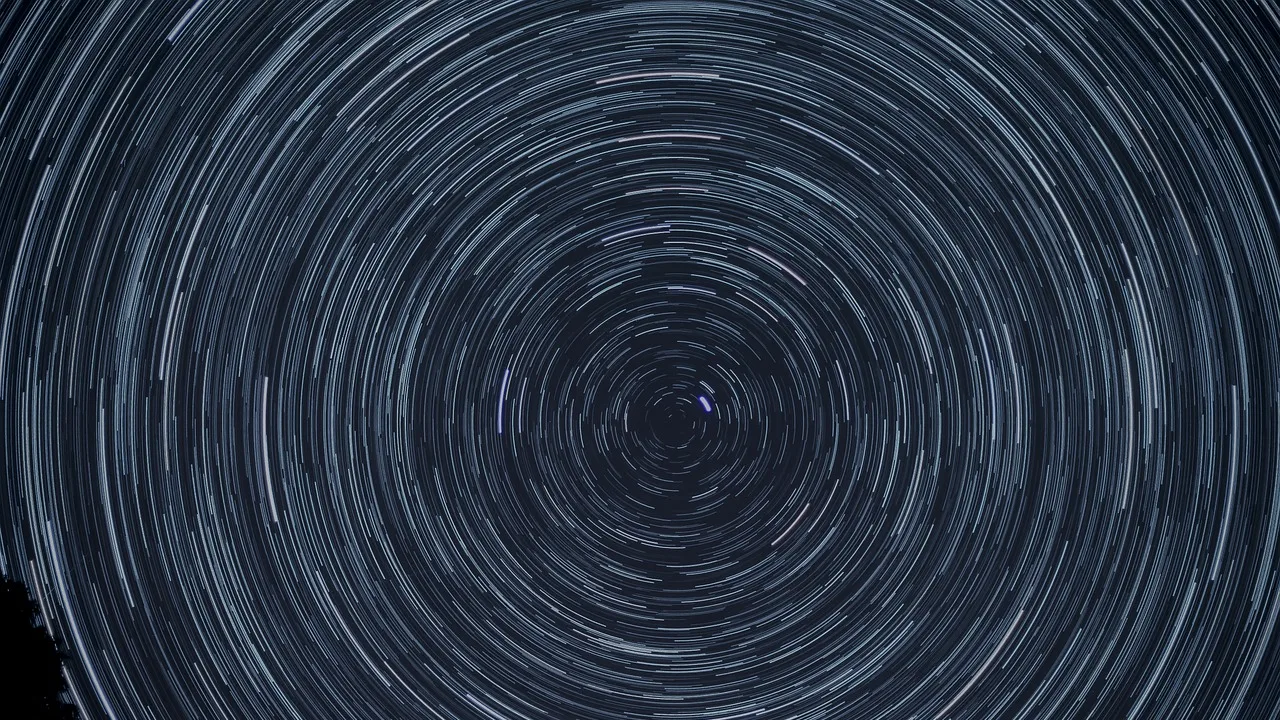
The annual Leonid meteor shower is reaching its peak overnight from Monday into early Tuesday morning, offering skywatchers an opportunity to observe some of the fastest meteors of the year blazing through the night sky.
Every November, Earth travels through a stream of dusty particles left behind by comet 55P/Tempel-Tuttle. As those small celestial fragments disintegrate upon entering Earth’s atmosphere, they produce bright streaks of light moving at speeds around 44 to 45 miles per second, according to space experts and astronomical organizations.
According to the American Meteor Society, peak activity is expected from Monday night, Nov. 16, into Tuesday morning, Nov. 17. Astronomers emphasize that this year will bring relatively modest meteor counts compared to historic outbursts. Under optimal dark conditions away from urban light pollution, viewers might see up to 15 meteors per hour, Bill Cooke, lead of NASA’s Meteoroid Environment Office, told CNN. However, the American Meteor Society noted that light from a moon that is roughly 39 to 41 percent illuminated could obscure fainter streaks, potentially reducing visible counts to fewer than three per hour, according to The New York Times.
How to View the Meteor Shower
To maximize viewing opportunities, experts recommend finding a rural location far from artificial lighting. Cooke advised sky-gazers to lie flat on their back to take in as wide a view of the sky as possible, without using telescopes or binoculars. The meteors will appear to radiate from the constellation Leo, which rises higher above the horizon after midnight. Because the moon sets before midnight in many locations, the pre-dawn hours will provide the darkest skies for observation. Astronomers also suggest giving eyes about 30 minutes to adjust to the darkness and avoiding mobile device screens.
A History of Celestial Storms
The Leonids are renowned for generating rare, intense meteor storms when Earth passes directly through dense debris streams created by comet Tempel-Tuttle during its 33-year orbit around the sun. A famous storm in 1833 produced tens of thousands of meteors per hour. Cooke told CNN that the 1833 display launched the formal scientific study of meteors, calling the Leonids “the shower that started it all.”
Another major outburst occurred 60 years ago in 1966, when observers at Arizona’s Kitt Peak recorded meteors falling at rates as high as 40 per second, or 144,000 per hour, Space.com reported. Additional Leonid outbursts were recorded in 1999, 2001 and 2002.
Future Outlook for Stargazers
A meteor storm is not anticipated this year because comet Tempel-Tuttle is currently located more than 1 billion miles from the sun in the outer solar system, according to Space.com. Gravitational forces from Jupiter in 2029 are also expected to alter the comet’s path through space.
Scientists project stronger displays in the coming decade, however. NASA estimates the next Leonid meteor storm could occur in 2033, while research published by French astronomer Jeremie Vaubaillon predicts an outburst in 2034 with rates reaching up to 2,000 meteors per hour, according to Space.com. The Leonids will remain active through Nov. 30.