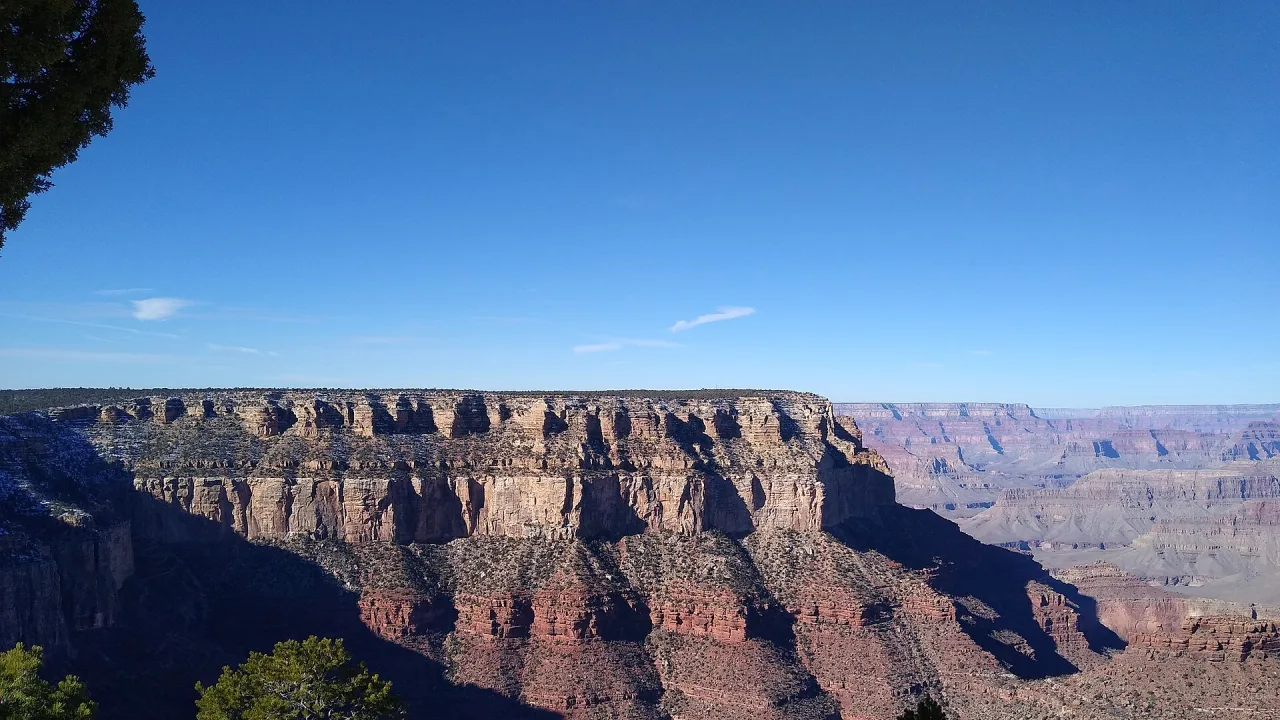
A geological riddle that has baffled scientists for more than a century may finally have an answer. According to a study published in the journal Nature, slow-moving currents within Earth’s mantle lifted entire continents skyward hundreds of millions of years ago, exposing them to massive ice sheets that scoured away up to a billion years of rock history.
Geologists first identified the missing record in the 1870s and named it the Great Unconformity. In places such as the Grand Canyon in the U.S., flat layers of sedimentary rock that are roughly 540 million years old sit directly atop crystalline rocks that date back up to two billion years. The missing rock layers represent up to a quarter of the planet’s history that seemingly vanished without a trace.
Supercomputers track deep heat currents
Researchers at the University of Wollongong in Australia used the Gadi supercomputer to simulate how mantle convection altered the elevation of Earth’s landmasses over the last billion years. The mantle is a 2,900-kilometer layer of solid, extremely hot rock that slowly flows, pushing continents up or allowing them to subside by hundreds of meters.
The computer simulations revealed that mantle flow drove ancient landmasses—including Laurentia, which forms much of modern North America, alongside Baltica in northern Europe and North China—to rise between one billion and 540 million years ago. Over the following 540 million years, those same landmasses were gradually drawn downward.
“A single, long period of uplift followed by a long period of sinking would have been the ideal recipe for removing the rock and preserving the worn surface,” Associate Professor Nicolas Flament, a study co-author, told the University of Wollongong media outlet.
The role of Snowball Earth and ice sheets
The timing of the ancient uplift proved crucial. The models showed the continents rose during the Neoproterozoic Era, overlapping with the Snowball Earth period that lasted from roughly 720 million to 635 million years ago. During this stretch, colossal ice sheets ground across the uplifted land, eroding massive layers of sediment and stripping the surface down to its deep crystalline core.
Glacial sheets act with exceptional force across gentle slopes, grinding away surface material far more effectively than rivers. Once the uplift phase ended around 540 million years ago, the continental crust began to subside beneath rising seas. This downward shift permitted new marine sediments to blanket and preserve the scoured bedrock below.
Lead author Santosh Dhungana compared the geological mystery to opening a novel and discovering entire chapters had been torn out in the middle.
“The Great Unconformity is that gap in Earth’s story, with the narrative jumping from the early chapters straight to a much later part of the story,” Dhungana said in a statement released by the university. “Our research suggests these pages weren’t lost by chance.”
Variations across continents
The findings also account for why the Great Unconformity is absent or less distinct in other parts of the world. While North America, northern Europe, and North China experienced the single long surge of elevation and subsequent sinking necessary to carve and preserve the gap, other areas followed different trajectories.
The research team found that Australia and South America underwent two distinct cycles of rising and sinking beginning around 900 million years ago. Those repeated shifts prevented the extensive preservation seen in North America, matching actual field observations.
The erosion that created the unconformity may have also altered ocean chemistry by washing continental debris into seawater. Scientists have long wondered if that chemical shift helped trigger the Cambrian explosion, an abrupt burst in animal diversity that began around 540 million years ago. While the mantle models explain how the rocks vanished, researchers will continue examining how the planetary scrubbing influenced the emergence of complex life.