WASHINGTON — Democrats captured full control of both chambers of Congress on Tuesday night, flipping the House and the Senate in a sweeping midterm rebuke of President Donald Trump and his legislative agenda, NBC News projected.
The victories marked the first time Democrats secured majorities in both legislative bodies since 2023, and the first time since 2006 that the minority party flipped both chambers in a single election night. Propelled by decisive wins across historically Republican territory, Democrats dismantled narrow GOP margins on Capitol Hill and cleared the path for a turbulent two years of divided government.
Breakthroughs in Deep-Red States
Democrats assembled their new Senate majority by scoring upsets across eight states, according to NBC News, flipping Republican-held seats in Michigan, Maine, Iowa, Kansas, Ohio, North Carolina, South Carolina and Texas. In Michigan, Democrat Abdul El-Sayed defeated Republican Mike Rogers, while in Maine, Troy Jackson unseated long-serving Republican Sen. Susan Collins, NPR reported.
The night also brought historic milestones in jurisdictions long dominated by the GOP. In Kansas, Adam Hamilton became the first Democratic senator elected from the state in nearly a century, NPR reported. Texas voters broke more than three decades of Republican statewide control by electing Democrat Gina Hinojosa as governor over incumbent Greg Abbott, while Democratic state Rep. James Talarico won the state’s open U.S. Senate contest.
Trump initially lashed out on social media Tuesday evening as early tallies broke against his party, writing, “I wasn’t on the Ballot and if I was, we would have won IN A LANDSLIDE!” NBC News reported. However, he subsequently congratulated Democratic leaders and affirmed multiple times that he would respect the election results, according to NPR.
Leadership Shifts and Oversight Agenda
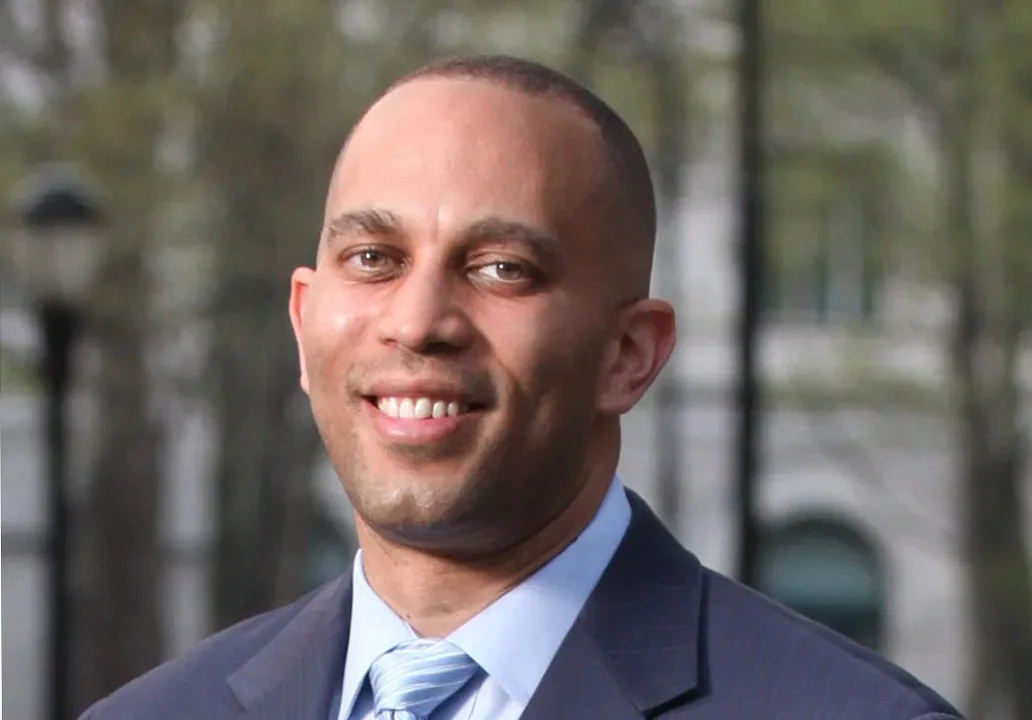
With House Democrats poised to hold what NBC News projected could be their largest majority in almost two decades, House Minority Leader Hakeem Jeffries, D-N.Y., is positioned to become the nation’s first Black speaker of the House. Democratic leadership votes are slated for the week of Nov. 16, ahead of the formal floor vote for speaker on Jan. 3.
“We understand as House Democrats that we need to deliver dramatic change,” Jeffries said Tuesday night, according to NPR. In earlier comments to reporters, Jeffries emphasized economic pressures, stating, “The cost of living is way too high, and Donald Trump — along with his Republican sycophantic members of Congress — have actually decided not to do anything about it.”
In the upper chamber, Sen. Chuck Schumer, D-N.Y., is slated to return as Senate majority leader. Schumer said his priorities would center on lowering costs, ending corruption and stopping administrative chaos, NBC News reported.
Controlling both chambers grants Democrats unilateral subpoena power and the ability to schedule committee hearings. Rep. Robert Garcia, D-Calif., the top Democrat on the House Oversight Committee, and Rep. Jamie Raskin, D-Md., the top Democrat on the House Judiciary Committee, have already mapped out wide-ranging inquiries. Garcia has pledged scrutiny of Trump family finances and immigration enforcement actions, while Judiciary Committee Democrats intend to review executive pardons and foreign financial ties.
What Comes Next
The outcome leaves the future of Republican congressional leadership deeply uncertain. Senate Majority Leader John Thune, R-S.D., must secure majority backing from his caucus in a closed-door ballot to become minority leader, amid lingering friction with Trump over legislative tactics. In the House, Speaker Mike Johnson, R-La., faces possible leadership challenges from rank-and-file conservatives following his party’s sweeping defeat.
Before the 119th Congress convenes in January, Republicans may attempt to leverage the upcoming lame-duck session to pass party-line budget reconciliation measures on spending and tax policy, as well as an increase to the federal debt ceiling, NBC News reported. In the Senate, Democratic control will also allow the incoming majority to block any potential nominations Trump might submit for federal judicial vacancies, including the Supreme Court.