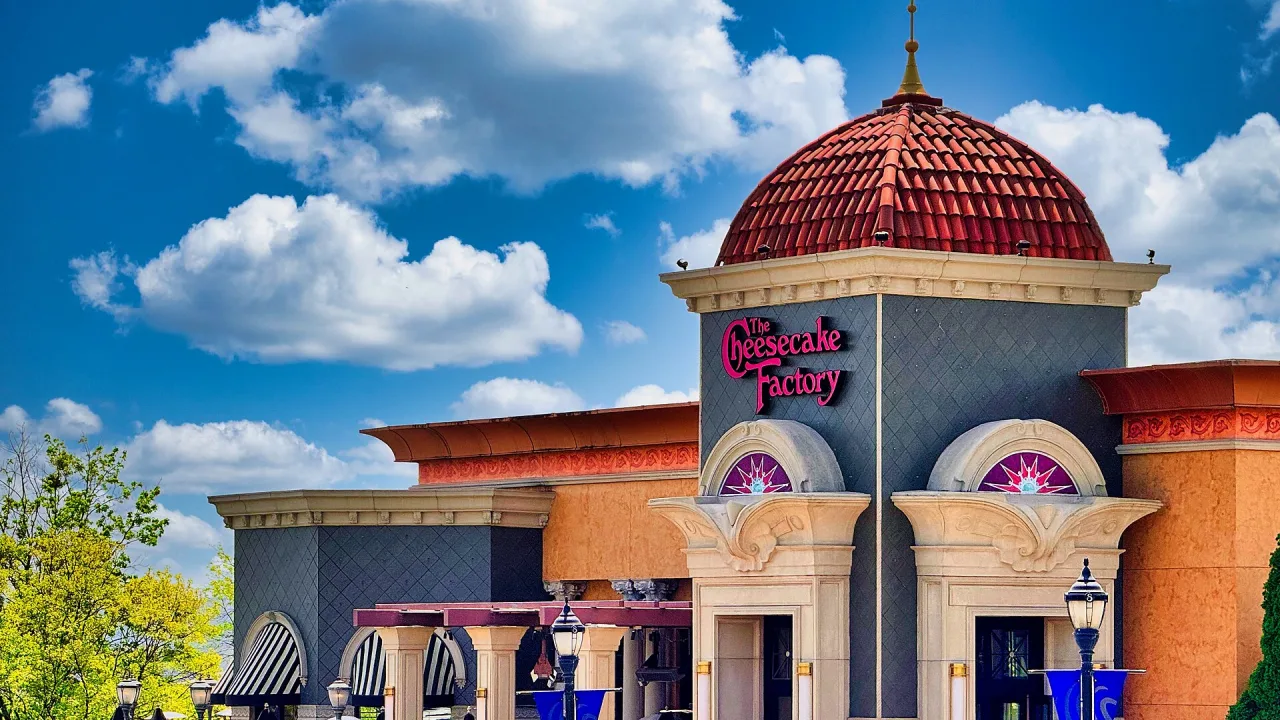
A campaign-trail jab from former President Barack Obama has thrust The Cheesecake Factory into the center of a national political dispute, just as the casual-dining giant posted record-breaking financial figures.
Speaking Saturday at the Cleveland Public Auditorium in Ohio, Obama criticized President Donald Trump’s taste in interior decorating while stumping for Democratic candidates ahead of the Nov. 3 midterm elections. Pointing to Trump’s addition of gilded ornamentation, a South Lawn helipad, and a massive new private ballroom replacing the demolished East Wing, Obama joked that Trump had made the Executive Mansion look like ’Saddam Hussein opened a Cheesecake Factory,’ Fortune reported.
Trump and allies mount swift counterattack
The punchline immediately went viral, prompting sharp pushback from conservative commentators and administration officials who accused the former president of looking down on everyday Americans. Critics on social media and cable news labeled the remark an example of out-of-touch elitism, arguing that the restaurant chain represents an affordable luxury for working families across the country.
Trump addressed the barb on Monday before departing for a campaign appearance in Mississippi, telling reporters at Joint Base Andrews that Obama’s comment demonstrated ’why you were a lousy president,’ CNBC reported. Trump defended his construction work, asserting that he was addressing building maintenance and broken decor that previous administrations ignored, according to Fortune. The White House’s official account on X also joined the fray by publishing a parody menu promoting administration achievements.
Treasury Secretary Scott Bessent took the rebuttal a step further on Monday by dining at a Cheesecake Factory location in downtown Washington. Bessent, a former hedge fund executive whose net worth is estimated at around $600 million, told a Fox Business reporter that he ordered his usual meal, a French Dip Cheeseburger, and urged the ’Martha’s Vineyard set’ to try the restaurant. Bessent also criticized Obama’s architectural legacy, likening the Obama Presidential Center in Chicago to ’Darth Vader’s tomb,’ CNBC reported.
Even the chain’s aesthetic team entered the conversation. Rick McCormack, the former vice president of design for The Cheesecake Factory, told CNN that the restaurant interiors look nothing like Trump’s White House. McCormack described the political firestorm as ’a little bit sad,’ lamenting that such soundbites dominate attention amid serious national problems.
Restaurant chain notches record quarterly revenue
While Washington argued over its aesthetic value, The Cheesecake Factory announced Tuesday that diners continue to pack its locations in droves. The company reported third-quarter revenue of $1.03 billion, up 14 percent from $907.2 million during the same period last year, Fortune reported.
Same-store sales climbed 15.2 percent, and adjusted earnings reached $1.02 per share, surpassing Wall Street expectations. The brand has benefited significantly from changing consumer habits, picking up customers seeking sit-down meals as fast-food prices climb, according to Fortune.
’The Cheesecake Factory has long enjoyed tremendous brand affinity across generations, and its ability to attract younger guests reinforces the enduring appeal and relevance of our namesake concept,’ Chairman and Chief Executive David Overton said in an earnings statement.
What comes next
The company’s stock had risen to an all-time peak of $118.63 earlier this month, having more than doubled over the course of the year. Shares climbed to $110.13 on Monday following Obama’s remarks before settling to $108.47 on Tuesday ahead of the financial release, Fortune reported.
The Cheesecake Factory executive leadership did not address the political brawl during Tuesday’s earnings conference call, and the company has declined to comment publicly on Obama’s remarks. With congressional control hanging in the balance ahead of next week’s midterm vote, it remains unclear whether the dining debate will resonate with voters focused on broader kitchen-table economic worries.