A potential corporate marriage between Tesla and SpaceX is officially under review by independent directors, setting in motion what could become the largest corporate combination in history, valued at roughly $3.5 trillion.
Elon Musk, who serves as chief executive of both companies, confirmed during Tesla’s quarterly earnings discussions that special board committees are evaluating the proposal. Musk endorsed the strategic logic of the tie-up, stating it holds “a lot of merit,” but cautioned that treating the merger as a foregone conclusion would be “overstating” the situation, according to earnings remarks reported by Fortune and BBC News.
A Ticking Political Timeline
The push to unite the electric vehicle maker and the aerospace giant comes amid rising urgency to secure regulatory approvals before President Donald Trump leaves office. A report by Bloomberg noted that people familiar with the matter see a push to announce an agreement in the first half of 2027 to ensure it concludes during the current administration, citing concerns over shifts in market sentiment and political oversight.
Political headwinds may intensify if Democrats regain legislative influence. Politico reported that Democratic lawmakers are preparing to scrutinize Musk’s companies over potential conflicts of interest as well as his past DOGE-era federal budget reductions. Musk reacted sharply on social media platform X, writing Wednesday: “Live by the sword, die by the sword,” and warning adversaries that he would target those “pulling the strings.”
National security and foreign operations could also pose regulatory hurdles. An analysis by JPMorgan reviewed by Benzinga pointed out that Tesla generates about 20 percent of its revenue in China. In contrast, SpaceX is a key U.S. defense contractor and manages Starlink, a satellite internet network prohibited in China. To ease regulatory friction, JPMorgan suggested Tesla might need to divest its Chinese division to a consortium of local companies.
Governance Hurdles and Shareholder Tests
Because Musk holds an estimated 85 percent voting share in SpaceX but only about 20 percent in Tesla, he characterized himself as a “conflicted party” who cannot sit on either independent evaluation committee. Describing the delicate corporate governance situation on an investor call, Musk remarked: “This is definitely the kind of question where I feel like I’m tap dancing through a minefield.”
Winning over Tesla investors represents one of the steepest challenges. Musk stated that approving the merger on Tesla’s side demands an absolute majority of all outstanding shares, rather than just a majority of votes cast, meaning any unvoted shares effectively count against the deal.
Finance experts say convincing Tesla’s diverse shareholder base will hinge heavily on the pricing structure. Nejat Seyhun, a finance professor at the University of Michigan, told Fortune that while investors would likely resist a zero-premium offer, an added premium of 20 to 40 percent would likely eliminate major pushback.
Conglomerate Doubts on Wall Street
Advocates argue consolidation offers clear advantages. Combining operations would allow Tesla and SpaceX to pool engineering staff, align heavy artificial intelligence spending, and collaborate on shared initiatives such as Starlink deployments at vehicle charging locations. SpaceX recently logged its first quarterly profit since going public, following its earlier acquisitions of xAI and social media platform X, BBC News reported.
Tesla, meanwhile, posted third-quarter sales of $28.05 billion, down slightly from $28.1 billion during the same period last year despite beating Wall Street forecasts, according to company results cited by BBC News and Fortune.
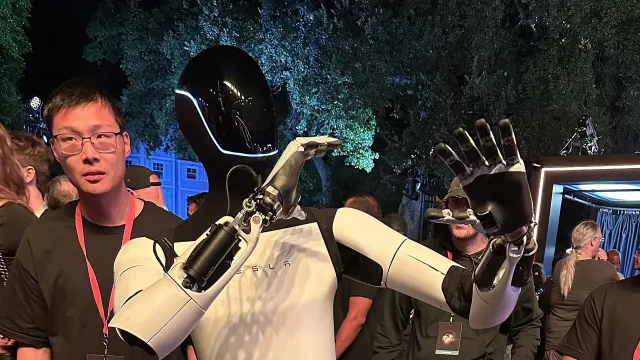
Still, some market observers caution against stitching together contrasting industries, warning of a potential “conglomerate discount” if investors struggle to value a business spanning electric cars, orbital rockets, humanoid robots, and orbital internet. Whether the special committees decide to advance formal merger terms is expected to emerge in the coming months.