A core group of OPEC+ oil producers agreed Sunday to keep production targets unchanged for November, extending a pause in quota increases for a second straight month as the war with Iran continues to limit how much crude Gulf members can ship.
The seven countries — Algeria, Iraq, Kazakhstan, Kuwait, Oman, Russia and Saudi Arabia — reached the decision in a short online meeting, CNBC reported. In a statement posted by OPEC, they said November’s required production would stay at September 2026 levels. The group said it would keep holding monthly meetings to review market conditions, and its next session is set for Nov. 1.
Taken together, the seven members’ quotas add up to about 31 million barrels a day, according to The National.
The outcome matched market expectations. The group spent much of this year raising its official targets following a long stretch of cuts, but the higher quotas have largely existed on paper. Export disruptions tied to the war have kept Gulf producers pumping well below their allowed levels, with shipments in recent months swinging between 60% and 80% of normal, CNBC reported. The fighting began Feb. 28 with U.S. and Israeli attacks on Iran, according to the AP.
The seven core members pumped 25 million barrels a day in August, according to OPEC data cited by CNBC. That was up 630,000 barrels a day from July but still roughly 5 million below February, before the war.
“Despite rising flows through the Strait of Hormuz, their output levels remain well below quota,” UBS analyst Giovanni Staunovo said, according to CNBC. He added that “the oil market remains tight.”
Prices stay high despite reserve release
Brent crude, the international benchmark, settled at $102.25 a barrel Friday, little changed on the day, while West Texas Intermediate, the main U.S. benchmark, fell $1.76 to $91.11, CNBC reported. Brent was about $73 before the war, CNBC said, and it touched an intraday high of $126 in late April, according to The National.
U.S. crude fell after the Group of Seven nations said Friday they would tap emergency stocks for 100 million barrels of crude and fuel products over four months, in an effort to be coordinated by the International Energy Agency. G7 leaders promised a “front-loaded substantial diesel release within the first 20 days,” the AP reported. They also agreed not to restrict energy exports to one another.
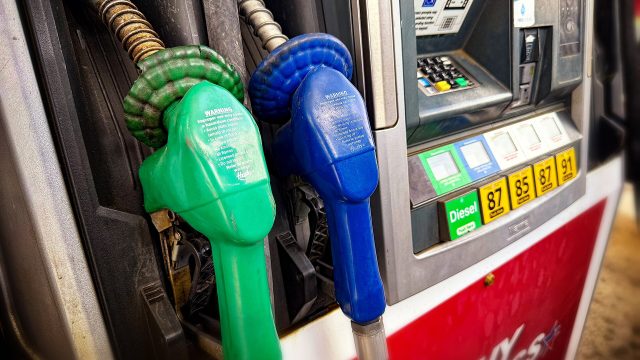
Diesel has been a particular strain for U.S. businesses and households. The national average was $6.37 a gallon on Friday, according to AAA, after reaching a record $6.52 on Sept. 22, the AP reported. The high prices have squeezed farmers, truckers and other heavy users of the fuel.
What to watch
OPEC+ also still has about 2 million barrels a day of output cuts, agreed in 2022, that remain in place through the end of the year, The National reported. The group is reviewing each member’s production capacity to set quotas for 2027, a process the war has delayed, industry sources told Reuters, according to CNBC. Sources have said changes to output are unlikely before 2027.
The next signals for fuel prices will come from how quickly the G7 diesel release reaches the market, from any change in Gulf export volumes and from the producers’ Nov. 1 meeting.