The world’s largest industrial democracies have agreed to draw 100 million barrels of oil and fuel from emergency reserves over the next four months, an effort to cool diesel prices that have hit records in the United States and Europe since the Iran war began in late February. The early releases will focus on diesel, the fuel that keeps trucks, farm machinery and much of the freight economy moving.
The Group of Seven announced the plan Friday after an emergency videoconference chaired by French President Emmanuel Macron, whose country holds the group’s rotating presidency. The International Energy Agency will coordinate the release, which is set to start immediately, with a “substantial diesel release” promised within the first 20 days.
The G7 is made up of the United States, Canada, France, Germany, Italy, Japan and the United Kingdom, with the European Union also taking part.
Why diesel is so expensive
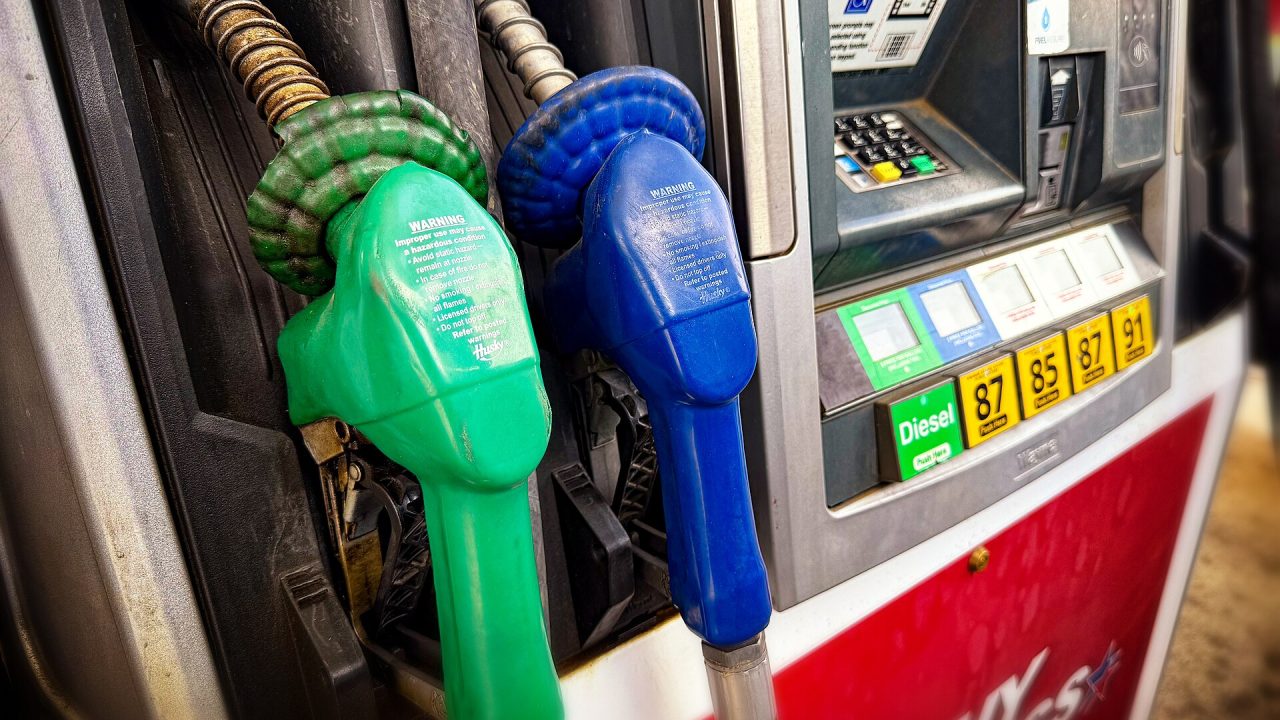
The U.S. average price of diesel stood at $6.37 a gallon on Friday, according to AAA figures cited by The Associated Press, down slightly from a record of more than $6.50 set on Sept. 22. NBC News reported that diesel has climbed about 70% since late February, when the United States and Israel attacked Iran.
Several forces are squeezing supply at the same time. War damage and blocked shipping routes have cut fuel exports from Persian Gulf producers, AP reported. Russia has halted diesel exports after Ukrainian drone attacks damaged its refineries, leaving former buyers such as Turkey and Latin American countries to compete with Europe for what remains. And many American and European refineries are already running at or near full capacity, according to NBC News.
Europe has been hit especially hard. NPR reported that diesel prices there have more than doubled since the war began, reaching about $10 a gallon in France. The country burns through roughly 600,000 barrels of diesel daily and relies on imports for about half.
How the deal came together
The deal came after the Trump administration spent a week leaning on European governments, especially France and Germany, to open their diesel stockpiles, NBC News reported. President Donald Trump had also publicly weighed a ban on U.S. diesel exports, a move analysts warned could backfire by driving global prices higher and eventually tightening gasoline supplies.
The G7 statement included a pledge that members will not restrict energy exports to one another. Asked Friday at the White House about an export ban, Trump said, “We’re not going to be doing the export ban.”
Will it lower prices?
Analysts expect some relief, though not a dramatic drop. Andy Lipow, president of Lipow Oil Associates, said the release could temporarily lower diesel prices by about 25 cents a gallon and would roughly offset the Russian supply lost to that country’s export ban, but would do little to add refining capacity, NBC News reported. Michael Lynch, a distinguished fellow at the Energy Policy Research Foundation, said that if Europe needs less American diesel, U.S. prices could fall 25 to 50 cents a gallon after a few weeks, according to AP.
Some details remain unclear. Pavel Molchanov, an investment strategy analyst at Raymond James, said it was not clear whether the 100 million barrels comes on top of the 426 million barrels of oil and fuel that IEA members pledged in March or is the final piece of that earlier commitment, AP reported. The G7 statement said the release takes into account commitments already fulfilled, and members agreed to confer through the IEA soon on whether more diesel should be released. Jim Krane, an energy researcher at Rice University’s Baker Institute, warned that drawing down reserves leaves Europe with less protection against future shocks and that the stockpiles will eventually have to be refilled, ideally when prices are low, AP reported.
Crude oil remains costly. Brent, the global benchmark, settled at $102.25 a barrel on Friday, essentially unchanged for the day and up more than 60% since the start of the year, according to NBC News.
What to watch
The first test comes over the next three weeks, when the front-loaded diesel release is supposed to reach the market. Watch weekly pump-price data for signs of relief, whether G7 members agree to release more diesel, and whether other steps Macron described, including lowering tanker insurance costs and getting more ships through the Strait of Hormuz, make headway. The stakes are political as well as economic: Trump and congressional Republicans face voters in the Nov. 3 midterm elections, and an AP-NORC poll found approval of Trump’s handling of the economy at a new low.