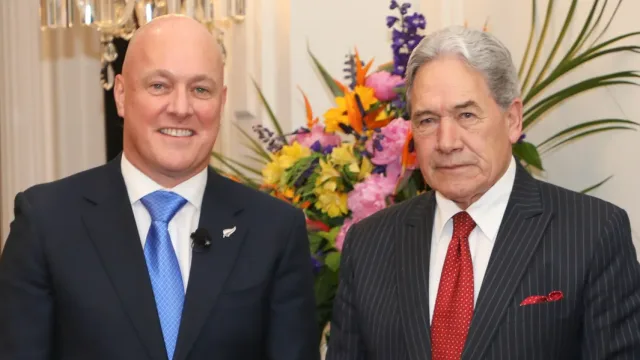
JERUSALEM — Israeli President Isaac Herzog on Saturday tapped opposition figure Gadi Eisenkot to assemble the country’s next government, passing over incumbent Prime Minister Benjamin Netanyahu after a deadlocked national election.
Herzog informed both political leaders of his choice Saturday evening, according to statements from the president’s office reported by international news outlets. Herzog is scheduled to formally present Eisenkot with the mandate during a ceremony at the presidential residence in Jerusalem on Sunday at 5 p.m. local time, NPR reported.
Eisenkot, a 66-year-old former military chief of staff who leads the centrist Yashar party, will have an initial window of 28 days to negotiate a governing coalition. Herzog can grant a 14-day extension if needed, providing up to six weeks to assemble a working majority in the 120-seat Knesset.
“Now is the time to form a national emergency government. I will do everything to ensure we are worthy,” Eisenkot posted on social media platform X, according to BBC News.
A Divided Parliament
The presidential decision followed consultations with party leaders after the Oct. 27 general election produced no clear majority. In the balloting, Netanyahu’s right-wing and religious coalition secured 53 seats, with his Likud party taking 27, NPR reported. Eisenkot’s four-party opposition bloc captured 48 seats, with Yashar winning 21.
Two Arab-led political coalitions, the United Arab List and the Joint List, earned a record combined total of 19 seats, the BBC reported. Endorsements from those factions gave Eisenkot 67 recommendations for the premiership, compared to 46 for Netanyahu, Herzog’s office announced.
Under Israeli law, the head of state holds wide latitude to designate the candidate judged most capable of establishing a functioning coalition, rather than automatically naming the leader of the largest single party, according to the BBC.
Obstacles to a Majority
Despite securing the mandate, Eisenkot faces a complicated route to reach the required 61-seat threshold. Before the vote, Eisenkot ruled out establishing an administration alongside Arab-led parties, Al Jazeera reported. Without their direct entry into a coalition, Eisenkot would need to entice other factions, such as the ultra-Orthodox Shas and United Torah Judaism parties, or attempt to run a minority government reliant on external parliamentary votes.
Ahmad Tibi, a prominent lawmaker with the Joint List, told Al Jazeera that the Arab-led alliance endorsed Eisenkot primarily to unseat Netanyahu’s right-wing administration. Tibi suggested Eisenkot may attempt to lead a minority government sustained by external Arab backing, Al Jazeera reported.
Netanyahu fiercely criticized any governing arrangement reliant on Arab parties. In a prerecorded address released hours before Herzog’s announcement, Netanyahu claimed that an opposition-led administration relying on such support would dismantle Israel from within, according to Al Jazeera.
What Lies Ahead
Eisenkot directed the Israel Defense Forces from 2015 to 2019. Following the Oct. 7, 2023, attacks, he participated as an observer in Netanyahu’s emergency war cabinet before resigning the following year over disagreements regarding war strategy and hostage negotiations, NPR reported. Eisenkot’s son, Gal, and two nephews were killed during the fighting in Gaza.
If Eisenkot cannot muster 61 seats within the allotted timeframe, Herzog may grant a 14-day extension or assign the mandate to a second lawmaker, according to news reports. If that candidate also falls short, a majority of parliament members can select a third contender for a final two-week attempt.
Should all coalition negotiations collapse, Israel would be forced to hold another snap election within 90 days, leaving Netanyahu in place as caretaker prime minister throughout the interim period.