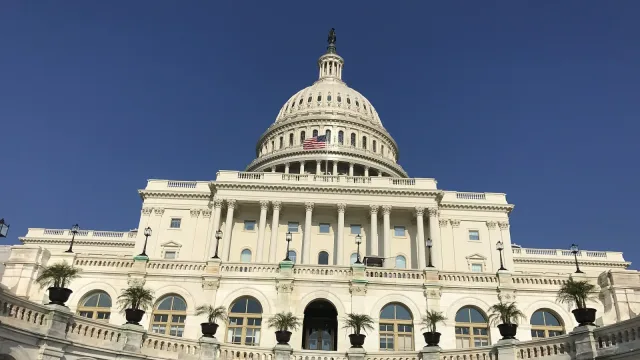
With two days remaining before the midterm elections, both parties are mounting intense closing arguments as voters weigh economic pressures and foreign conflict. Democrats need a net pickup of just three seats in the House and four in the Senate to claim majorities in both chambers, an outcome that would usher in divided government and dramatically limit President Donald Trump’s ability to govern unchecked.
National surveys indicate a favorable environment for Democrats, with the RealClearPolling average showing them ahead of Republicans by 51.5 percent to 43.1 percent, Al Jazeera reported. But with more than 51 million ballots already cast, the outcome will hinge on tightly contested individual races nationwide.
Trump signals veto showdowns
Even if Democrats flip one or both chambers, their ability to pass legislation will be constrained by the executive branch. Trump has already indicated he will push back aggressively against a Democratic-controlled Congress. According to CNN, Trump said last week: “What happens is I veto everything, and then the Democrats come and they want to make a deal.”
Because Democrats are not projected to hold the two-thirds majorities necessary to override presidential vetoes, any major legislative proposals would have to be attached to must-pass measures, such as annual spending bills. House Democratic Leader Hakeem Jeffries has organized working groups focused on reducing everyday living costs, CNN reported, but efforts to roll back Trump’s tariffs or curb military action in the war on Iran would require Republican support to clear legislative hurdles.
Subpoena power and oversight
The most immediate shift of a Democratic victory would be felt through congressional investigations. Securing committee gavels gives the majority party unilateral subpoena authority and control over public hearings.
According to CNN, Democrats are preparing to open inquiries into Elon Musk and the Department of Government Efficiency that was established with Trump’s backing, as well as government contracts granted to Musk’s companies. Lawmakers would also likely scrutinize business earnings by Trump’s adult children and review administration actions aimed at curbing agencies such as the Department of Education. High-ranking Cabinet figures, including Defense Secretary Pete Hegseth and Attorney General Todd Blanche, would face aggressive oversight schedules before congressional committees.
Spending fights and the debt ceiling
Democrats plan to leverage the congressional power of the purse to challenge key portions of the Republican domestic agenda. Republican legislation known as the One Big Beautiful Bill Act instituted federal work rules for Medicaid starting Jan. 1 and introduced state error-rate penalties for food stamps. That provision contributed to more than 5.5 million people losing food assistance, according to data from the Food Research & Action Center cited by CNN.
Healthcare remains another critical flashpoint. Democrats are pushing to restore enhanced Affordable Care Act premium subsidies, which expired at the end of 2025 and triggered a 58 percent surge in premiums this year. However, permanently extending those subsidies carries an estimated 10-year cost of $350 billion, according to the Congressional Budget Office. With the national debt having surpassed $40 trillion, lawmakers will also face another high-stakes battle over raising the federal debt limit in 2027.
Crucial races will decide the outcome
Campaign activity reached a fever pitch on Sunday as leaders made their final appeals. Trump was scheduled to appear at campaign events in Iowa and Kansas, reversing an earlier decision to cancel the visits, Al Jazeera reported. In Kansas, Republican Sen. Roger Marshall is defending his seat against Democrat Adam Hamilton in a state that has not sent a Democrat to the Senate since 1932. In Michigan, Democratic Senate nominee Abdul El-Sayed scheduled rallies in Detroit and Southfield for his contest against Republican Mike Rogers.
Control of the House will be decided in 16 districts rated as tossups by ABC News, spanning battlegrounds such as Colorado, Florida, Michigan, and Texas. Polls begin closing on Tuesday evening, when initial vote tallies will start to reveal whether Washington enters a new era of divided government.