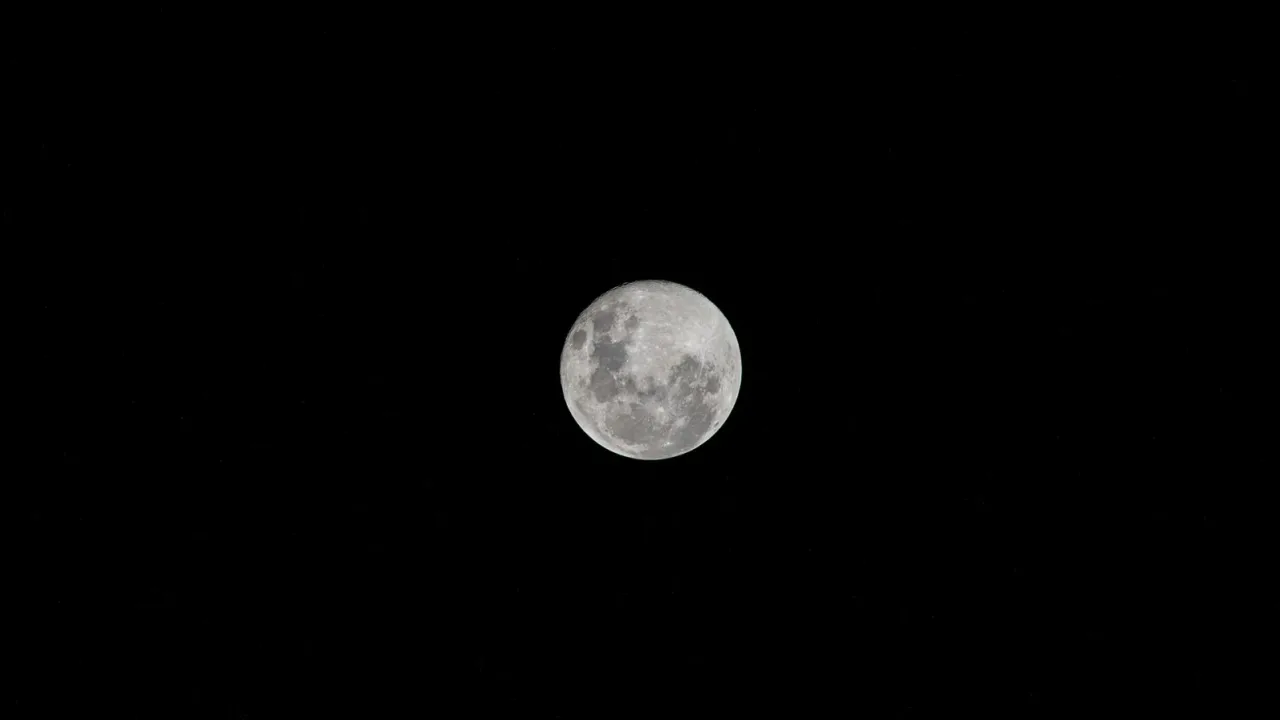
Skywatchers across the country will be treated to a dazzling celestial display this weekend as October’s full Hunter’s Moon rises on the eastern horizon just around sunset.
Astronomical forecasts indicate the moon will reach its peak full phase early Monday morning, Oct. 26. Live Science reported the exact moment of fullness occurs at 12:11 a.m. Eastern Daylight Time, while Astronomy magazine placed the timing at 12:12 a.m. EDT. Despite the late-night official peak, the lunar orb will appear completely round to casual observers on both Sunday and Monday evenings, creating back-to-back viewing opportunities.
How and when to watch
For the clearest view, astronomers recommend heading outside shortly before sunset and finding an elevated vantage point, open park or coastal clearing with an unobstructed view toward the east. Man-made structures and dense tree lines can block the horizon and postpone the exact moment the moon comes into sight.
Sunday evening offers an early glimpse as the waxing moon ascends just before dusk in the constellation Aries. Observers looking toward the moon will also be able to spot Saturn shining steadily with the naked eye to its upper right, according to Live Science. On Monday, the moon climbs into a darker sky just after sunset, positioning itself directly above the Pleiades star cluster, cataloged as M45.
Viewers might also notice an orange or deep reddish hue during early moonrise. According to the BBC, this coloration is caused by atmospheric scattering: shorter blue wavelengths of light scatter easily through thick layers of air near the ground, leaving the longer red and orange wavelengths to travel directly to human eyes.
The moon will likely seem exceptionally large right as it clears the skyline due to the “moon illusion.” Both the BBC and Live Science noted that this phenomenon is a trick of the human brain, which misjudges size when our eyes compare the celestial orb to familiar reference points on the horizon like distant buildings and trees.
A busy night for stargazers
Beyond the moon itself, skywatchers may be able to catch a few lingering shooting stars. The annual Orionid meteor shower is currently passing its peak, the BBC reported. However, the brilliance of the lunar disk will likely wash out fainter streaks, so patience and dark-adapted vision are essential for anyone hoping to spot a meteor.
Those equipped with backyard telescopes can also explore lunar topography. As Astronomy magazine noted, sunlight shines straight down during a full moon, reducing surface shadows, but bright ray systems extending from impact craters remain prominent. Craters such as Tycho in the southern highlands display ray patterns that stretch for hundreds of miles across the surface.
Folklore and upcoming supermoons
The name “Hunter’s Moon” traces back to Anglo-Saxon traditions, marking the seasonal cue for hunters to gather and preserve provisions before winter weather set in, according to Time and Date. Native American communities have traditionally referred to the October moon by other seasonal names, including the Falling Leaves Moon, the Freezing Moon and the Drying Rice Moon.
While this particular lunation is not classified as a supermoon, it acts as a prelude to a rare sequence. Live Science reported that four consecutive supermoons will follow, beginning with the Beaver Moon on Nov. 24 and continuing through February. Supermoons happen whenever the moon reaches its full phase near perigee, its closest point to Earth along its elliptical orbit.
Our natural satellite will hit perigee for the current cycle on Wednesday, Oct. 28, at 2:06 p.m. EDT, coming within 226,433 miles of Earth, according to Astronomy magazine.