WASHINGTON — The U.S. Department of State on Wednesday ordered nonemergency government personnel and their relatives to leave Saudi Arabia as a wave of drone and missile strikes launched by Yemen's Iran-backed Houthi movement intensifies across the kingdom.
State Department spokesperson Tommy Pigott announced the mandatory departure directive on social media, pointing directly to the mounting danger posed by the Yemeni rebel group. Pigott said the militants have increasingly assaulted critical infrastructure and civilian airports, inflicting casualties and triggering severe disruptions to regional travel.
Officials emphasized that the mandatory withdrawal instruction was confined to missions inside Saudi Arabia, pushing back against reports suggesting a wider evacuation across the Persian Gulf. However, CBS News reported that several other regional U.S. embassies have trimmed staff levels under a restricted operations status enacted in August.
Deadly Strikes on Air and Energy Infrastructure
The evacuation order follows an abrupt escalation in Houthi strikes targeting Saudi urban centers, energy assets and commercial transit hubs. The Armed Conflict Location & Event Data Project recorded that attempted and completed Houthi strikes against the kingdom more than doubled within a single week this month, Fox News reported.
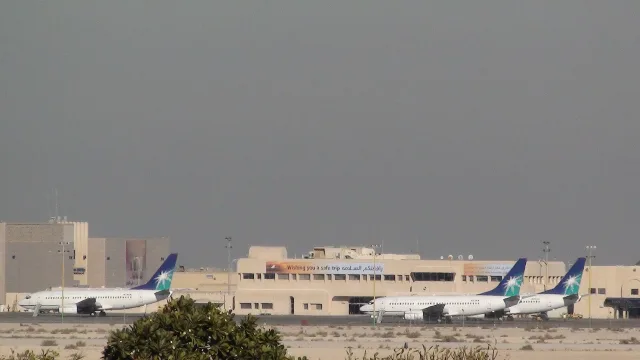
Recent barrages have targeted airfields in Dammam, Abha, Jizan, Najran and Riyadh since Oct. 5. The deadliest incident occurred at Riyadh's King Khalid International Airport earlier this month. News accounts differed slightly on the casualty count: CBS News reported that the airport strike killed 12 people, including one American, and wounded more than 300, while Fox News reported that at least 13 people died.
Assaults have also struck energy installations deep inside the country. On Tuesday, falling debris from an intercepted drone targeting the Shaybah oil field in the Eastern Province killed two foreign workers and injured two others, Saudi authorities reported. A security alert released Wednesday by the U.S. Embassy in Riyadh warned that American government staff now require high-level authorization before using any civilian airport across Saudi Arabia.
Allies Rally While Washington Weighs Options
The intensifying campaign has stretched air defenses across the Arabian Peninsula. Saudi Arabia has appealed to Western partners for more air defense interceptors, though Secretary of State Marco Rubio noted on Tuesday that global inventories face intense strain.
“I also talked to Saudi Arabia today; they'd like interceptors. Israel would like interceptors. We would like interceptors,” Rubio said, describing the munitions as arguably the most sought-after defense hardware in the world.
Foreign partners have started stepping forward to bolster the kingdom. Britain announced on Tuesday that it would send Typhoon fighter jets to assist in protecting Saudi cities and essential facilities, and Egypt has offered defense assistance. Meanwhile, President Donald Trump has kept the door open to direct American military intervention against Houthi positions, telling reporters earlier this month that the administration is reviewing the possibility of joining strikes.
Whether the White House will authorize new military action remains undetermined, but U.S. forces continue providing intelligence and target coordination to the Saudi-led coalition as regional fighting threatens vital commercial waterways in the Red Sea and Gulf of Aden.