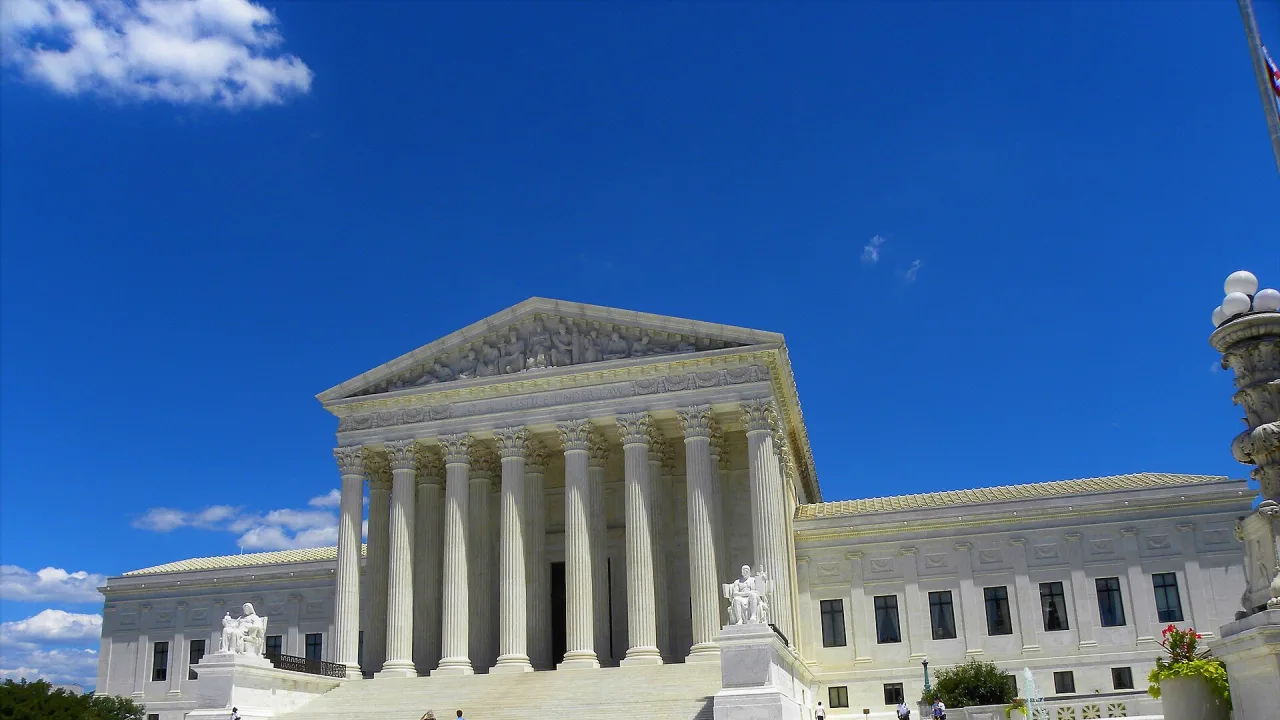
WASHINGTON — The Supreme Court on Wednesday rejected an emergency appeal from the Trump administration, refusing to reinstate federal rules that would have eliminated hormone therapies and other gender-affirming care for incarcerated transgender people.
In a brief, unsigned order issued without written reasoning, the justices declined to freeze a lower court injunction that halted the Bureau of Prisons directives. Justices Clarence Thomas and Samuel Alito were the lone publicly recorded dissents, stating they would have granted the White House request.
The high court action keeps in place protections for federal prisoners while legal challenges move forward, providing a rare victory for civil rights advocates before a 6-3 conservative bench that has previously upheld restrictions on transgender individuals.
Challenging an Abrupt Shift
The disputed regulations originated following a directive from President Donald Trump instructing executive departments to define sex strictly along binary biological lines and restrict federal money from funding gender transition care. The Bureau of Prisons subsequently introduced rules barring surgeries, hormone treatments and personal accommodations like makeup, wigs and padding.
Under the administration plan, inmates diagnosed with gender dysphoria could only access mental health counseling and certain psychiatric prescriptions, while individuals already undergoing hormone therapy faced gradual tapering to cut off medication.
Advocates with the American Civil Liberties Union filed a lawsuit on behalf of three incarcerated plaintiffs, Alishea Kingdom, Jas Kapule and Solo Nichols, along with a class of federal inmates. The lawsuit contended the drastic regulatory rollback breached the Eighth Amendment protection against cruel and unusual punishment and flouted federal procedural laws governing agency decisions.
Lawyers for the inmates pointed out that federal penitentiaries have routinely furnished hormone treatments to prisoners experiencing gender dysphoria since 1992. The ACLU estimated that nearly 1,000 people in custody stood to lose essential medical care under the White House initiative, though outside estimates from the Osborne Association indicated nearly 2,200 transgender individuals were held across federal facilities.
Judicial Rebukes in Lower Courts
U.S. District Judge Royce Lamberth, who was appointed by President Ronald Reagan, blocked the prison directives earlier this year. In his ruling, Lamberth determined that prison leadership failed to evaluate the consequences of dismantling decades of established medical practices.
“Despite providing gender-affirming care to inmates in its custody for years, the government cites in the Program Statement zero evidence from its own medical or mental health professionals to support its conclusions,” Lamberth wrote, adding that officials showed no proof that earlier protocols were “ineffective or harmful.”
The judge stressed that the bench would “not wade into the culture war being waged against transgender individuals,” instead finding the government made arbitrary changes without adequate justification. Last month, a divided three-judge panel on the U.S. Court of Appeals for the District of Columbia Circuit voted 2-1 to keep Lamberth’s block active.
Solicitor General D. John Sauer appealed directly to the Supreme Court, insisting the trial judge had engaged in “substituting its own policy judgment for that of the agency” and urged the justices to respect decisions made by corrections administrators. Sauer asserted that deference to prison officials meant courts should not second-guess the choice to address gender dysphoria using psychotherapy instead of physical medical interventions.
Following Wednesday’s action by the high court, the injunction remains in effect as substantive litigation over the federal prison rules proceeds through the judicial system.