Bleached corals hovering near death can make a rapid, full recovery if placed in direct physical contact with healthy fragments of the same genetic clone, according to a Stanford University study published Wednesday in Science Advances.
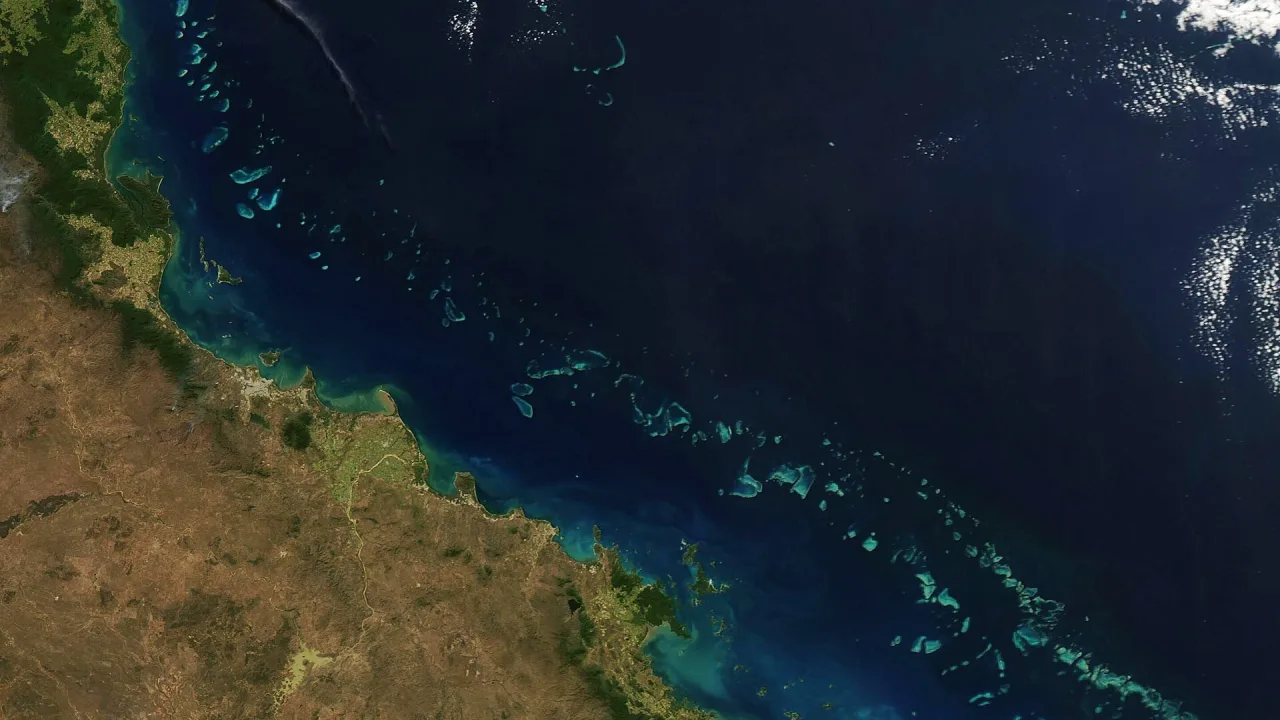
Coral reefs support roughly a quarter of all marine life despite covering only a tiny fraction of the ocean floor, according to the National Oceanic and Atmospheric Administration. When ocean waters reach abnormally high temperatures, corals expel the microscopic, photosynthetic algae that inhabit their tissue and provide them with food. This process turns the animals stark white and often leads to starvation and mortality if conditions do not quickly normalize.
The breakthrough originated from a serendipitous laboratory observation in 2025, ABC News and Euronews reported. Steve Palumbi, a professor of oceans and marine biology at Stanford’s Doerr School of Sustainability, spotted two coral fragments that had accidentally fallen against each other in an aquarium. One piece was bleached while the other remained healthy, yet color had begun returning at the exact point where their tissues touched.
A rapid transfer of algae
Danny Collins, a doctoral student at Stanford and lead author of the study, had been investigating pathogen transmission between marine plastics and corals when he teamed up with Palumbi to test whether physical contact could instead deliver beneficial symbiotic algae to heat-stressed corals.
In controlled laboratory trials, researchers paired 10 sets of bleached and healthy coral fragments taken from identical colonies. Five pairs were placed in direct physical contact, while the remaining five were separated by a distance of only a few millimeters. Within seven weeks, all five bleached pieces touching their healthy twins achieved full recovery, whereas the separated bleached corals died, Euronews reported.
Microscopic analysis revealed that the coral tissues quickly fused together to create tiny channels between the fragments. Collins told ABC News that this tissue bridge served as a “nutrient highway” that allowed the healthy corals to transfer algal symbionts across to the bleached fragments in as little as 36 hours.
Once inside the damaged corals, the transferred algae began multiplying at extraordinary speeds. Palumbi told Euronews that the algae doubled every four days during the second week, dividing roughly 10 times faster than the rates typically observed in wild corals. This rapid growth allowed damaged pieces to continue recovering on their own even after being separated following a single week of contact.
Barriers to scaling in the wild
Despite the recovery seen in the lab, researchers caution that the direct-contact method cannot simply be deployed across wild reefs. The healing process only functioned when the corals were exact genetic clones. When researchers attempted to pair corals with different genetic backgrounds, the tissues failed to fuse and instead engaged in antagonistic behavior akin to an organ transplant rejection, Collins told ABC News.
The findings arrive amid growing urgency for marine ecosystems. According to the Global Coral Reef Monitoring Network, the planet has lost approximately 10 percent of its living coral cover over the past 40 years. Between 2023 and 2024 alone, living coral declined by nearly 9 percent during a massive global bleaching event that NOAA reported exposed an estimated 84 percent of the world’s reef area to bleaching-level heat stress.
Next steps for reef restoration
Researchers stress that laboratory interventions cannot shield reefs from the fundamental driver of mass bleaching: warming ocean temperatures. Palumbi noted to Euronews that while the research provides a potential recovery tool for the aftermath of marine heat waves, global action is still needed to cut greenhouse gas emissions, curb water pollution and reduce overfishing.
Moving forward, the Stanford research team is exploring whether beneficial algal symbionts can be extracted directly from healthy donor corals and introduced into bleached colonies without requiring physical contact or genetic matching. Scientists hope further testing will determine whether the technique can be adapted to assist large-scale reef restoration projects worldwide.