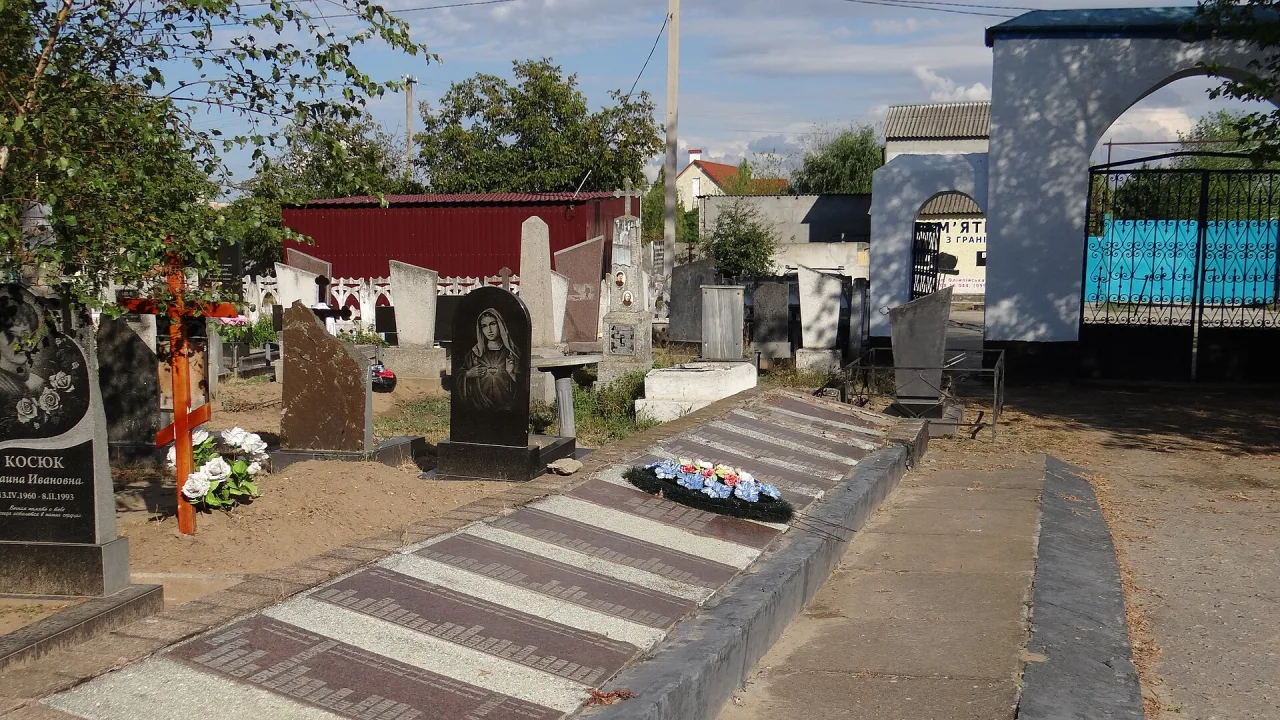
Trapped along the front lines in Ukraine’s southern Kherson region, fewer than 2,000 residents in the Russian-occupied city of Oleshky face looming starvation and disease as winter approaches without basic utilities or safe evacuation routes, the Associated Press reported.
Perched directly across the Dnipro River from Ukrainian-held territory, Oleshky has lost electricity, heating and running water. Roads leading out of the community are strewn with landmines and burned vehicles, while military drones constantly monitor the skies, according to evacuees and officials.
A treacherous escape route
Once home to roughly 24,000 people before Russian troops seized it on the opening day of the full-scale invasion in 2022, Oleshky has endured widespread destruction. Flooding caused by the collapse of the Kakhovka Dam in June 2023 caused further devastation. Although the city’s population has plummeted, Ukrainian Human Rights Ombudsman Dmytro Lubinets estimated in September that more than 6,000 people, including about 200 children, may still reside in Oleshky and nearby settlements.
For those attempting to flee, the primary route leads 12 miles to the Russian-occupied village of Radensk. Local authorities and evacuees refer to this stretch as the “road of death.” Tetiana Hasanenko, the exiled head of Oleshky’s Ukrainian military administration, stated that uncollected corpses remain along the corridor following repeated artillery strikes and mine blasts.
Lt. Yevhen Voronetskyi, a spokesperson for Ukraine’s 34th Separate Marine Brigade, told the AP that Russian units placed landmines along exit roads, while Ukrainian forces have deployed drone-laid mines on forest trails to hinder enemy troop movements. He noted that the Ukrainian military has used heavy drones since September to deliver more than seven tons of essential provisions, including flour, canned goods and insulin, to stranded civilians across the river.
Humanitarian gridlock and diplomatic appeals
Life inside the city has deteriorated to severe levels. The United Nations human rights office confirmed that the last regular ground convoy carrying food into Oleshky arrived on May 26. Without electricity, bodies are decomposing in the morgue, and Hasanenko reported that roughly 100 corpses are stored in the basement of the local hospital.
Both sides continue to trade blame for the standoff. Russian officials have accused Ukraine of impeding relief efforts and civilian departures, while Ukrainian President Volodymyr Zelenskyy argued at a recent forum in Poland that Moscow is holding residents hostage in a city “razed to the ground.”
Diplomatic initiatives have brought little relief. In a telephone conversation on Friday, Pope Leo XIV pressed Russian President Vladimir Putin to implement a local ceasefire for humanitarian aid and evacuations, the Vatican announced. While the Kremlin indicated Putin supported Vatican humanitarian initiatives, no formal agreement has been established between Kyiv and Moscow.
Whether international intermediaries can negotiate a safe passage remains uncertain as temperatures drop and bad weather threatens to make the unpaved, mined routes completely impassable.