A joint maritime search operation continued Saturday for 11 people missing in the Pacific Ocean after a vessel carrying nearly 30 individuals sank off the coast of Baja California, authorities said.
Emergency crews pulled 16 survivors from the water early Friday roughly 140 miles west of Ensenada, Mexico, following a late-night distress transmission. The Mexican consulate in San Diego confirmed that all 16 rescued individuals are Mexican citizens. Survivors reported that a total of 27 passengers had been on board before the vessel foundered.
Dangerous Nighttime Rescue
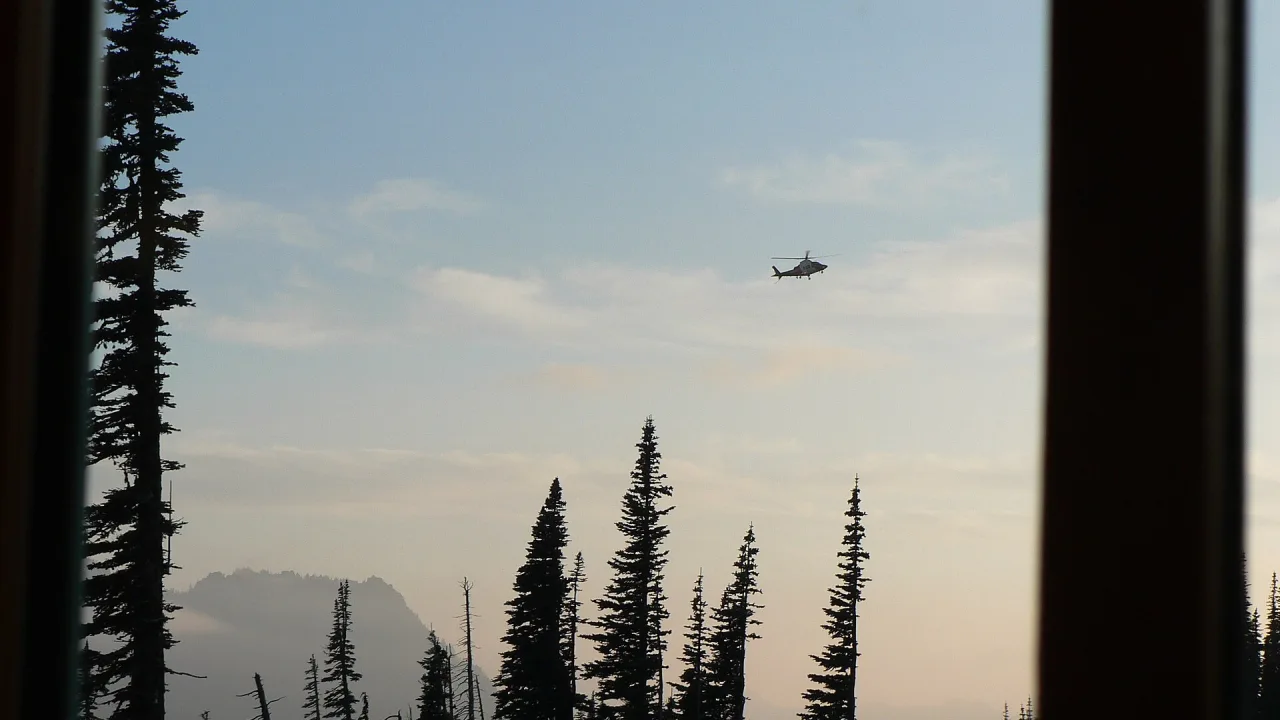
The incident began around 1 a.m. Friday when an emergency mayday message signaled that a vessel was taking on water far offshore, according to Coast Guard Lt. Santiago Tamburini. A rescue helicopter reached the coordinates roughly two hours later, finding survivors floating among scattered debris.
Coast Guard personnel, aided by a rescue swimmer, spent about 90 minutes hauling people from the ocean. Rescuers noted that while some passengers had life jackets, others were clinging to flotsam and holding onto one another to remain afloat. The boat itself had completely disappeared below the surface, leaving search teams unable to immediately determine the type or size of the craft.
Helicopters transported the survivors to Coast Guard headquarters in San Diego, where waiting ambulances took them to regional medical centers. Hospital and municipal officials said two patients arrived in critical condition. At least one person suffered injuries consistent with shark bites, while two others were treated for severe exposure to the cold water.
Suspected Smuggling Operations
Federal officials noted that the disaster occurred outside U.S. territorial boundaries along an ocean corridor frequently exploited by human smugglers seeking to bypass fortified land crossings. Small, open vessels known as pangas often embark on nighttime voyages from Baja California, occasionally traveling far out to sea or hundreds of miles north to elude detection.
“This case highlights the extreme dangers of taking to the sea,” said Capt. Robert Tucker, commander of the Coast Guard’s San Diego sector, in a statement reported by The San Diego Union-Tribune. “The vessel had a large number of people on board and was following a route normally used in illegal maritime smuggling operations.”
Weather conditions near the location at the time of the sinking featured winds near 10 knots and ocean swells around 5 feet, which National Weather Service meteorologists described as manageable for ocean-certified crafts but potentially perilous for smaller or overloaded boats. Officials pointed out that two regional tropical cyclones, Simon and Trudy, were not affecting conditions in that section of the Pacific.
Expanding the Pacific Grid
The ongoing search has encompassed hundreds of square nautical miles. Assets deployed in the mission include multiple Coast Guard helicopters, a fixed-wing aircraft, a Coast Guard cutter, a U.S. Navy combat ship and surface vessels launched by the Mexican Navy out of Ensenada.
U.S. Customs and Border Protection is questioning the survivors as part of an investigation into the voyage, according to ABC News. Legal analysts note that if any rescued passengers serve as witnesses in a criminal smuggling inquiry, they could potentially receive temporary humanitarian parole in the United States.
By Saturday evening, search crews had not located any additional passengers or recovered any bodies. Officials have not stated how long air and sea sweeps will continue as the window for locating more survivors narrows.