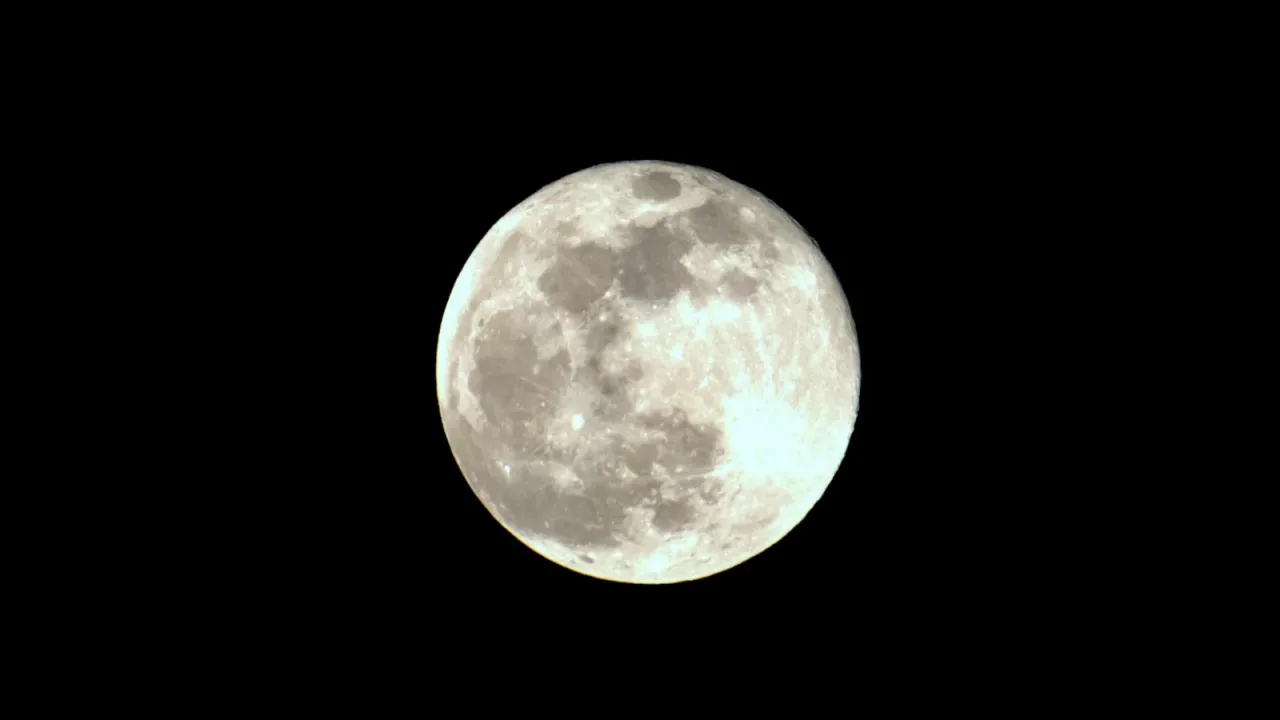
A series of three consecutive supermoons begins Tuesday with the arrival of November’s full Beaver Moon, an astronomical event that will also heighten coastal flooding risks across parts of the United States heading into Thanksgiving.
The moon will officially reach its full phase at 9:53 a.m. Eastern Time on Tuesday, Nov. 24, according to Live Science. Because the moon will sit beneath the horizon in North America at that moment, the optimal viewing opportunity will come at dusk on Tuesday evening when it ascends in the east as the sun sets in the west.
The science behind a supermoon
A supermoon develops whenever a full moon coincides with perigee, the point along its elliptical path where it travels closest to Earth. The distance between Earth and its natural satellite averages about 238,900 miles, but this proximity fluctuates each month.
Devon Salasin, head astronomer and area manager at Stargazing Moab, explained to National Geographic that astronomers refer to the alignment as a perigee-syzygy. NASA notes the informal designation typically applies when a full moon reaches within at least 90 percent of perigee.
While supermoons produce a brighter and slightly larger lunar disk, the difference is subtle. Salasin told National Geographic that the size shift is nearly imperceptible to the unaided human eye. When viewed near the horizon, however, an optical illusion frequently tricks the brain into perceiving the orb as much larger against trees, terrain, and distant buildings.
The Beaver Moon marks the smallest of the three upcoming supermoons, according to EarthSky. It will be followed in December by the full Cold Moon, which astrophysicist Fred Espenak calculated will be the nearest, biggest, and brightest full moon of 2026 and the closest approach to Earth since Jan. 2, 2018.
Origin of the Beaver Moon name
The moniker stems from seasonal wildlife behaviors across North America. The Old Farmer’s Almanac connects the name to beavers seeking shelter inside their lodges after gathering supplies ahead of winter, while TimeandDate notes nocturnal beavers traditionally build dams during this period under lunar light.
Other historical names include the Frost Moon and Snow Moon, AccuWeather reported. According to the Center for Native American Studies, the Anishinaabeg people know the late-fall event as Baashkaakodin Giizis, or the Freezing Moon.
King tides raise coastal flooding worries
Beyond offering a skywatching display, the celestial alignment poses physical challenges along vulnerable coastlines. When the sun, Earth, and moon align during a full moon, gravitational forces create wider variations between low and high water levels, AccuWeather reported.
Because the moon’s closer orbital position intensifies that gravitational pull, coastal zones are bracing for exceptionally high king tides through Thanksgiving week. Such tides can submerge low-lying roadways, parking areas, and sidewalks without any rainfall.
Municipalities in Southern California are taking defensive measures to protect beachfront infrastructure from elevated sea levels and pounding surf. Crews in Laguna Beach have deployed pumps, sandbags, and sand berms to counteract impending high water, following an October full moon that brought record water levels to tide gauges near Los Angeles and San Diego.
Meteorologists advise residents and holiday travelers along vulnerable coastlines to monitor local tide tables closely as higher-than-average ocean levels persist over the coming days.