Global crude prices climbed to their highest marks in more than five months on Friday, driven by escalating attacks on commercial vessels in the Middle East and growing concerns over a potential military offensive against Iran.
Brent crude, the international pricing standard, rose 1 percent on Friday morning to top $115 per barrel, The Guardian reported. The surge followed earlier gains on Wednesday, when Brent jumped by more than $2 to reach $110.85 per barrel, according to Al Jazeera.
The price spike comes as the conflict enters its eighth month. Energy markets were unsettled by warnings from Tehran that it would target regional oil infrastructure, undersea cables, data centers and artificial intelligence facilities if American and Israeli forces launch a fresh offensive against Iranian territory, The Guardian reported. Market analysts noted widespread expectations that U.S. and Israeli leadership might authorize attacks on Iranian energy infrastructure following the Nov. 3 midterm elections.
Tanker Attacks Mount Near Vital Chokepoints
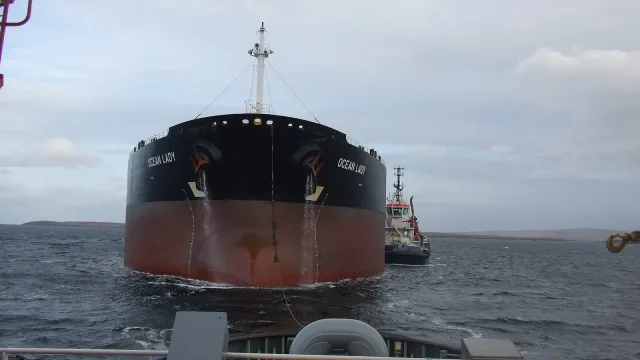
Tensions on key maritime transit corridors have intensified throughout the week. Iran’s Islamic Revolutionary Guard Corps claimed to have struck four commercial vessels in the Strait of Hormuz on Wednesday, The Guardian reported. Earlier in the week, the IRGC said two tankers caught fire after striking mines, and on Thursday claimed to have struck seven more ships, though officials in Washington dismissed that assertion, according to Al Jazeera.
The U.S. State Department instructed select diplomats and dependents of government personnel to evacuate Saudi Arabia amid ongoing drone and missile attacks launched by Houthi forces from Yemen, The Guardian reported. In September, the Houthis seized ground near the Bab al-Mandeb strait at the mouth of the Red Sea, further complicating maritime routes. Roughly one-fifth of global petroleum supplies typically passed through the Strait of Hormuz before the conflict began on Feb. 28.
Global Strategic Reserves Tapped to Multi-Decade Lows
The market volatility arrives while emergency stockpiles designed to cushion sudden supply disruptions remain severely depleted. Days after fighting began in March, member states of the International Energy Agency agreed to release 400 million barrels of emergency crude, Al Jazeera reported.
The U.S. Strategic Petroleum Reserve has since dropped to 283 million barrels, marking its lowest recorded volume since October 1982, according to the U.S. Department of Energy. Aaron Kildow, a senior crude analyst at Sparta Commodities, told Al Jazeera that worldwide strategic reserves—excluding stockpiles held by China and Iran—have fallen by nearly 327 million barrels since late December 2025.
Kildow estimated that only about 400 million barrels of usable emergency reserves remain available globally, with nearly half of that volume situated in Japan. Muyu Xu, a senior crude oil analyst at Kpler, estimated that a full closure of the Strait of Hormuz alongside Houthi disruptions could leave global markets facing a Middle Eastern crude shortfall of roughly 9.3 million barrels per day.
Whether diplomatic efforts can cool tensions before the November elections remains uncertain, leaving market participants watching for any fresh disruptions to regional tanker traffic or direct strikes on energy facilities.