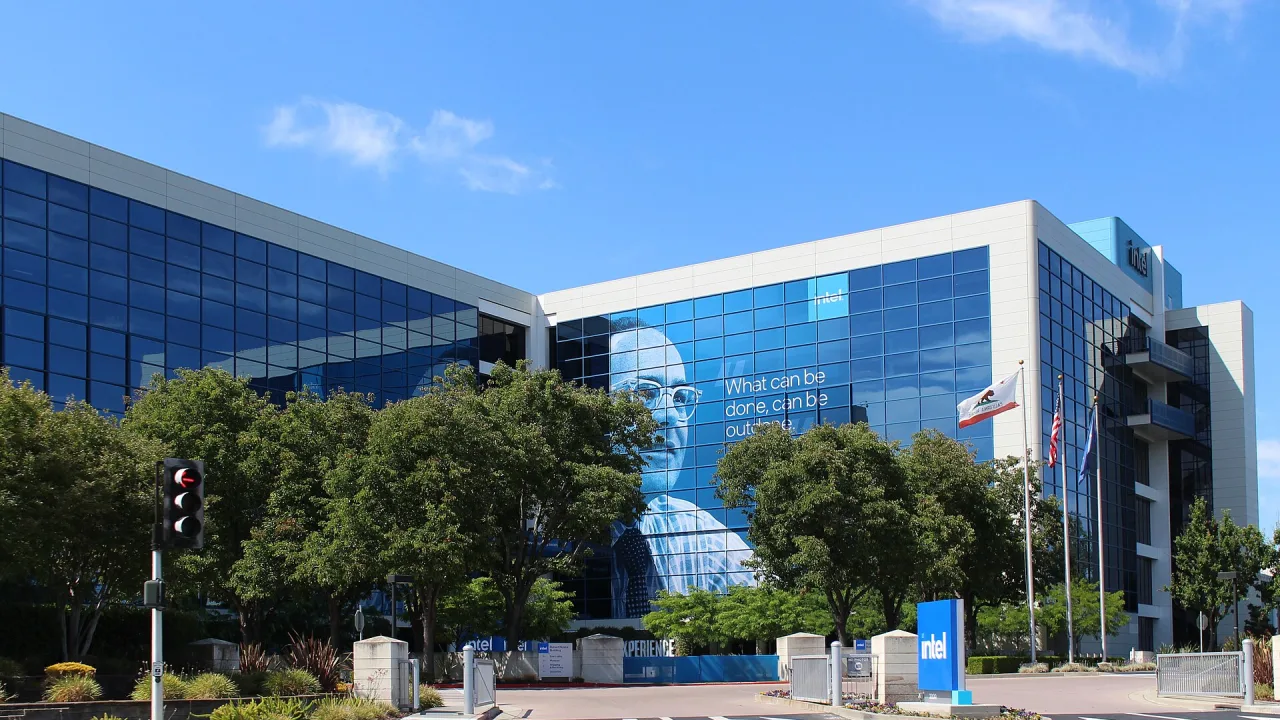
Intel shares plunged more than 20 percent in extended trading Thursday evening after the semiconductor manufacturer issued fourth-quarter guidance that fell significantly short of Wall Street targets, pointing to a persistent slowdown across the personal computer industry.
For the fourth quarter, Intel projected revenue between $15 billion and $16 billion, along with adjusted earnings of 25 cents per share, CNBC reported. Those numbers lagged well behind analyst expectations, which had anticipated $17 billion to $17.1 billion in revenue and earnings per share of 43 cents, according to data from LSEG reported by CNBC and Yahoo Finance.
PC Slump Offsets Strong AI Data Center Sales
The company delivered stronger-than-expected earnings for its third quarter, with adjusted earnings coming in at 52 cents per share against Wall Street estimates of 41 cents, according to Yahoo Finance. Revenue reached $16.5 billion, representing a 21 percent rise from $13.7 billion a year earlier.
However, strength in cloud computing could not counteract the drop in traditional hardware. Intel reported that its client computing and physical AI division generated $8.1 billion in the third quarter, a 5 percent decrease year over year that fell short of the $8.8 billion consensus estimate tracked by Yahoo Finance. Conversely, the company’s data center and artificial intelligence unit posted $7.3 billion in revenue, up 78 percent from the prior year as demand for server processors surged.
Company executives warned that sluggish conditions in the PC sector will linger. “We see the PC slowdown continuing at least through the first half of next year,” Intel Chief Financial Officer David Zinsner said in a statement.
The downturn stems from multiple compounding factors. Counterpoint Research data cited by CNBC showed worldwide PC shipments fell 4 percent in the second quarter amid escalating memory and hardware prices. In addition, personal computer makers face difficult comparisons to the previous year, when Microsoft ended support for Windows 10 and triggered a wave of enterprise workstation upgrades, Yahoo Finance reported.
Deadly Plant Accident Adds to Supply Pressures
Intel’s immediate supply capabilities were further hit by an explosion earlier in October at a manufacturing facility in Israel. The blast killed two personnel and severely hurt a third, according to CNBC. Intel Chief Executive Officer Lip-Bu Tan termed the event an “unfortunate and tragic accident” that triggered an extended operational halt and hindered shipments of 10-nanometer microprocessors.
Zinsner said the disruption will cost Intel roughly $600 million in lost sales across two fiscal quarters, with Yahoo Finance reporting that roughly $300 million of that hit lands directly in the fourth quarter.
Shortages extend across the wider component supply chain. Tan noted that the technology sector continues to endure historic component constraints driven by explosive demand for AI computing infrastructure. Zinsner cautioned that severe shortages in system memory are unlikely to clear up next year or throughout 2027, according to reporting by The Verge.
Despite component headwinds, Intel stated that its low-cost Wildcat Lake mobile processors have sold out as laptop builders pursue budget-conscious designs. Intel’s dedicated chip foundry arm also grew, delivering $6.7 billion in third-quarter revenue to beat analyst estimates, according to Yahoo Finance.
What to Watch Next
Investors will watch closely to see whether demand for central processing units can overcome broader tech hardware stagnation. While Intel’s stock had climbed about 150 percent this year prior to the earnings release, the stock fell about 23 percent in October amid broader market debates about the sustainability of massive artificial intelligence spending, CNBC reported.
Further clarity on the semiconductor market’s health will emerge shortly. Competitor Advanced Micro Devices is scheduled to post financial results next week, while market leader Nvidia reports its earnings in mid-November.