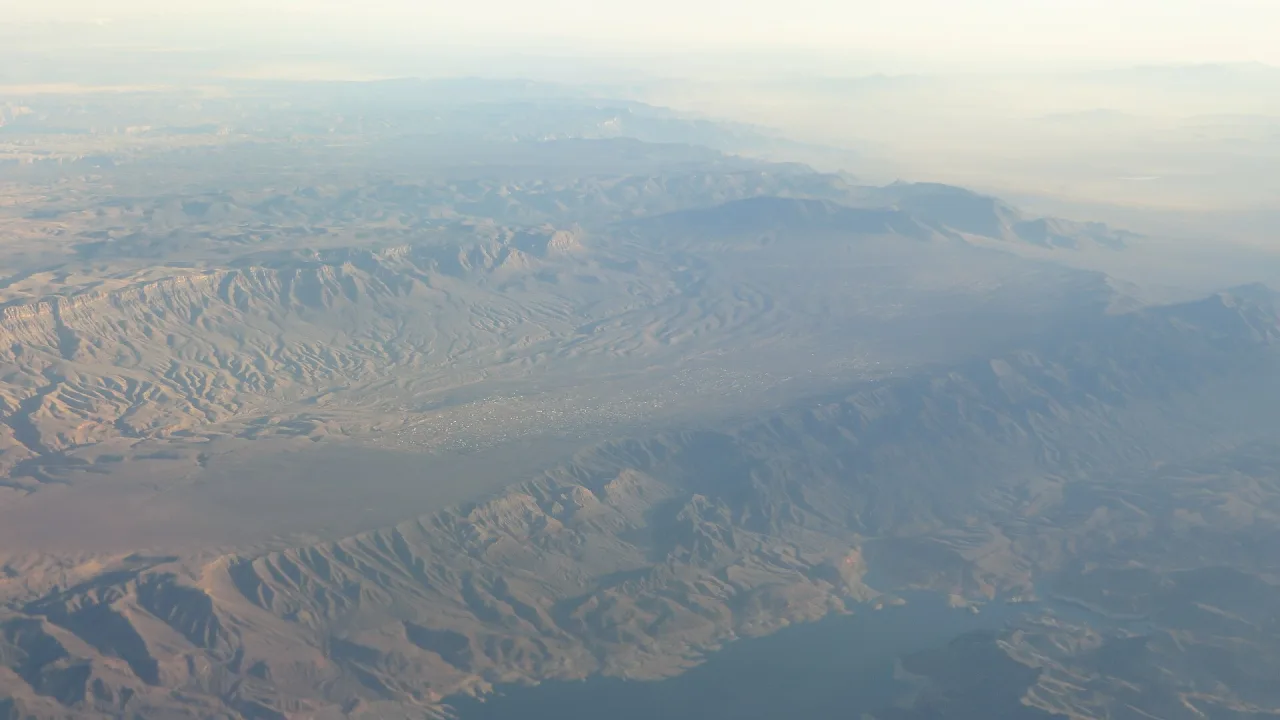
When boaters spotted a corroded industrial drum emerging from the mud at Lake Mead in May 2022, the grim find immediately captured international attention as a potential artifact of organized crime in Las Vegas. On Thursday, authorities officially identified the remains as Edward Lelburian Jackson, an Arkansas man believed to have been murdered in the early 1980s. The breakthrough answers a yearslong question about who was inside the barrel, but it also redirects a high-profile mystery away from romanticized underworld folklore and toward the difficult reality of a decades-old homicide investigation.
Lore versus evidence
From the moment the barrel surfaced at Hemenway Harbor, the circumstances seemed tailored for mob mythology. The victim had suffered a single gunshot wound to the head, and investigators determined the container had been discarded decades earlier, when the location was half a mile to a mile offshore, CNN reported. Commentators and observers were quick to draw parallels to vintage syndicate executions, in which bodies were hidden in deep waters or buried in the desert.
Yet authorities have cautioned that public assumptions do not align with verified facts. Las Vegas Metropolitan Police Lt. Robert Price said during a news conference that detectives have uncovered no evidence connecting the homicide to organized crime. Jackson, who also went by the nickname “Buddy,” had no documented ties to Las Vegas and no known record of gambling, according to police. Instead, records indicate he lived in California during the early 1970s and had a criminal record in Utah involving charges of aggravated arson and conspiracy to commit fraud in the early 1980s, NBC News reported.
The climate and technology convergence
Jackson’s identification reflects the intersection of environmental crisis and forensic genealogy. Lake Mead, the nation’s largest man-made reservoir, has seen its waterline drop dramatically during a drought spanning more than 25 years, according to the Colorado River Commission of Nevada. That retreat exposed four sets of human remains in 2022 alone. While the others were eventually determined to be drowning victims or individuals who disappeared decades ago, Jackson was the sole confirmed murder victim among them, authorities noted.
Solving his identity required overcoming severe physical degradation. Submerged in water for approximately four decades, the bone samples yielded difficult genetic material, CNN reported. After the FBI released a composite rendering in 2023 and an initial test showed a distant familial relationship in early 2024, forensic scientists at Oklahoma State University generated the lead that led investigators to a matching relative. The process demonstrated how contemporary genealogical databases can reconstruct identities even when a victim died long before DNA profiling existed.
An elusive trail forward
While forensics solved the man’s name, establishing who placed him in the reservoir remains a formidable task. Investigators have spoken with surviving relatives, but those family members were several generations removed and possessed little information beyond occasional visits from an itinerant uncle, NBC News reported.
Detectives must now reconstruct Jackson’s final movements without direct local records, relying on decades-old memories and potential associates who may be elderly or deceased. Price emphasized that the case remains an open homicide inquiry, with authorities urging anyone who knew Jackson, his employment history, or his associates during the late 1970s and early 1980s to contact Las Vegas police.