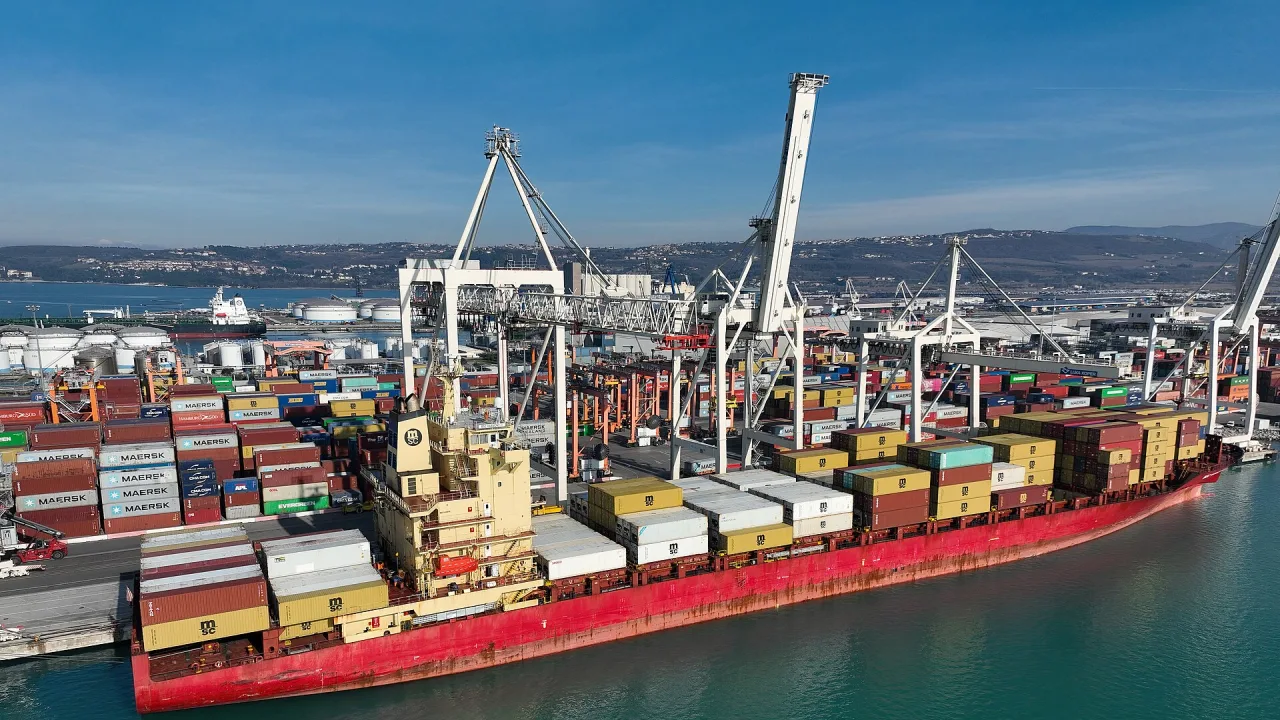
A Singapore-registered container vessel went down in the Strait of Hormuz on Wednesday, a day after a projectile hit it and set it on fire. Singapore’s maritime regulator said all 21 people aboard were brought off the ship, and no one was hurt. The GFS Pride is the third merchant vessel the International Maritime Organization, a U.N. body, has counted as sunk since the Iran war began, CNBC reported.
Singapore’s authority described the strikes as indefensible and a violation of global law. Pakistani maritime officials issued a navigational warning about cargo containers drifting in the water near the wreck, CNBC reported.
A second ship flying the Singapore flag, the GFS Giselle, took damage to its hull from a projectile on the same day. It made it to a secure anchorage, and its crew came through unharmed, Singapore’s authority said.
The Guardian also reported that a separate ship, the Cape Dao, flagged in Antigua and Barbuda, went down near the strait. The BBC, which cited the risk firm Vanguard and Reuters, reported instead that the bulk carrier was still going under after a rescue effort failed. The two outlets’ accounts differ on whether that vessel has fully sunk.
Conflicting accounts of the cause
Iran’s Revolutionary Guard said early Wednesday that a container ship struck a naval mine and went under, the state news agency Tasnim reported. The maritime security firm Marisks said there was no independent evidence that a mine brought down the Pride. It characterized Tehran’s statements as part of a psychological campaign meant to stoke fear and deter commercial traffic.
The UK Maritime Trade Operations Centre, known as UKMTO, indicated both ships were hit by projectiles of unknown origin. The Guardian reported that this put Tehran’s version of events in doubt.
Attacks and oil flows
Dozens of ships have been targeted in recent weeks, with more than 20 this month alone, most of them oil tankers, spanning Hormuz waters, the wider Persian Gulf and the Gulf of Oman, UKMTO incident data cited by CNBC shows. Al Jazeera reported that UKMTO logged 15 more incidents between Oct. 6 and Oct. 14, with 11 of them landing in the final stretch of that span.
The IMO said two sailors are unaccounted for and more than a dozen others were hurt this month.
Crude shipments moving through the strait averaged 8.5 million barrels per day in the week ended Oct. 12, roughly 40 percent under typical prewar volumes, Kpler data reported by CNBC shows. Flows had returned to prewar levels in September, while U.S. forces escorted tankers through the passage.
Two Iranian officials told Reuters, as the Guardian reported, that the new tactics were meant to thwart efforts to lower global oil prices, and that one goal was to sway the U.S. midterm elections on Nov. 3. A U.S. military official told Reuters that Iran has started deploying unarmed spotters in small boats to pick out targets, American naval vessels among them.
What comes next
U.S. Central Command pushed back on a claim by the Revolutionary Guard’s navy commander that Tehran controls the waterway, posting on X that American forces and regional partners hold it. Iran’s security chief, Mohsen Rezaei, said, “You are smuggling, but the strait is under Iran’s control, and we manage it,” Al Jazeera reported.
Tehran has said it will not agree to a deal until every one of its demands is satisfied, Al Jazeera reported. Brent crude traded near $106.58 a barrel early Wednesday, Al Jazeera reported.
Several questions remain open, including what hit the GFS Pride, whether the Cape Dao has fully gone under, and whether traffic through the strait can recover before the midterm elections. Al Jazeera also reported that Iran plans to disrupt a Washington-supported shuttle arrangement that has let more energy cargo leave the Gulf.